Camino Primitivo
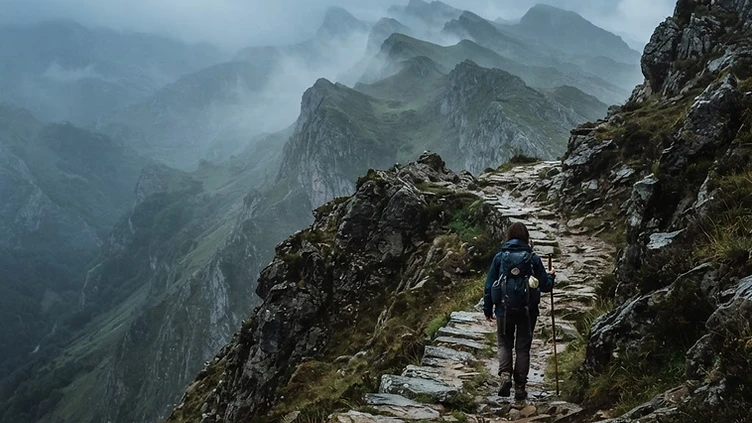
The Primitivo is for walkers who want the oldest, wildest Camino in a tight two-week window. It's the best short route on the network if you can handle the climbs.
The original Camino — the route King Alfonso II walked in the 9th century. Short, mountainous, and the most physically tough interior route, with a real sense of pilgrimage history.
At a Glance
- — You want easy flat days
- — You need a big pilgrim social scene
The Camino Primitivo is the oldest pilgrimage route to Santiago — the path Alfonso II of Asturias took from Oviedo in 813 AD, and the template for everything that followed. It's short (~320 km) but unrelenting: the first week climbs over the Asturian mountains via the Hospitales ridge, high, exposed, and the Primitivo's signature section. Few pilgrims, real mountains, and a genuine sense of walking the original. Best for fit walkers with two weeks. Join the Francés at Melide for the final run into Santiago.
How it got here
Alfonso II of Asturias traveled from Oviedo to Santiago de Compostela in the ninth century to confirm the discovery of the tomb of Saint James. This trek established the initial pilgrimage path, a precursor to the dense network of routes that later crossed the Iberian Peninsula. The path follows the interior mountain backbone of the northern kingdoms, linking the Asturian capital to the Galician interior. Because it connects these two power centers, it holds the title of the original route. Medieval monarchs prioritized the security of this passage, ensuring that the path provided a reliable corridor through territory reclaimed during the Reconquista.
Where it sits
The trail pushes through the high Asturian peaks and drops into the rolling terrain of western Galicia. Sharp ridges and deep valleys define the first half, where mist hangs low over heavy stone hamlets and dense chestnut woods. Autumn brings persistent rain and early snow to the high passes, while spring floods the lower pastures with green. The path stays quiet compared to other northern routes because the terrain demands persistent effort. Pilgrims walk through remote villages where the traditional stone horreos still stand above the damp earth, marking a landscape largely unchanged by modern through-traffic.
What to eat and drink
Asturian kitchens provide hearty stews like fabada, a rich dish of white beans cooked with chorizo and morcilla. Cider, or sidra, arrives poured from a height to aerate the tart apple base. As the path crosses into Galicia, the plate shifts toward caldo gallego, a thick soup of potatoes, kale, and beans. Pulpo a feira, boiled octopus dusted with paprika and salt, appears in the village markets. The local diet relies on the hard-won produce of small mountain plots, focusing on salted meats and dairy to sustain walkers moving through the humid, cool climate of the northern cordillera.
What's Nearby



Logistics are verified only. We don't publish schedules we haven't confirmed.
Ready to build Camino Primitivo into a trip?
You've found a place worth going. When you're ready to turn discovery into an itinerary, Travel Itinerary Co picks up where the Field Guide leaves off — with your saved places already in hand.
Build this into a tripContinues on Travel Itinerary Co
Spain Field Guide may earn a commission when you book through selected links. Recommendations are editorial and independent of commission.