Balearic Islands
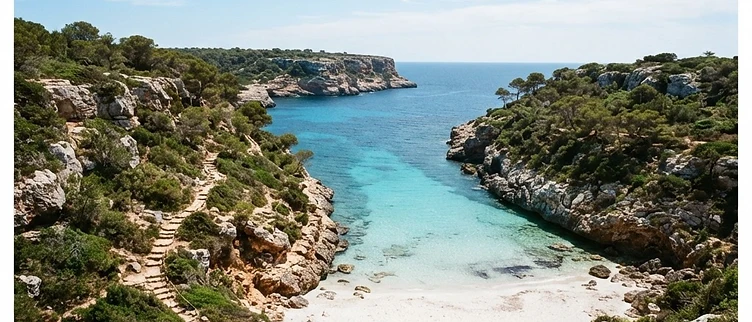
Four islands doing four different jobs: Mallorca, big enough to hold mountains, a serious city and quiet corners; Menorca, the calmest, with the best coves; Ibiza, which is two places — the clubs and a rural north almost nobody photographs; and Formentera, small, sandy and best in May and October. The sea is the reason to come, but the islands reward anyone who leaves the beach. The trade is seasonality and price: July and August are expensive and crowded, and much of the coast closes from November.
How long this region actually takes
Five days is one island. Two weeks is the honest way to do two of them well, and the shoulder months matter more here than anywhere else in Spain.
Where to put your nights
Spain Field Guide may earn a commission when you book through selected links. Recommendations are editorial and independent of commission.
The questions that decide the trip
The south-east of Mallorca has the big resorts and the clearest water; the Tramuntana coast in the north-west has cliffs, terraces and small calas you reach on foot; Menorca's whole south coast is a chain of coves. Ibiza's west is the sunset coast, its north is wooded.
Cala Macarelleta and Cala Mitjana on Menorca for the picture, Cala d'Hort in Ibiza for the view back to Es Vedrà, and Es Trenc and the Migjorn coast in Mallorca. Menorca's coves are the reason to go there; Mallorca's best are the ones you walk to.
Ensaimada and sobrasada are the staples, with tumbet, arròs brut and grilled fish behind them. Menorca has the most distinctive cooking — lobster stew, mayonnaise built on egg yolk, and pastries that come out of the same ovens all year.
Palma has a cathedral that dominates the bay, a royal palace, and Bellver castle, one of the few round castles in Europe. Formentera, Ibiza and Menorca carry Phoenician and Roman layers, and in Menorca's case Talayotic ones older than anything on the mainland.
Ferries and fast boats connect the islands frequently, and Palma has buses and a train to Sóller. On Menorca and in the Tramuntana, buses reach the calas in season; outside it, and for the smallest coves, a car is the difference between seeing them and not.
The Tramuntana road, the interior villages of Mallorca and Ibiza, and Menorca's coves — though parking at the popular calas is restricted in summer, and some are reachable only by boat or on foot.
Late May, June, and September into early October: warm sea, manageable crowds, everything open. April and May for walking the Tramuntana. July and August if you are here only for the water, knowing the price and the crowds.
August unless everything is booked, and the November to March window if you are coming for beaches — many hotels and restaurants on Menorca and Formentera close entirely.
Five days in Balearic Islands
Fly into Palma for two nights — the cathedral, the old city, and a day in the Tramuntana by the Sóller train — then take the ferry to Menorca for three nights, splitting them between the south coast coves and a night in the old capital at Ciutadella.
Where Balearic Islands gets compared
Experiences worth booking ahead
Spain Field Guide may earn a commission when you book through selected links. Recommendations are editorial and independent of commission.
Everywhere in Balearic Islands
The other regional guides
Turn Balearic Islands into an actual itinerary
You've decided how long the region needs. Travel Itinerary Co takes the places you saved here and sequences them into days, with driving times and overnights attached.
Build this into a tripContinues on Travel Itinerary Co