Es Vedrà
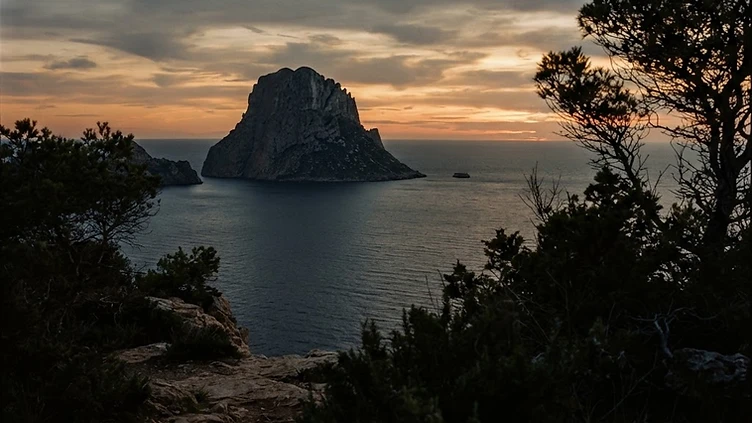
Two hours from Cala d'Hort at sunset, and worth the drive. Park on the approach road; the cliffs are unprotected and the drop is real.
The most storied rock in the Mediterranean: a 400-metre limestone islet off Ibiza, with the island's best sunset and a set of ancient legends attached.
Ibiza · Menorca · Valldemossa · Formentera
At a Glance
Es Vedrà is an uninhabited rock islet standing about two kilometres off Ibiza's south-west coast, nearly 400 metres high and visible from a great deal of the island. It has attracted legends since antiquity — as the home of the sirens, or of the Carthaginian goddess Tanit — and the best views are from the cliffs near Cala d'Hort, above all at sunset.
How it got here
Phoenicians settled the Pityusic Islands in the seventh century BC, establishing a permanent base at nearby Sa Caleta. The proximity of the rock to these early trade routes ensured its inclusion in local seafaring lore. Sailors recounted encounters with sirens near its crags, marking the islet as a place of danger and divine presence. While the rock itself remained uninhabited, the island of Ibiza served as a maritime crossroads for Carthaginians, Romans, and eventually the Byzantines. Today, the limestone mass functions as a geographical anchor for local identity, linking modern visitors to these ancient maritime traditions that defined the strategic value of the Balearic archipelago.
Where it sits
The islet rises abruptly from the deep Mediterranean blue, a jagged silhouette of bare rock visible from the southern heights of Ibiza. Below, the cliffs at Cala d'Hort provide the primary vantage point, looking out over shifting currents where the seabed drops sharply. Sparse Mediterranean maquis clings to the thin soils of the mainland headlands, while the rock itself sustains little beyond gulls and falcons. Summer brings a constant flow of watchers to the cliff edge, though the winter months leave the coast to the wind, the sea spray, and the quiet movement of fishing vessels returning to port.
What to eat and drink
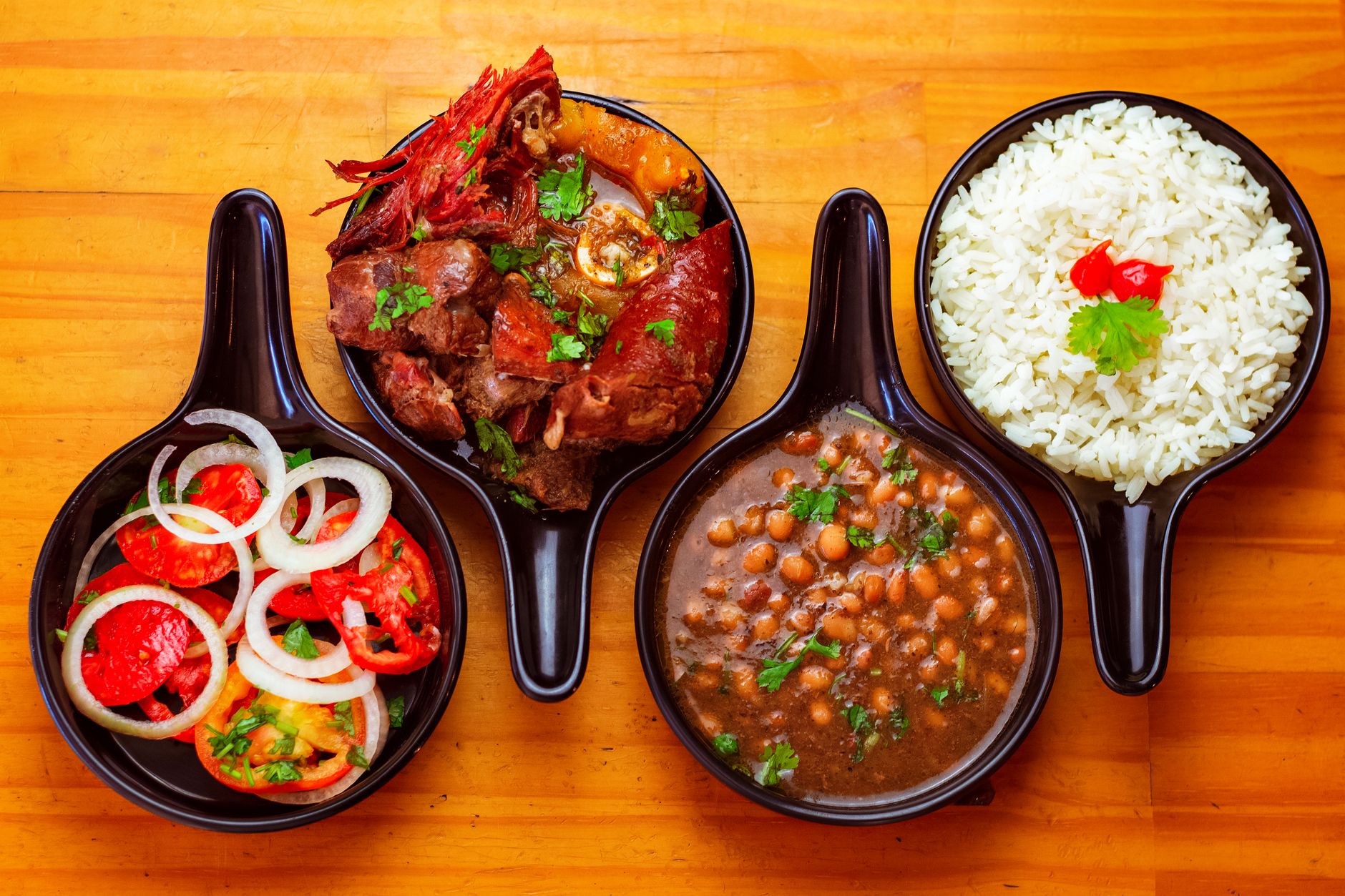
Ibiza produces a robust traditional cuisine centered on the harvest of the sea and the island countryside. Bullit de peix, a rich fish stew cooked with potatoes and finished with a rice dish known as arròs a banda, defines the local table. Sofrit pagès, a hearty mixture of chicken, lamb, and spicy sobrassada sausage fried with potatoes and garlic, serves as the island’s classic communal dish. For a final course, flaó, a dense cheesecake flavored with mint and anise, marks the end of a meal, typically paired with a glass of hierbas ibicencas, a liqueur distilled from local aromatic herbs.
Balearic Islands: the whole region
Four islands doing four different jobs: Mallorca, big enough to hold mountains, a serious city and quiet corners; Menorca, the calmest, with the best coves; Ibiza, which is two places — the clubs and a rural north almost nobody…
Minimum 5 days · better 10 days · deep 2 weeks
In Balearic Islands


In Balearic Islands




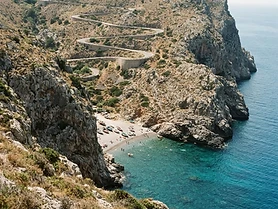

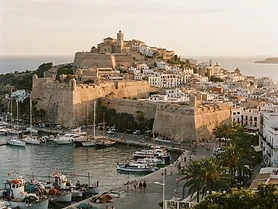

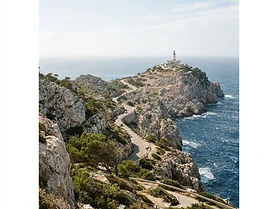


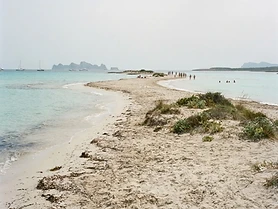
More viewpoint in Balearic Islands
Logistics are verified only. We don't publish schedules we haven't confirmed.
Experiences worth booking ahead
Spain Field Guide may earn a commission when you book through selected links. Recommendations are editorial and independent of commission.
Ready to build Es Vedrà into a trip?
You've found a place worth going. When you're ready to turn discovery into an itinerary, Travel Itinerary Co picks up where the Field Guide leaves off — with your saved places already in hand.
Build this into a tripContinues on Travel Itinerary Co
Spain Field Guide may earn a commission when you book through selected links. Recommendations are editorial and independent of commission.