Murcia
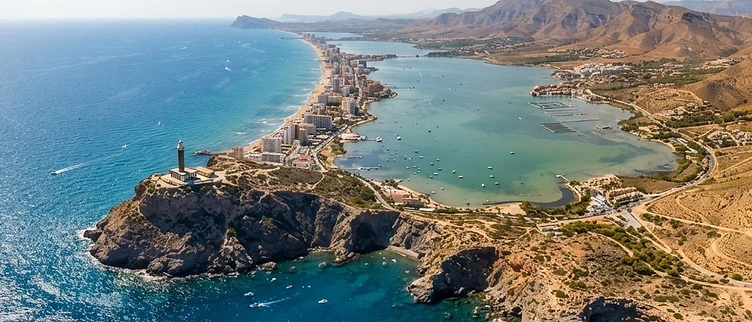
The driest corner of Spain, and better for it: a region of arid hills, irrigated valleys and a coast that is still mostly open. Cartagena is the surprise — a port with a Roman theatre, an Art Nouveau street and a naval history you can walk through — and Murcia city is a pleasant, underrated place to eat. The Mar Menor is warm and shallow, but overbuilt in places. The trade is heat, and the airport-to-coast strip, which is best avoided.
How long this region actually takes
Three days is Cartagena and Murcia with the Mar Menor between them. Five lets you go north-west into the wine country at Jumilla and the hill towns of Lorca and Caravaca, which is the part that feels undiscovered.
Where to put your nights
Spain Field Guide may earn a commission when you book through selected links. Recommendations are editorial and independent of commission.
The questions that decide the trip
Two coasts. The Mediterranean side of Cabo de Palos has rock coves and real water; the Mar Menor behind it is a shallow, warm lagoon with no waves, which is why families use it. La Manga is the strip dividing them, and the most built-up part of the region.
Calblanque for wild sand and no development, Cala Cortina next to Cartagena's port, and the coves around Cabo de Palos. The Mar Menor's beaches are shallow and safe; in August they are crowded almost everywhere.
Murcia's huerta produces the region's best cooking: zarangollo, michirones, pasteles de carne, rice cooked a hundred ways, and vegetables that taste of the sun. Jumilla's Monastrell wines are powerful and cheap, and the cheese from the northern hills is worth carrying home.
Cartagena was Carthaginian, then Roman, then one of the most important naval bases in the Mediterranean — the Roman theatre is the centrepiece, but the Punic walls under the city are the older story. Murcia has a fine cathedral and the remains of a Moorish city, and Lorca and Caravaca carry castles that take longer than you expect.
Murcia city and Cartagena are on the rail line and reasonably connected, with buses to the coast. Jumilla, Caravaca, Cehegín and the best beaches need a car; there is no train along the coast at all.
The northern wine country, the hill towns of northwest Murcia, and Calblanque. The coast road from Cartagena to Águilas is excellent and almost empty outside August.
March to May and October, when the coast is still swimmable and the interior is not a furnace. April is the best month here by a distance. July and August are extreme inland, over 40 degrees, and busy on the coast.
Inland Murcia in July and August, and La Manga in August, which is the region at its most dense.
Five days in Murcia
Two nights in Cartagena for the Roman theatre and the port, with the coves at Calblanque and Cabo de Palos on the first day; then a night in Murcia for the cathedral and a long lunch, and a loop up to Jumilla and Caravaca for the wine and the castles before coming back to the coast.
Where Murcia gets compared
Experiences worth booking ahead
Spain Field Guide may earn a commission when you book through selected links. Recommendations are editorial and independent of commission.
Everywhere in Murcia
The other regional guides
Turn Murcia into an actual itinerary
You've decided how long the region needs. Travel Itinerary Co takes the places you saved here and sequences them into days, with driving times and overnights attached.
Build this into a tripContinues on Travel Itinerary Co