Queso de Murcia al Vino
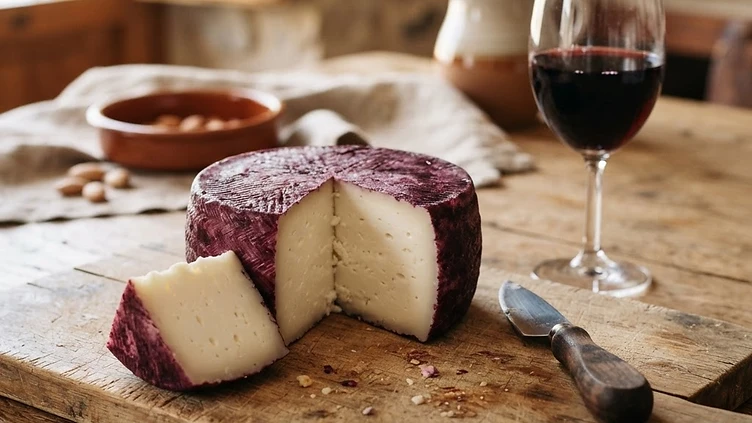
Buy it young, from a market or a producer's stand at a fair, and eat it within a fortnight. Supermarket versions travel too far and dry out.
A goat's cheese with a wine-dark rind, made only in Murcia and eaten fresh — a regional product with no real equivalent elsewhere.
At a Glance
Murcia al Vino is a pasteurised goat's cheese from the Murcian interior, bathed in red wine during curing so the rind darkens to a deep violet. The paste stays white, soft and slightly acidic, and it is eaten young, within weeks. It is one of the few Spanish cheeses whose appearance argues for it before the taste does.
How it got here
Goat herding defined the economy of the Murcian interior long before formal documentation arrived. The Murcian goat breeds adapted to the arid scrublands of the Segura river basin, producing milk with high fat content that made cheesemaking a primary method for preserving seasonal surpluses. Producers developed the practice of washing rinds in red wine during the modern era to protect the curd from the dry, dusty conditions of regional storehouses. This method turned a simple survival food into a distinct product of the Murcian agricultural tradition. It connects current production to the fundamental reliance on the Capra aegagrus hircus that sustained inland communities for centuries.
Where it sits
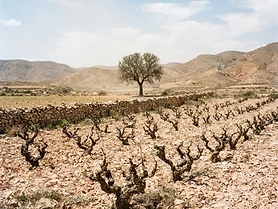
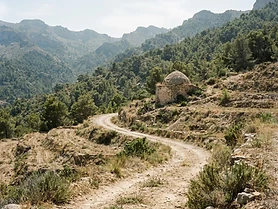
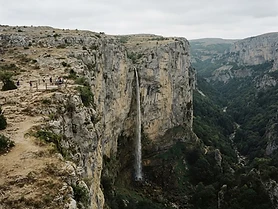
The Murcian interior consists of sun-bleached plains and jagged limestone ranges that rise sharply from the Segura valley. Rain remains infrequent, leaving the landscape dominated by hardy olive groves, almonds, and low-lying brush. Travel through the province requires navigating steep switchbacks that connect the high plateaus to the coastal plains. In summer, the heat bakes the earth until the ground cracks, while winter brings biting winds that drop temperatures across the high altitude pastures. These harsh conditions force the goat herds into lower valleys during the colder months, creating a cycle of seasonal movement that determines the rhythm of village life.
What to eat and drink
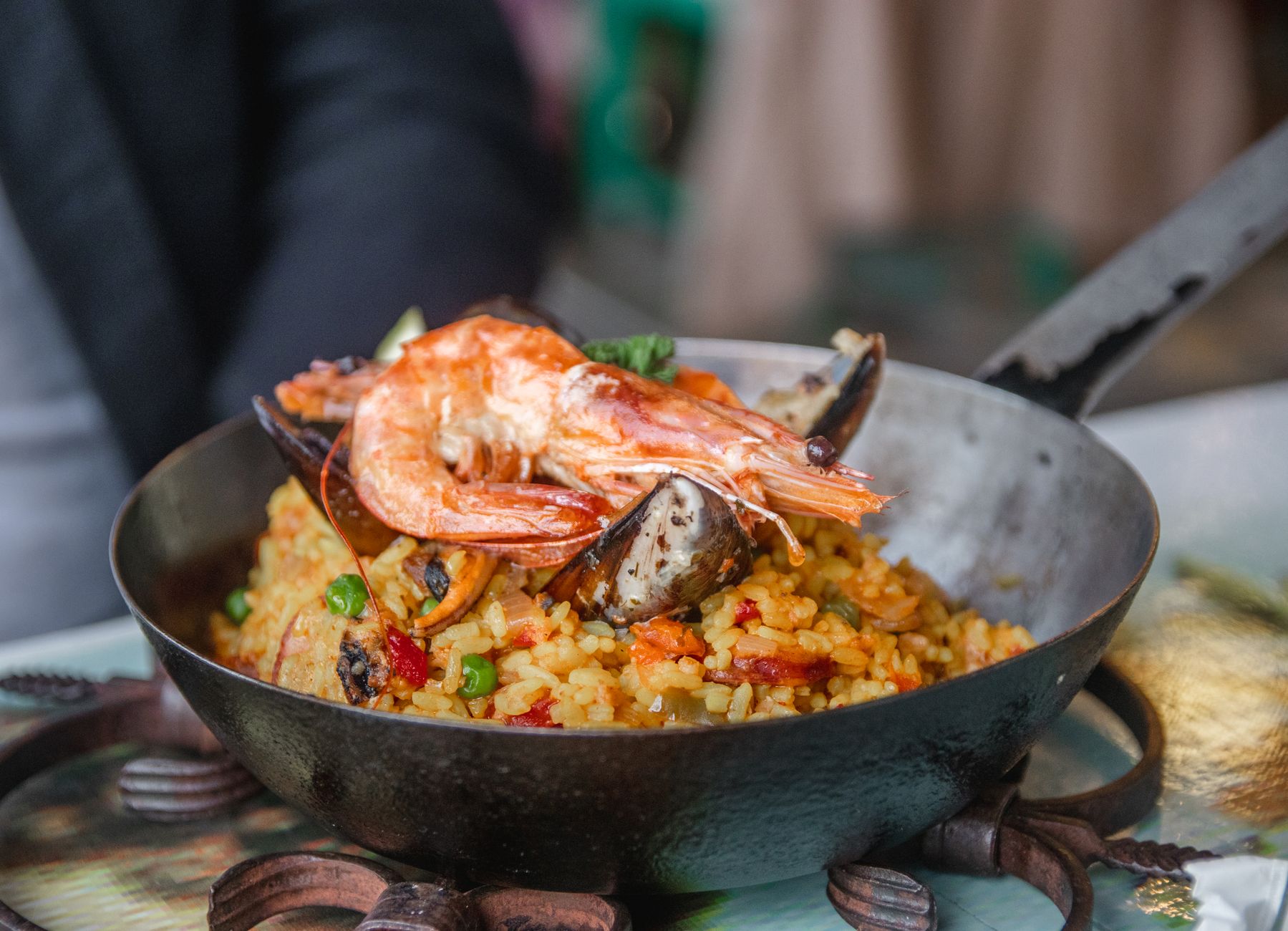
The cuisine of Murcia relies on the abundance of the huerta and the hardiness of its livestock. Zarangollo, a scramble of zucchini, onion, and egg, captures the bounty of local irrigated gardens. Caldero del Mar Menor, a rice dish prepared with intensely flavored rockfish and ñora peppers, provides the standard for coastal tables. For dessert, paparajotes consist of lemon leaves dipped in sweet batter and fried, then dusted with sugar and cinnamon. These dishes go best with the robust red wines from the nearby Bullas, Jumilla, or Yecla denominations, which provide the tannins necessary to balance the richness of the local goat cheeses.
Murcia: the whole region
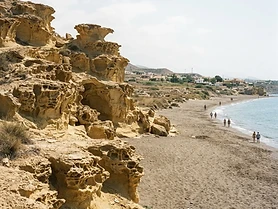
The driest corner of Spain, and better for it: a region of arid hills, irrigated valleys and a coast that is still mostly open. Cartagena is the surprise — a port with a Roman theatre, an Art Nouveau street and a naval history you can walk…
Minimum 3 days · better 5-6 days · deep 8 days
In Murcia


In Murcia


In Murcia










Logistics are verified only. We don't publish schedules we haven't confirmed.
Ready to build Queso de Murcia al Vino into a trip?
You've found a place worth going. When you're ready to turn discovery into an itinerary, Travel Itinerary Co picks up where the Field Guide leaves off — with your saved places already in hand.
Build this into a tripContinues on Travel Itinerary Co
Spain Field Guide may earn a commission when you book through selected links. Recommendations are editorial and independent of commission.