Playa de Calblanque

Murcia's best-kept secret is a genuine wild stretch of coast, and it's staying that way thanks to strict protection.
Dunes, scrub, and empty sand run for miles inside a regional park with almost no development — a rarity on this coast.
At a Glance
- — you need facilities
- — limited mobility
- — you dislike unpaved access roads
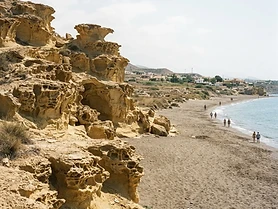
Dunes, scrub-covered hills, and miles of wild, empty sand define this pocket of the Murcian coast. Because it sits inside a protected regional park, you won't find any concrete developments or beach bars cluttering the horizon. It remains one of the few genuinely untouched stretches left on this part of the Mediterranean, kept that way by restricted vehicle access.
How it got here
The coastal stretch between Cartagena and Cabo de Palos long stood as a buffer zone between the maritime dominance of the Mediterranean and the interior plains of the Campo de Cartagena. Mining activity defined the nearby Sierra Minera for centuries, leaving behind tunnels and extraction sites that shaped the local economy until the mid-twentieth century. While the coast escaped the concrete expansion seen further north, the preservation of the landscape follows the eventual recognition of the geological value of these saline lagoons and scrublands. This protected status prevents the growth that altered the rest of the Murcian shoreline, preserving the emptiness that once defined the entire sector.
Where it sits
The terrain consists of fossil dunes and metamorphic rock sloping into the Mediterranean. Salt marshes and lagoons sit inland, creating a barrier between the beach and the cultivated agricultural land of the Campo de Cartagena. Coastal winds shape the vegetation, which shifts from sea lavender to hardy juniper. Access requires travel on unpaved tracks that force a slower pace. The summer heat dries the scrubland until the landscape turns pale gold, while autumn rains occasionally turn the low-lying paths into mud. Few people walk these sands during the winter months when the wind makes the open coast uncomfortable.
What to eat and drink
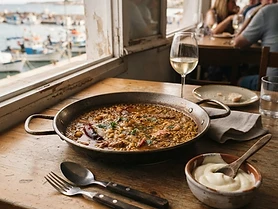
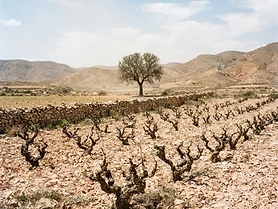
Murcian coastal kitchens rely on the sea and the fertile inland huertas. Caldero del Mar Menor is the standard dish here, a rich rice stew cooked in a cast-iron pot with ñora peppers and local rockfish, served with a side of garlic alioli. To drink, order a glass of Jumilla, a deep red wine produced from Monastrell grapes grown in the arid soils of the nearby interior provinces. For a quick snack, eat pastel de carne, a layered pastry filled with spiced minced meat, egg, and chorizo, which has been a staple of the Murcian diet since the eighteenth century.
Murcia: the whole region
The driest corner of Spain, and better for it: a region of arid hills, irrigated valleys and a coast that is still mostly open. Cartagena is the surprise — a port with a Roman theatre, an Art Nouveau street and a naval history you can walk…
Minimum 3 days · better 5-6 days · deep 8 days

Pair It With

In Murcia






In Murcia


In Murcia










Logistics are verified only. We don't publish schedules we haven't confirmed.
Ready to build Playa de Calblanque into a trip?
You've found a place worth going. When you're ready to turn discovery into an itinerary, Travel Itinerary Co picks up where the Field Guide leaves off — with your saved places already in hand.
Build this into a tripContinues on Travel Itinerary Co
Spain Field Guide may earn a commission when you book through selected links. Recommendations are editorial and independent of commission.