Barrio de las Letras
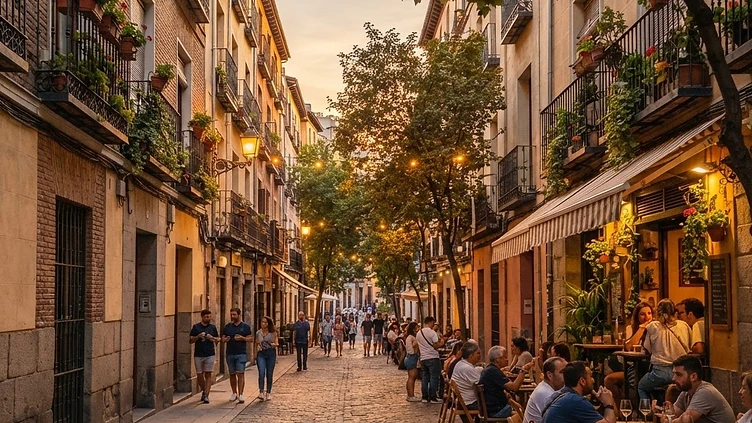
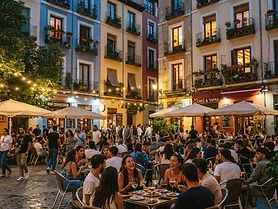
Treat it as somewhere to sleep and eat breakfast, then walk out of it for the sights. The Plaza de Santa Ana's terraces are comfortable and priced accordingly; the side streets a minute away eat better for less.
The best base in central Madrid, and the most pleasant streets to walk between sights.
At a Glance
- — You want the cheapest beds in the city
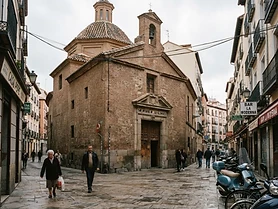
Cervantes, Lope de Vega and Quevedo lived within a few streets of each other here, and the quarter trades on it gently, with quotations set into the paving and the old theatres of the Huertas. It is also the most convenient place in Madrid to stay: the museums, the Retiro and the old town are all within a walk.
How it got here
During the seventeenth century, the literary elite of the Spanish Golden Age gravitated toward the district between the Carrera de San Jerónimo and the Calle de Atocha. Miguel de Cervantes and Lope de Vega occupied residences within these tight, irregular street patterns, establishing a density of intellectual life that redefined the Spanish language. The district functioned as the primary home for the city's corral de comedias, where the playwrights staged their works. This heritage survives in the metal lettering embedded in the pavement and the specific names assigned to the thoroughfares, which continue to honor the figures who once resided in the rooming houses and private palaces of the neighborhood.
Where it sits
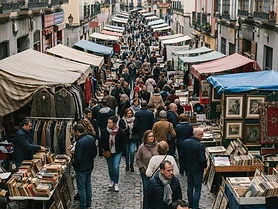
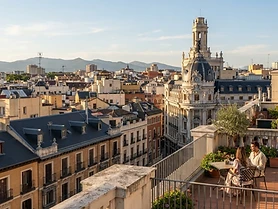
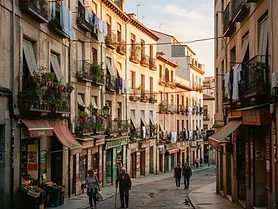
The neighborhood sits at the transition point between the monumental austerity of the Hapsburg city and the nineteenth-century expansion toward the Retiro park. It occupies a gentle slope falling from the central plateau toward the Manzanares river valley. Narrow, pedestrian-friendly streets prevent the transit of heavy traffic, forcing a pace that remains slow even during the peak of the working week. Winter brings a sharp, dry chill from the Guadarrama mountains, while summer afternoons push the heat into the stone façades. The ground remains hard underfoot and the shadows lengthen quickly across the short distances between the major art collections nearby.
What to eat and drink
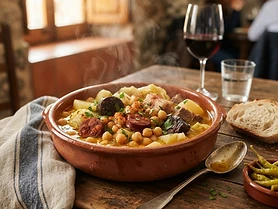
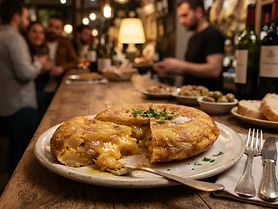
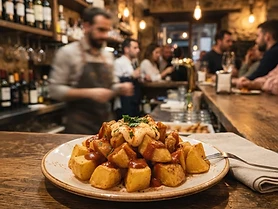
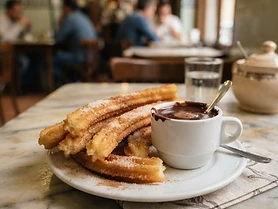
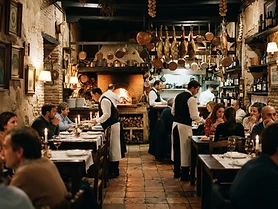
The taverns here serve the traditional dishes of the Castilian table, focused on heavy staples and fortified wines. Callos a la madrileña, a stew of tripe, chorizo, and morcilla, provides the necessary heat for the winter months. Plates of bacalao, salted cod fried or simmered in garlic-heavy tomato sauces, remain a fixture of the older kitchens. Drinkers order vermut de grifo, a fortified spiced wine served from a tap, often accompanied by boquerones en vinagre, white anchovies cured in vinegar and garlic. The produce arrives daily from the surrounding plains, ensuring the legumes and cured pork products maintain their distinct, regional character.
Madrid: the whole region
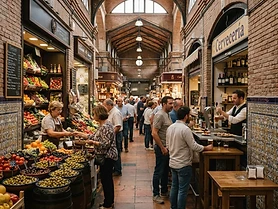
Madrid is a province with one great city in it, and that city is worth three or four days on its own: three major museums within a few hundred metres of each other, a working market culture, a nightlife that starts late and does not stop,…
Minimum 3 days · better 5-6 days · deep 8-10 days

Pair It With


In Madrid









In Madrid















Linked from elsewhere
Entries that name this place in their own nearby lists.


Logistics are verified only. We don't publish schedules we haven't confirmed.
Experiences worth booking ahead
Spain Field Guide may earn a commission when you book through selected links. Recommendations are editorial and independent of commission.
Ready to build Barrio de las Letras into a trip?
You've found a place worth going. When you're ready to turn discovery into an itinerary, Travel Itinerary Co picks up where the Field Guide leaves off — with your saved places already in hand.
Build this into a tripContinues on Travel Itinerary Co
Spain Field Guide may earn a commission when you book through selected links. Recommendations are editorial and independent of commission.