Iglesia de San Jerónimo el Real
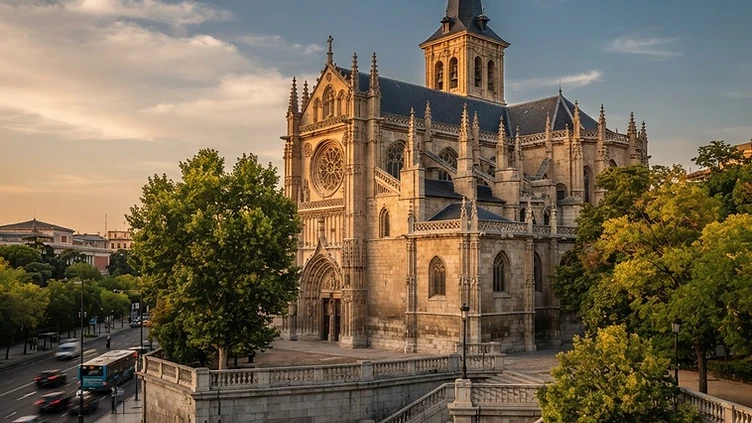
A ten-minute detour from the Prado's exit, which is exactly how to use it: Isabelline stonework and silence after the crowds. If you are not already at the museum, it is not worth crossing the city for on its own.
The royal monastery church behind the Prado, with 15th-century Isabelline carving, a nave built for royal ceremonies, and the court history Velázquez painted from the inside.
At a Glance
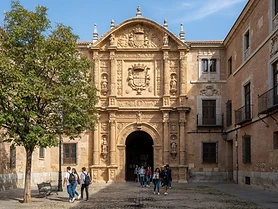
Tucked directly behind the Prado, this Isabelline-Gothic landmark has witnessed centuries of royal weddings and state funerals. The rough stone walls and pointed arches feel heavy with the weight of Spanish history, housing spaces that once hosted the courtly life described in Velázquez’s paintings. Despite its proximity to the capital's busiest museum, the interior retains a hushed, monastic quality that feels far removed from the city's frantic energy.
How it got here
Catholic Monarchs Isabella and Ferdinand ordered the construction of this monastery in the fifteenth century to house the Order of Saint Jerome. The building grew alongside the adjacent royal retreat known as the Buen Retiro. Architects prioritized the Isabelline Gothic style, which blended late medieval structural traditions with ornamental complexity. After the original monastic buildings vanished, this church endured as the primary setting for royal coronations and state ceremonies. The stone walls withstood the French occupation during the Peninsular War, which turned the site into a barracks. Today, the building stands as a architectural fragment of the Habsburg era, anchored firmly to the site of the former royal palace grounds.
Where it sits
The church occupies a rise of land directly south of the Prado and east of the botanical gardens. This part of Madrid consists of dense stone architecture and wide boulevards laid out during the Bourbon reforms. Winter mornings here bring sharp air from the Sierra de Guadarrama, while summer afternoons bake the surrounding limestone and granite pavements. Traffic flows constantly along the nearby Alfonso XII, yet the church grounds provide a static buffer from the constant movement of the city. Access remains simple from the central rail hub of Atocha, following the steady incline up toward the Retiro park entrance.
What to eat and drink
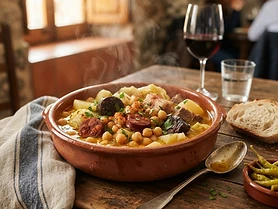
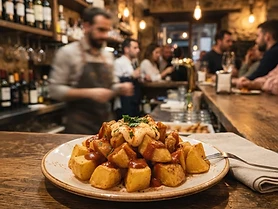
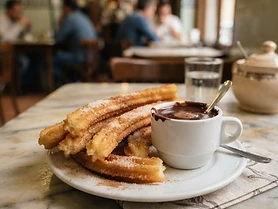
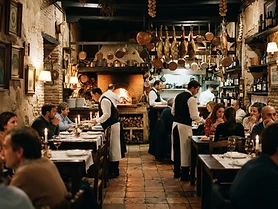
Madrid favors the hearty food of the Castilian plateau. Cocido madrileño, a slow-simmered chickpea stew with pork belly, chorizo, and morcilla, provides the necessary substance for cold months. Callos a la madrileña, a dense tripe stew seasoned with paprika, represents the traditional working class kitchen of the capital. For a lighter bite, churros dipped into thick, dark hot chocolate serve as a common morning staple. Wine lists across the city rely on robust reds from nearby Vinos de Madrid, specifically the Garnacha and Tempranillo grapes grown in the granite soils of the Sierra de Gredos.
Madrid: the whole region
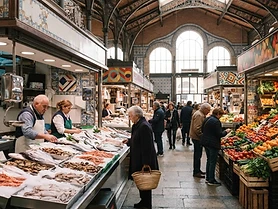
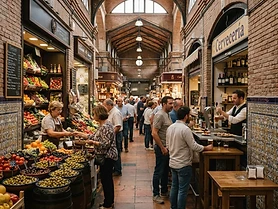
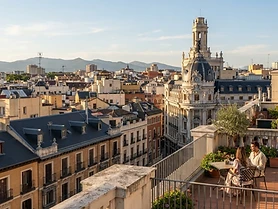
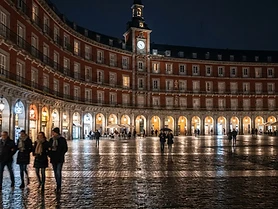
Madrid is a province with one great city in it, and that city is worth three or four days on its own: three major museums within a few hundred metres of each other, a working market culture, a nightlife that starts late and does not stop,…
Minimum 3 days · better 5-6 days · deep 8-10 days
What's Nearby


In Madrid










In Madrid













Logistics are verified only. We don't publish schedules we haven't confirmed.
Experiences worth booking ahead
Spain Field Guide may earn a commission when you book through selected links. Recommendations are editorial and independent of commission.
Ready to build Iglesia de San Jerónimo el Real into a trip?
You've found a place worth going. When you're ready to turn discovery into an itinerary, Travel Itinerary Co picks up where the Field Guide leaves off — with your saved places already in hand.
Build this into a tripContinues on Travel Itinerary Co
Spain Field Guide may earn a commission when you book through selected links. Recommendations are editorial and independent of commission.