Catedral de la Almudena

Skippable unless you're already at the Royal Palace — the exterior is fine, the interior underwhelms next to Spain's older cathedrals.
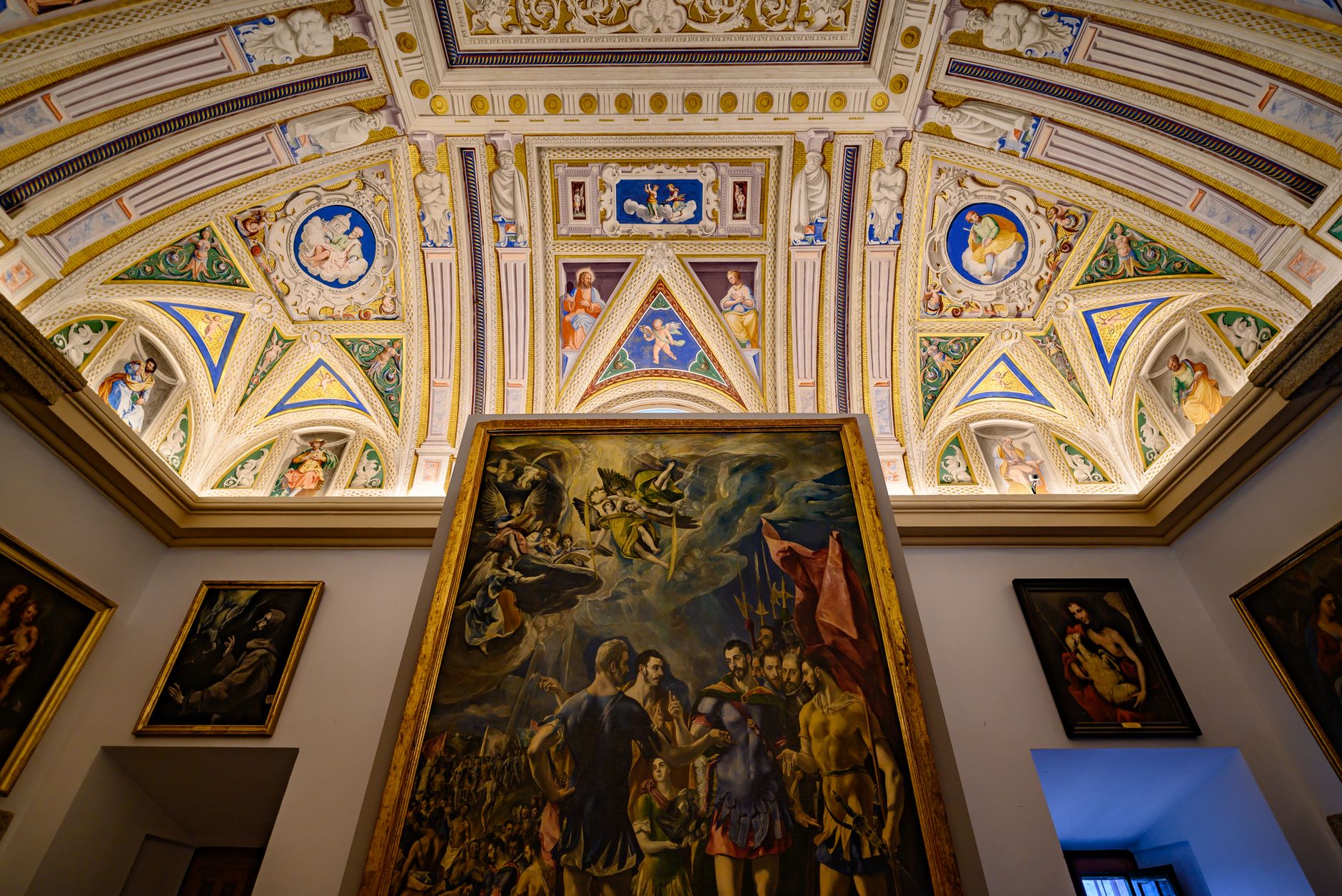
It's the only reason to see how a 20th-century cathedral looks stitched onto a medieval city, with a colorful neo-Gothic ceiling that surprises some visitors.
At a Glance
- — seeking historic Gothic or Romanesque cathedrals
- — limited time in Madrid
Completed in 1993, the Almudena is a neo-Gothic addition to a medieval part of Madrid, and it still reads as new. The ceiling is painted in colors that are unexpected next to Spain's older cathedrals. It is an interesting study in modern ecclesiastical ambition, but it lacks the centuries of accumulated atmosphere that make the country's historic cathedrals what they are.
How it got here
Architects conceived a cathedral for Madrid in the late nineteenth century as the city lacked a bishopric seat separate from the Archdiocese of Toledo. Construction slowed through the twentieth century despite foundations laid in 1883. The Spanish Civil War halted progress for decades until architects resumed work in the mid-century to finalize the structure according to altered neo-Gothic plans. Pope John Paul II consecrated the building in 1993, finalizing a project that bridged the gap between the historic Habsburg foundations of the city and the modern requirements of the capital. It serves as a marker of the transition between the old aristocratic center and the expanding administrative city.
Where it sits
The cathedral stands on a high bluff overlooking the valley of the Manzanares river, directly opposite the Royal Palace. It occupies a site once held by a medieval defensive wall, separating the austerity of the Plaza de la Armería from the narrow streets of the old quarter. Summer heat bakes the limestone and granite surfaces, while winter winds blow cold from the Sierra de Guadarrama across the central plateau. Tourist crowds gather here throughout the year, but the surrounding slopes retain the quiet weight of the historic core, caught between the formal gardens of the palace and the dense residential grid.
What to eat and drink
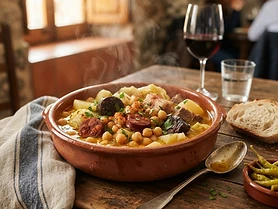
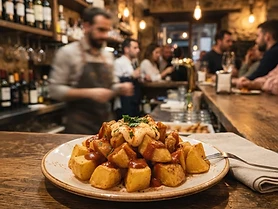
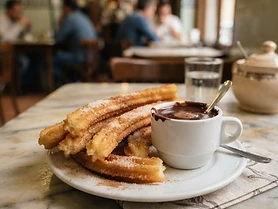
The culinary traditions of Madrid focus on the ingredients brought from the surrounding Castilian plains. Cocido madrileño is the foundation of local cooking, a chickpea stew simmered with pork, chorizo, morcilla, and cabbage served in stages. Callos a la madrileña, a hearty dish of tripe slow-cooked with spicy sausage and paprika, defines the tavern menus of the nearby neighborhood. Visitors drink vermut de grifo, herbal fortified wine served from a tap, often accompanied by olives or boquerones en vinagre, white anchovies cured in vinegar and garlic. Sweet churros dipped in thick, dark hot chocolate provide the standard local breakfast.
Madrid: the whole region
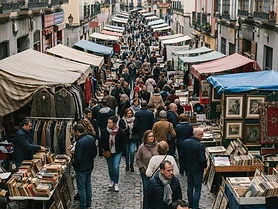
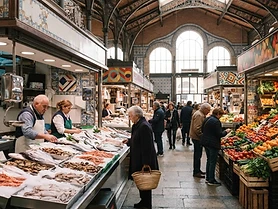
Madrid is a province with one great city in it, and that city is worth three or four days on its own: three major museums within a few hundred metres of each other, a working market culture, a nightlife that starts late and does not stop,…
Minimum 3 days · better 5-6 days · deep 8-10 days
What's Nearby


Pair It With
In Madrid








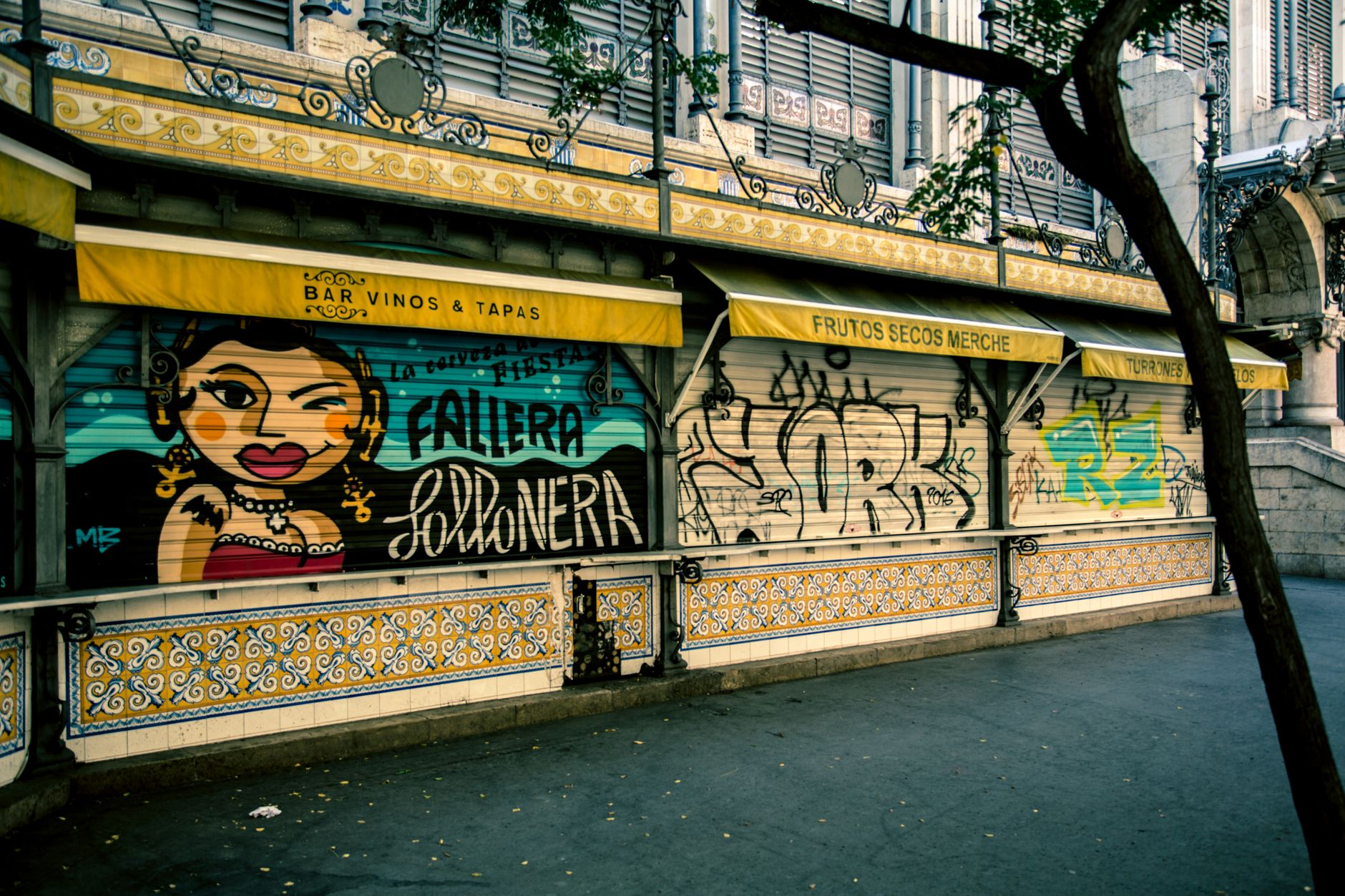


In Madrid


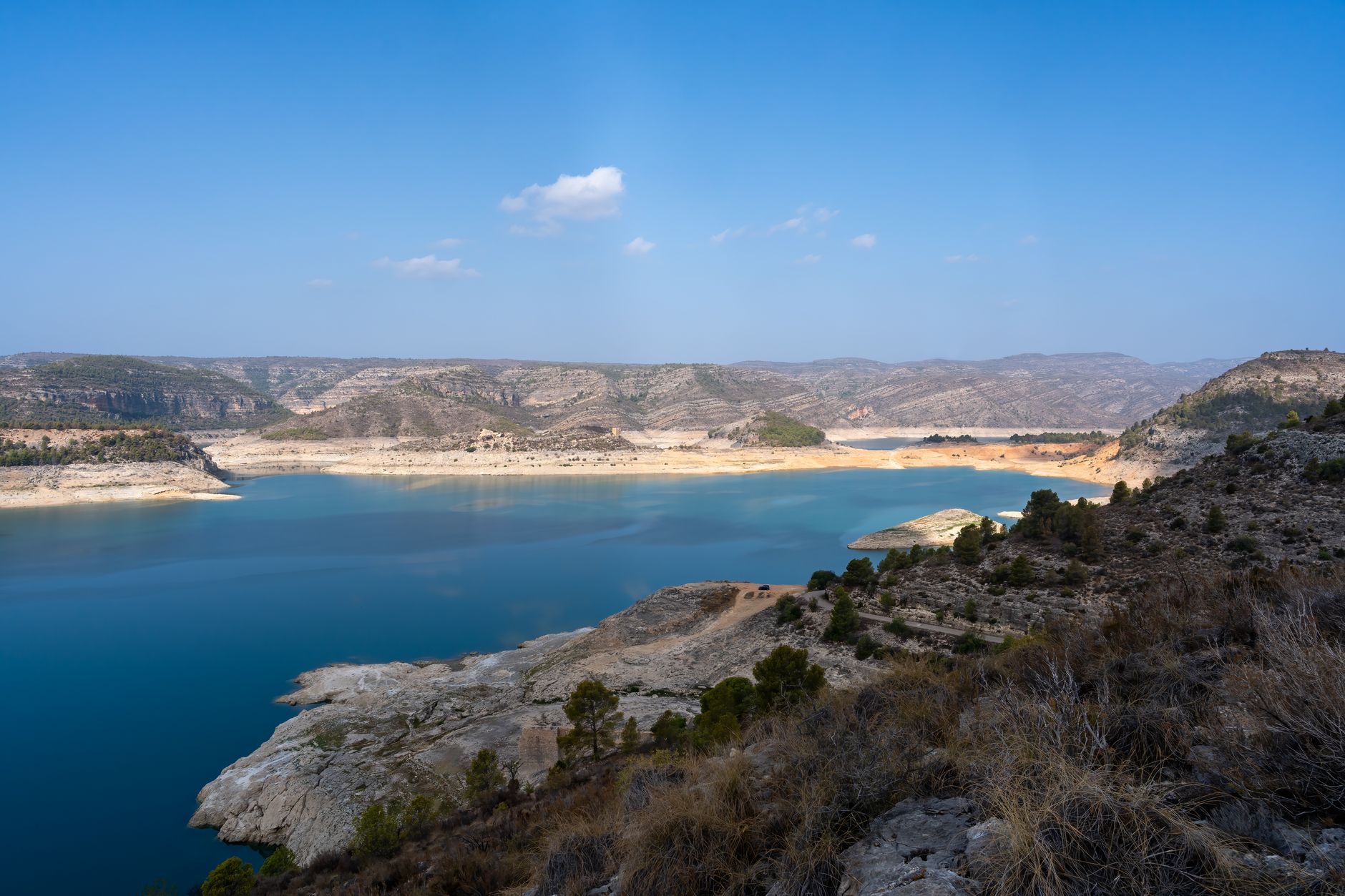












Logistics are verified only. We don't publish schedules we haven't confirmed.
Experiences worth booking ahead
Spain Field Guide may earn a commission when you book through selected links. Recommendations are editorial and independent of commission.
Ready to build Catedral de la Almudena into a trip?
You've found a place worth going. When you're ready to turn discovery into an itinerary, Travel Itinerary Co picks up where the Field Guide leaves off — with your saved places already in hand.
Build this into a tripContinues on Travel Itinerary Co
Spain Field Guide may earn a commission when you book through selected links. Recommendations are editorial and independent of commission.