Cocido Madrileño
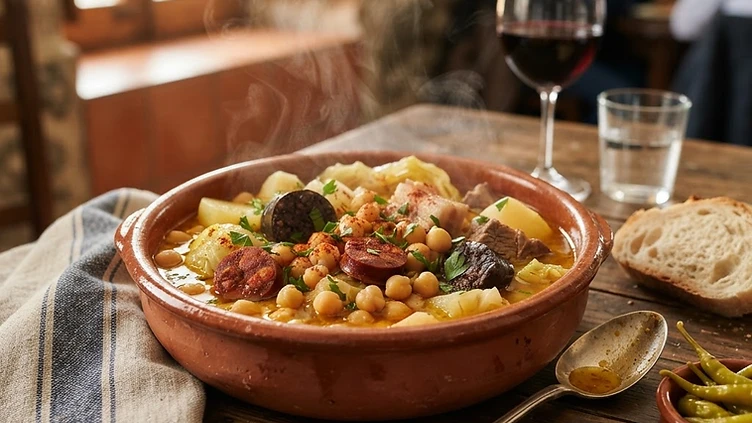
A lunch-only dish in winter. Malacatín or La Bola are the traditional houses. Don't plan dinner after it.
Madrid's signature three-course stew — chickpeas, meats, vegetables, served in stages: broth, then veg, then meat. A winter institution.
At a Glance
- — You're vegetarian
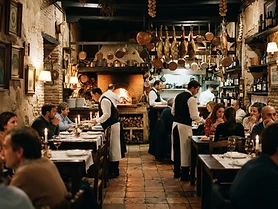
This multi-stage meal is a winter ritual that demands patience, beginning with a fortifying, golden broth and concluding with a feast of chickpeas, slow-cooked meats, and garden vegetables. The tradition of serving the dish in separate courses allows one to appreciate the depth of the long-simmered flavors, particularly the melt-in-the-mouth textures of the pork and chorizo. It is a heavy, restorative affair meant to be enjoyed over several hours in a wood-paneled dining room, effectively ending any ambition for a productive afternoon.
How it got here
Castilian kitchens long favored the olla podrida, a slow-simmered pot of pulses and meats intended to sustain the household through the work week. Madrid refined this concept into the structured three-course service seen today, moving from the soup to the chickpeas and finally the meats. The dish evolved from the requirements of Jewish Sabbath laws prohibiting fire on the holy day, necessitating the use of heavy earthenware vessels that retained heat from Friday preparations. By the eighteenth century, the city had codified the process, transforming a humble staple of rural necessity into a distinct culinary ritual practiced in dining rooms across the capital.
Where it sits
Madrid sits upon the high, arid Meseta Central, a landscape of sweeping plateaus and extreme thermal shifts. Winter brings biting winds from the Sierra de Guadarrama that turn the streets cold and grey. Residents seek shelter in the deep, traditional taverns found in the center of the city. These interiors provide respite from the harsh outdoor climate. When the sun retreats in January, the city slows to match the heavy pace of a long lunch. The dry heat of summer gives way to an early autumn chill, the moment when kitchens prepare the first pots of the season.
What to eat and drink
Cocido madrileño provides the necessary sustenance for the winter months. The meal begins with the broth, fortified with fideos, followed by the main course of garbanzo beans, cabbage, and fatty cuts of pork including tocino, morcilla, and chorizo. Diners consume this with crusty bread and a glass of robust red wine from the nearby vineyards of Vinos de Madrid. Before this meal, one might find a tapa of oreja a la plancha, sliced pork ear seared on a flat-top grill, or slices of jamón ibérico cured in the mountain air of the neighboring provinces.
Madrid: the whole region
Madrid is a province with one great city in it, and that city is worth three or four days on its own: three major museums within a few hundred metres of each other, a working market culture, a nightlife that starts late and does not stop,…
Minimum 3 days · better 5-6 days · deep 8-10 days
In Madrid







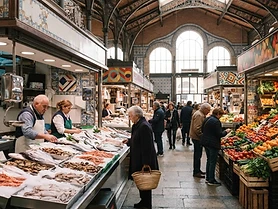

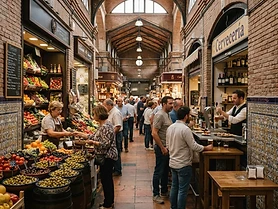

In Madrid













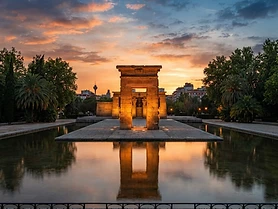


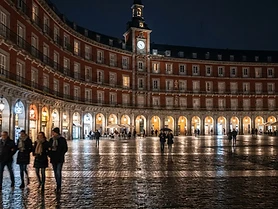



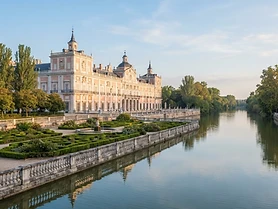
Linked from elsewhere
Entries that name this place in their own nearby lists.
Logistics are verified only. We don't publish schedules we haven't confirmed.
Appears In
Cooking classes and food tours worth booking ahead
- 100% Hands-on Cooking Class Paella Tapas Sangria in Madrid5.0 (1,460)4 hrsFrom €85
- Madrid Tapas & Taverns Small Group Food & History Tour4.9 (3,745)From €63
- Madrid: Paella Cooking Class with Bottomless Wine Pairing5.0 (1,096)2.5 hrsFrom €119
- Madrid Tapas & Wine Tasting Food Tour – Small Group Local Bars4.9 (5,517)3 hrsFrom €79
Spain Field Guide may earn a commission when you book through selected links. Recommendations are editorial and independent of commission.
Ready to build Cocido Madrileño into a trip?
You've found a place worth going. When you're ready to turn discovery into an itinerary, Travel Itinerary Co picks up where the Field Guide leaves off — with your saved places already in hand.
Build this into a tripContinues on Travel Itinerary Co
Spain Field Guide may earn a commission when you book through selected links. Recommendations are editorial and independent of commission.