Valencia
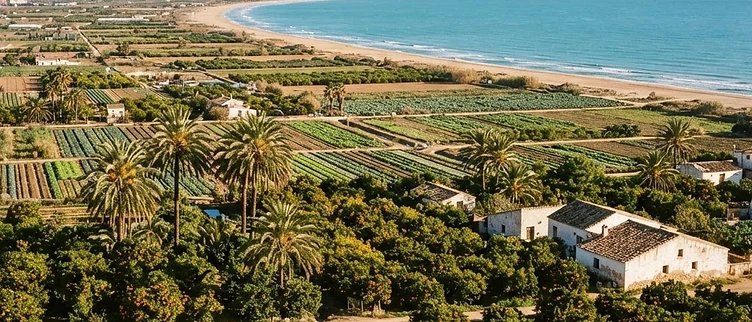
A long, hot, flat coast with one excellent city at its centre and much emptier country behind it. Valencia itself earns three days on its own — the old town, the Central Market, the City of Arts, and the rice that was invented in the marshlands around it. North of the city, Peñíscola's fortress on its rock is the one coastal town here worth a dedicated detour. Much of the rest of the coastline is resort country, and the interesting interior is barely visited.
How long this region actually takes
Three days is the city alone. A week adds the northern coast and the inland vineyards, which are the parts almost nobody sees.
Where to put your nights
Spain Field Guide may earn a commission when you book through selected links. Recommendations are editorial and independent of commission.
The questions that decide the trip
One coast in three parts. North of Valencia it is rocky and castellated, around Peñíscola and the Maestrazgo shore; in front of the city it is sand and port; south it flattens into resort after resort.
Malvarrosa is the city beach — convenient and unremarkable. The best sand is north around Cala del Portitxol and south in the long bays; the water is warm from June to October.
Paella was invented here, and it is a lunch dish eaten from the pan, traditionally with rabbit and chicken rather than only seafood. Also arròs negre, fideuà, horchata with fartons, and the fish and vegetables of the Central Market.
Valencia's Gothic civil buildings — the Lonja de la Seda and the Torres de Serranos — the Mudéjar and Jewish traces in the old town, and Peñíscola's castle, which sheltered a pope during the Great Schism.
Valencia and Peñíscola are both reachable by rail, and the city itself needs nothing. The coast between them and the inland country need buses, which are slow and infrequent.
The whole coast, the Utiel-Requena vineyards, and the Moorish hill towns of the interior that the coast's visitors never reach.
March to June, and October. September is warm with the crowds gone; July and August are hot and humid along the shore.
August on the coast and inland, where the heat is serious rather than pleasant, and the overbuilt stretches of shoreline if you came for landscape.
Five days in Valencia
Three nights in Valencia — Central Market, old town, City of Arts, one proper paella lunch out by the Albufera — then drive north for two nights in Peñíscola with a day on the Maestrazgo coast behind it.
Where Valencia gets compared
Experiences worth booking ahead
Spain Field Guide may earn a commission when you book through selected links. Recommendations are editorial and independent of commission.
Everywhere in Valencia
- Castell de Xàtiva
- Castillo de Peñíscola
- Castillo de Santa Bárbara
- Catedral de Valencia
- City of Arts and Sciences
- Fallas de Valencia
- Hogueras de San Juan (Alicante)
- La Lonja de la Seda (Silk Exchange)
- La Tomatina
- Las Fallas
- Moros y Cristianos (Alcoy)
- Palmeral de Elche
- Plaza de Toros de Valencia
- Torres de Serranos
The other regional guides
Turn Valencia into an actual itinerary
You've decided how long the region needs. Travel Itinerary Co takes the places you saved here and sequences them into days, with driving times and overnights attached.
Build this into a tripContinues on Travel Itinerary Co