La Tomatina

A novelty. Do it once if you're in Valencia in late August and have a ticket; don't build a Spain trip around it.
To throw tomatoes at strangers in a small Spanish town for an hour, then be hosed down by residents.
At a Glance
- — You hate mess and crowds
- — You're not in the region on the last Wednesday of August
- — You don't have a ticket in advance
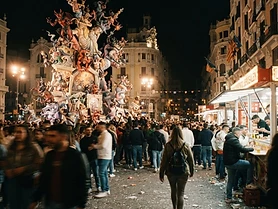
La Tomatina is the tomato fight held in the small town of Buñol (40km west of Valencia) on the last Wednesday of August. Thousands gather in the main square, a ham is cut down from a greased pole, a cannon fires, and for an hour the streets become a red river of flying tomatoes. It's frivolous, exhausting, and famous enough that tickets now sell out — the town caps participation at 20,000. It's one of Spain's most internationally known festivals and also its most purely for-fun, with no religious or historical justification beyond the fact that it started (nobody quite agrees how) in 1945.
How it got here
Accounts differ on the origins of the brawl that began in the town square in 1945. Some residents point to a spontaneous dispute among youth during a parade, while others suggest it grew from an intentional act of defiance against local authorities. The event persisted through decades of shifting social climate, eventually gaining international notoriety as a centerpiece of the Valencian calendar. Today the chaos functions as a secular outlet for the town, lacking any religious foundation. It persists as a singular annual disruption that defines the identity of Buñol, drawing observers who gather to participate in the hour of organized disorder.
Where it sits
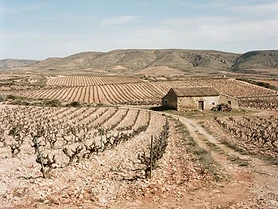
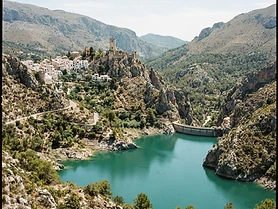
Buñol sits within the limestone hills west of the city of Valencia where the landscape transitions from the coastal plain toward the interior plateau. Pine forests and steep ravines define the terrain that traps the heat during the height of August. Roads from the coast climb through fruit orchards and dry scrubland to reach the town. The valley remains quiet for most of the year, yet the final week of August brings a sudden surge of movement that fills the narrow streets. Cool breezes arrive only after the sun dips behind the surrounding ridgeline.
What to eat and drink
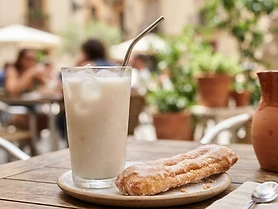
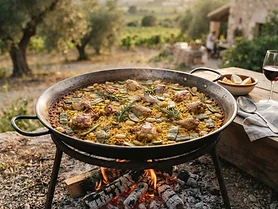
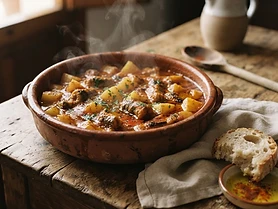
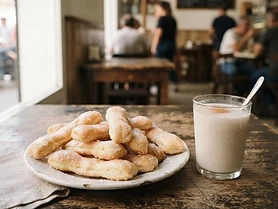
Valencian cooking centers on the rice grown in the wetlands of the nearby Albufera. Paella valenciana utilizes locally sourced chicken, rabbit, and flat green beans cooked over a wood fire. Fideuà, a variation using short noodles instead of rice, appears frequently in coastal and inland kitchens alike, prepared with seafood or stock. Horchata, a milky drink pressed from soaked tiger nuts, provides relief from the summer temperature. Foraged snails and seasonal artichokes appear in the regional pantry, reflecting the agricultural rhythms of the Valencian province where the soil supports diverse crops beyond the tomato harvest.
Valencia: the whole region
A long, hot, flat coast with one excellent city at its centre and much emptier country behind it. Valencia itself earns three days on its own — the old town, the Central Market, the City of Arts, and the rice that was invented in the…
Minimum 3 days · better 5-6 days · deep 8-10 days

Pair It With


In Valencia









In Valencia


In Valencia












Logistics are verified only. We don't publish schedules we haven't confirmed.
Ready to build La Tomatina into a trip?
You've found a place worth going. When you're ready to turn discovery into an itinerary, Travel Itinerary Co picks up where the Field Guide leaves off — with your saved places already in hand.
Build this into a tripContinues on Travel Itinerary Co
Spain Field Guide may earn a commission when you book through selected links. Recommendations are editorial and independent of commission.