Fallas de Valencia

Essential if you're in Valencia in March. The mascletà alone justifies a day trip, and the Cremà is the finish worth staying for. Bring earplugs.
To watch a city set itself on fire, on purpose, with art and satire and noise.
At a Glance
- — You're sensitive to loud noise and smoke
- — You're outside the 15–19 March window
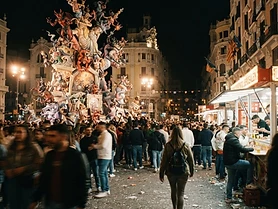
Las Fallas is Valencia's great spring festival, 15–19 March, and it's built around a single astonishing idea: the city spends a year building hundreds of giant satirical papier-mâché sculptures — the fallas — plants them at every major intersection, and then burns most of them to the ground on the final night, the Cremà. The days are a rolling party of mascletàs (rhythmic firecracker symphonies at 2pm), street paella competitions, and falleras in traditional dress laying flowers at the Virgen de los Desamparados. It's loud, smoky, sleepless, and completely Valencian — and UNESCO-listed.
How it got here
Tradition links these fire rituals to the carpentry guilds of the Middle Ages. Carpenters burned their wooden workshop lamps when the arrival of spring light rendered them obsolete, eventually dressing the wooden structures in papier-mâché to mock local figures. The festival grew into a formalized celebration during the eighteenth and nineteenth centuries, gaining a satirical edge that persists today. Each year, neighborhoods form associations to fund these constructions, maintaining a communal structure that defines the social rhythm of Valencia. The UNESCO recognition of the event recognizes these long-standing neighborhood practices and the preservation of traditional craft techniques that survive despite modern urban pressures.
Where it sits
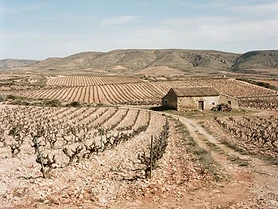
Valencia spreads across a flat coastal plain between the Mediterranean Sea and the rugged interior mountains. The city landscape changes entirely in March as thousands of temporary structures occupy road junctions and plazas, blocking normal traffic flow. The humidity of the coast hangs in the air, amplified by the sulfurous haze of firecrackers that fill the streets throughout the day. Access relies on the train lines connecting to Madrid and the coastal rail corridors. As spring approaches, the climate warms significantly, though the persistent noise and the smoke of the burning wood create an atmosphere distinct from the rest of the year.
What to eat and drink
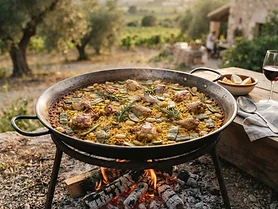
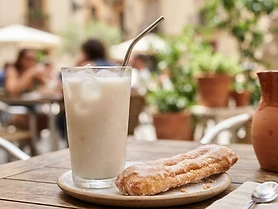
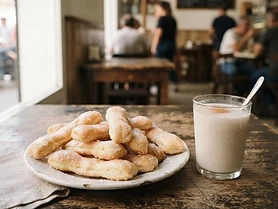
Paella valenciana defines the local kitchen, cooked over open orange-wood fires with rabbit, chicken, and garrofó beans. Street stalls sell buñuelos de calabaza, pumpkin fritters fried in hot oil and dusted with sugar, often dipped in thick chocolate. Horchata, a cold drink pressed from tiger nuts, provides relief from the heat of the fire ceremonies. Locals drink mistela, a sweet fortified wine, during the late hours of the celebrations. Throughout the festival, communal street dining centers on these rice dishes, while the scent of roasting meat and sugar persists in the city air long after the fires finish.
Valencia: the whole region
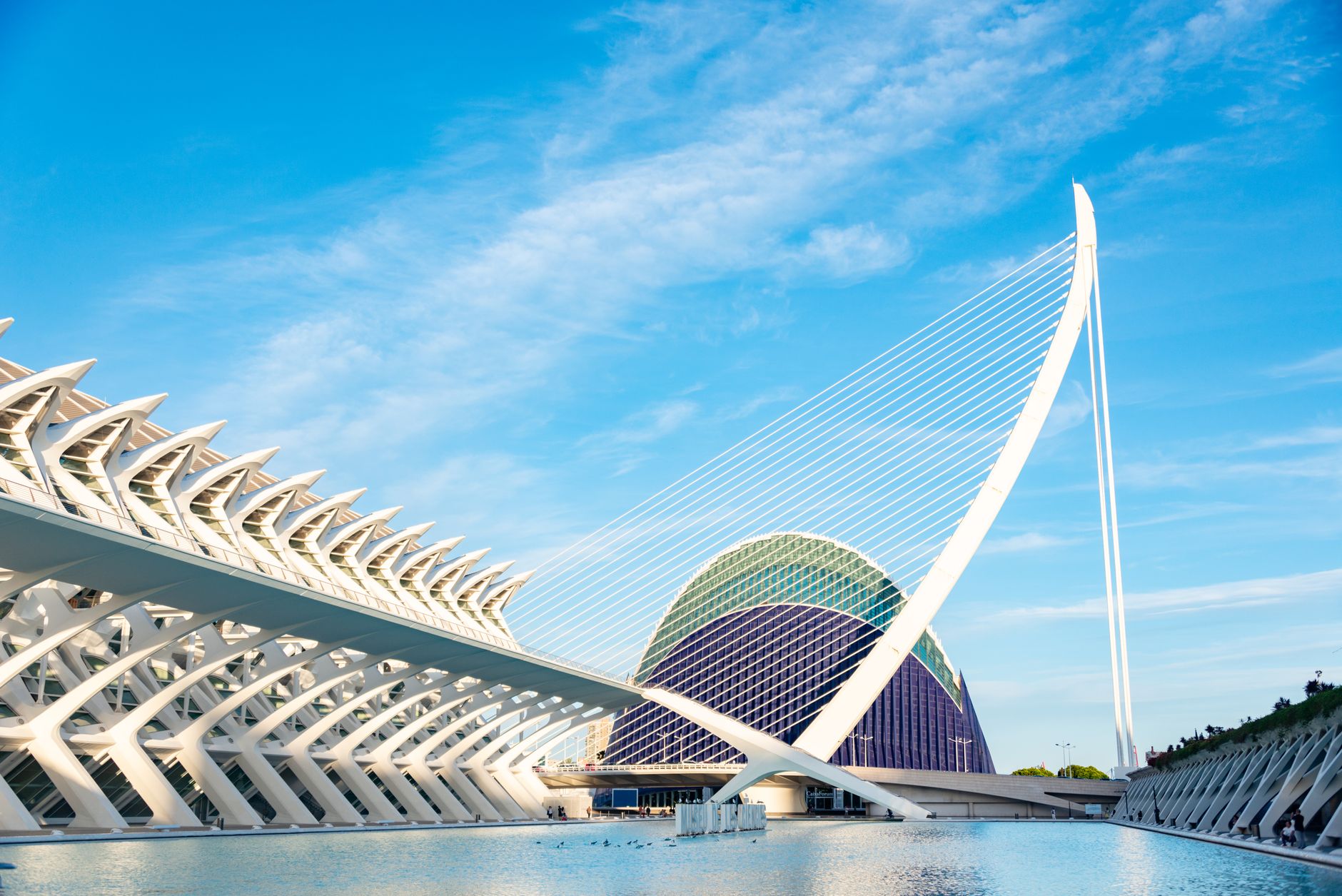
A long, hot, flat coast with one excellent city at its centre and much emptier country behind it. Valencia itself earns three days on its own — the old town, the Central Market, the City of Arts, and the rice that was invented in the…
Minimum 3 days · better 5-6 days · deep 8-10 days

In Valencia







In Valencia


In Valencia










Linked from elsewhere
Entries that name this place in their own nearby lists.
Experiences worth booking ahead
- Paella Cooking Class, Wine Tasting & Central Market in Valencia5.0 (2,372)3.5 hrsFrom €70
- Valencia Old Town Tour with Wine & Tapas in 11th Century Historic Monument5.0 (3,805)4 hrsFrom €75
- Private TukTuk Tour 2 Hours of Valencia4.9 (170)2 hrsFrom €40
- Valencia: City Highlights Bike or E-Bike Tour4.5 (220)2.5 hrsFrom €23
Spain Field Guide may earn a commission when you book through selected links. Recommendations are editorial and independent of commission.
Ready to build Fallas de Valencia into a trip?
You've found a place worth going. When you're ready to turn discovery into an itinerary, Travel Itinerary Co picks up where the Field Guide leaves off — with your saved places already in hand.
Build this into a tripContinues on Travel Itinerary Co
Spain Field Guide may earn a commission when you book through selected links. Recommendations are editorial and independent of commission.