Castell de Xàtiva

Worth the detour for the views alone, and the history is genuinely dark and interesting.
This dual-fortress complex held Aragonese kings as prisoners and offers sweeping views over the Valencian countryside, all with far fewer visitors than the coastal castles.
At a Glance
- — mobility concerns with steep paths
- — short on time
- — expecting restored interiors
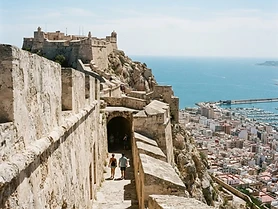
Twin medieval fortresses crest a jagged ridge, providing a high-altitude vantage point over the patchwork fields of the Valencian countryside. Once a formidable royal prison for Aragonese kings, the site feels remarkably empty compared to the crowded coastal castles nearby. The climb is steep and the history is grim, but the panoramic views from the battlements are worth the exertion.
How it got here
Iberian, Roman, and Islamic engineers shaped these twin fortresses across the summit of the Serra del Castell. The site gained prominence under the Valencian Taifa as a strategic bulwark against northern expansion. After Jaime I of Aragón captured the stronghold in 1244, the crown repurposed the cells for high-ranking political prisoners. The heavy stone wards trace the evolving military architecture of the Middle Ages, shifting from defensive Islamic masonry to the starker Aragonese fortifications. These walls dictated the movement of goods and armies along the Via Augusta for centuries, serving as a silent witness to the administrative shifts between the Kingdom of Valencia and the Crown of Aragón.
Where it sits
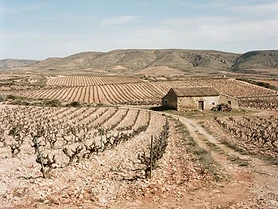
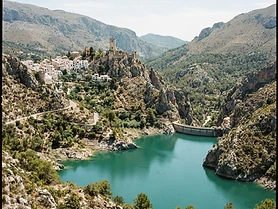
The ridge commands a view over the fertile plains of the Costera region where the river Albaida carves through the limestone basin. Below the castle, the town of Xàtiva clings to the hillside, a cluster of tile roofs and narrow streets. Access requires a slow ascent through pine groves that thin out as the limestone foundations of the fortress take over. Winds cut through the narrow gaps between the twin castle complexes during the winter months, while summer sun turns the surrounding dry earth and olive groves into a pale, dust-covered landscape. The site stays quiet compared to the coastal resorts of the Mediterranean.
What to eat and drink
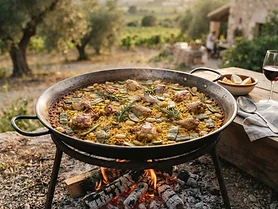
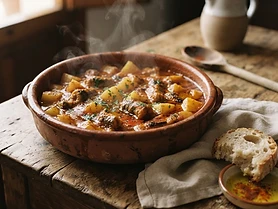
The cuisine centers on the harvest of the Valencian huerta and the traditions of the interior. Arroz al horno, rice baked in a clay pot with chickpeas, pork ribs, morcilla, and tomatoes, provides the staple calorie-dense meal of the region. Almoixàvena, a pastry dusted with sugar and cinnamon, carries the legacy of Islamic culinary influence in the area. Local farmers produce horchata from chufa tubers, a cold drink served with fartons for breakfast or afternoon relief from the heat. Sweet muscatel wines from the nearby slopes provide the standard accompaniment for meals that rely on orchard fruits and seasonal garden vegetables.
Valencia: the whole region
A long, hot, flat coast with one excellent city at its centre and much emptier country behind it. Valencia itself earns three days on its own — the old town, the Central Market, the City of Arts, and the rice that was invented in the…
Minimum 3 days · better 5-6 days · deep 8-10 days

Pair It With

In Valencia











In Valencia


In Valencia












Linked from elsewhere
Entries that name this place in their own nearby lists.
Logistics are verified only. We don't publish schedules we haven't confirmed.
Appears In
Experiences worth booking ahead
- Games and History Walking Tour in the Center of Valencia5.0 (15)3 hrsFrom €40
- Tour in Chiva Rumbera with Party and Fun Music in Cartagena4.6 (10)2 hrsFrom €14
- Full Xátiva from Valencia castle and museum included5.0 (2)6 hrsFrom €40
- Private Day Trip from Valencia to Xàtiva Castle and Old Town5.0 (1)8 hrsFrom €490
Spain Field Guide may earn a commission when you book through selected links. Recommendations are editorial and independent of commission.
Ready to build Castell de Xàtiva into a trip?
You've found a place worth going. When you're ready to turn discovery into an itinerary, Travel Itinerary Co picks up where the Field Guide leaves off — with your saved places already in hand.
Build this into a tripContinues on Travel Itinerary Co
Spain Field Guide may earn a commission when you book through selected links. Recommendations are editorial and independent of commission.