La Latina
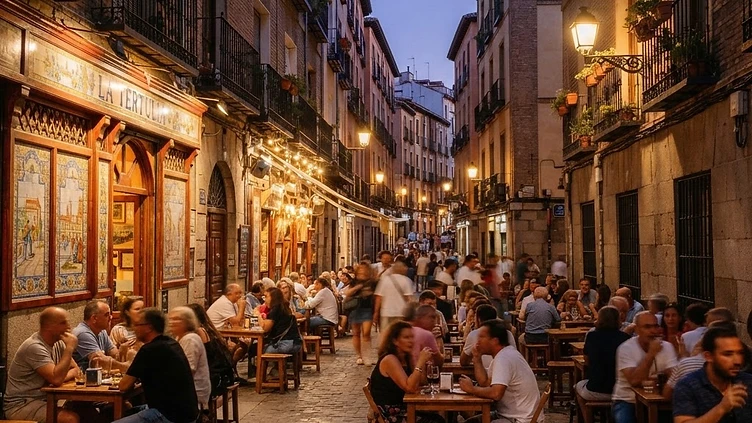
Best in the early evening, when the bars fill but before the late-night crowd arrives, or on a Sunday morning for the Rastro. The Cava Baja is the busiest eating street in the city and not always the best; two blocks off it prices drop and quality holds.
Eating and drinking, and the Sunday market. This is Madrid's most Madrid neighbourhood.
At a Glance
- — You dislike crowds; Sundays here are packed
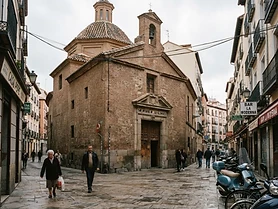
The medieval core, wrapped around the Plaza de la Paja and the Cava Baja, with the Rastro spilling through it every Sunday morning. It is a quarter of tabernas, wine bars and churches rather than monuments, and the lanes between the Plaza Mayor and the river are older than anything else in the city.
How it got here
These lanes follow the footprint of the Islamic Mayrit, built as a walled frontier post along the river Manzanares. When the Christian armies of Alfonso VI took the settlement in 1083, the old Moorish layout persisted beneath the shifting street patterns of the growing capital. Plaza de la Paja served as the central market square until the seventeenth century, functioning as the primary site for grain distribution. The irregular angles and narrow passages between the Plaza Mayor and the lower riverbanks survive from this medieval configuration, creating a dense district that resisted the grand eighteenth-century urban expansions that straightened the rest of the city.
Where it sits
The neighborhood clings to the southern slope of the plateau where central Madrid meets the valley of the Manzanares. The terrain drops sharply from the high ground of the palace and the Plaza Mayor toward the river. Summer sun heats the cramped, masonry-heavy streets, while winter nights bring cold winds off the Guadarrama mountains. Sunday mornings bring intense movement as the street market occupies the arteries stretching toward the Ribera de Curtidores. Beyond the weekends, the district settles into the patterns of a working quarter with narrow windows and small, stone-hewn portals that remain shuttered during the midday heat.
What to eat and drink
The culinary tradition centers on the produce of the Castilian interior. Callos a la madrileña, a slow-simmered stew of beef tripe with chorizo, morcilla and pimentón, defines the local preference for robust offal dishes. Gambas al ajillo, shrimp sautéed in oil with garlic and dried chili, persists as a standard late-night staple in the tabernas. Drinkers favor vermut de grifo, a fortified wine served on tap with a slice of orange and a single olive, or carajillo, coffee tempered with a splash of brandy or orujo. These flavors reflect a reliance on durable, preserved ingredients that sustain the city through the seasonal extremes.
Madrid: the whole region
Madrid is a province with one great city in it, and that city is worth three or four days on its own: three major museums within a few hundred metres of each other, a working market culture, a nightlife that starts late and does not stop,…
Minimum 3 days · better 5-6 days · deep 8-10 days
What's Nearby


In Madrid









In Madrid













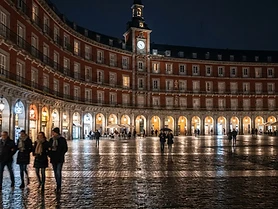

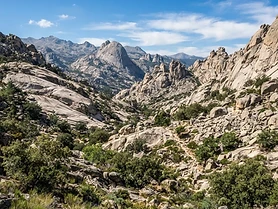

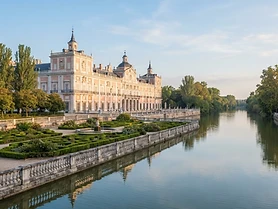
Linked from elsewhere
Entries that name this place in their own nearby lists.

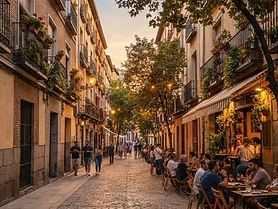
Logistics are verified only. We don't publish schedules we haven't confirmed.
Experiences worth booking ahead
Spain Field Guide may earn a commission when you book through selected links. Recommendations are editorial and independent of commission.
Ready to build La Latina into a trip?
You've found a place worth going. When you're ready to turn discovery into an itinerary, Travel Itinerary Co picks up where the Field Guide leaves off — with your saved places already in hand.
Build this into a tripContinues on Travel Itinerary Co
Spain Field Guide may earn a commission when you book through selected links. Recommendations are editorial and independent of commission.