Lavapiés
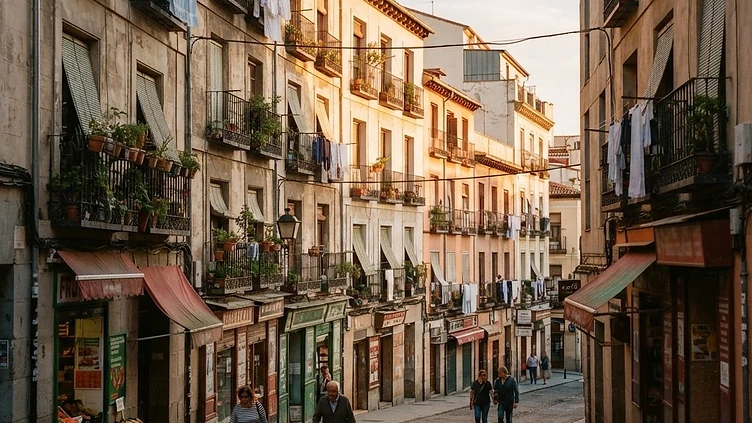
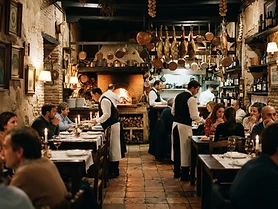
Worth an evening of eating at whatever hour you like. It is not a sightseeing neighbourhood, and the bars around the Plaza de Lavapies are more character than comfort.
Food from everywhere at low prices, and Madrid at its least touristic.
At a Glance
- — You want a polished or quiet area
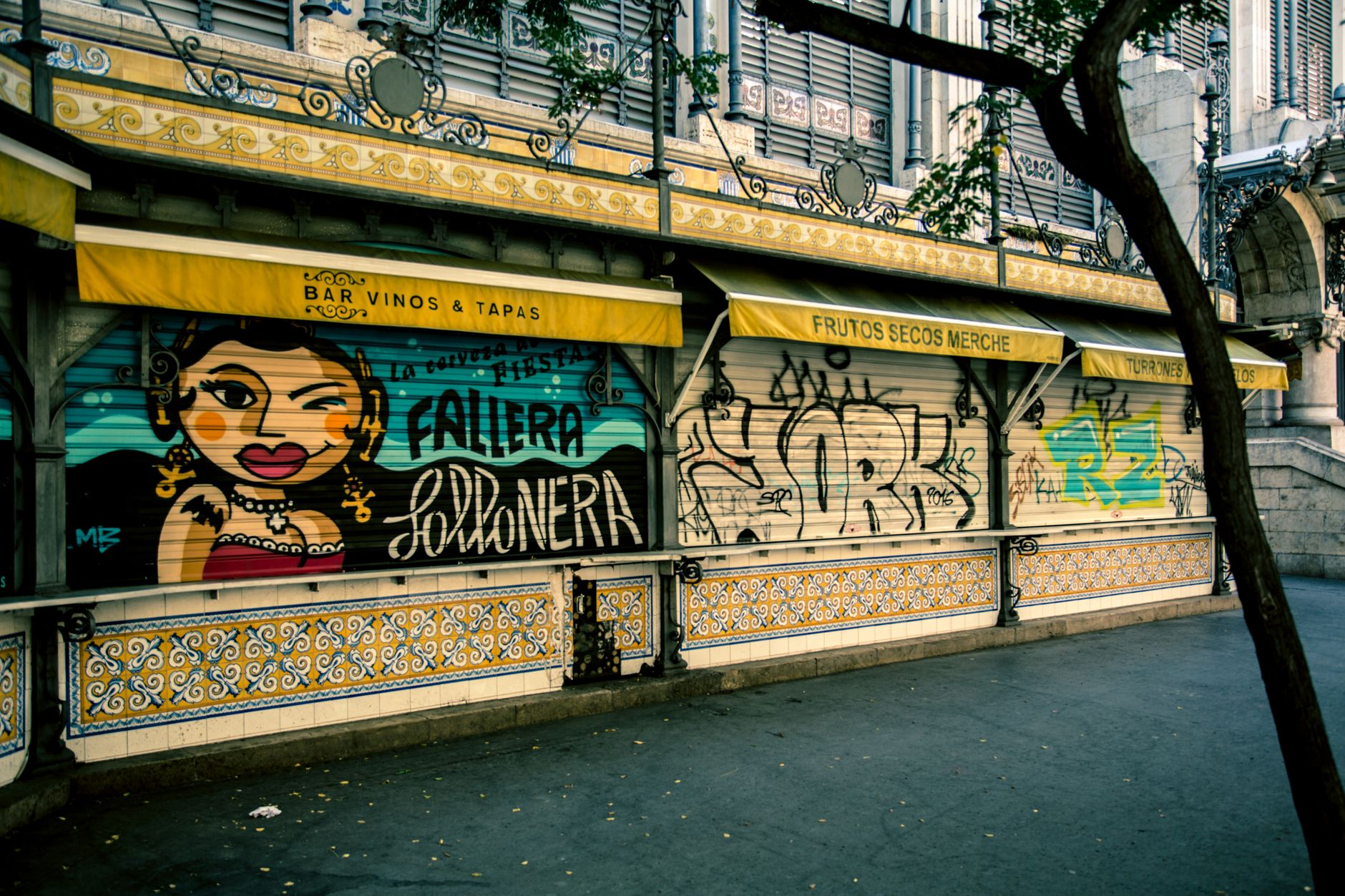
The steepest and most diverse quarter in the centre: Senegalese, Indian, Bangladeshi and Chinese kitchens beside Spanish bars, a small theatre culture, and the city's most genuinely mixed street life. It is neither polished nor dangerous, and it eats far better than its appearance suggests.
How it got here
The name originates from the Plaza de Lavapiés, where a stone fountain once stood. During the sixteenth century the area held a dense population of converted Jews and Muslims living outside the city walls. This demographic legacy persists in the narrow, winding street patterns that predate the expansion of the nineteenth-century city. The arrival of the rail hub at Atocha and the growth of the tobacco factory shaped the dense working-class housing seen today. These foundations established a tradition of tenement living that fostered the social density and cultural heterogeneity now visible across the neighborhood, distinguishing its development from the grid of the surrounding city center.
Where it sits
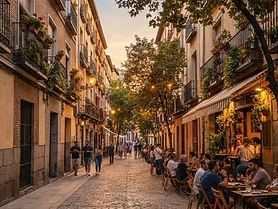
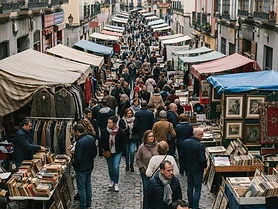
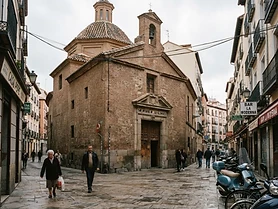
The neighborhood clings to the southern slope of the city, descending toward the Ronda de Valencia. The terrain is marked by sharp inclines and uneven stone paving that separates it from the flat, grand boulevards of the city core. Summer heat gathers in the tight, shadowed corridors, while winter winds channel through the canyons of century-old tenements. Pedestrian traffic dominates the narrow passages, which remain crowded during the late hours of the night. It sits within walking distance of the central train station, yet its layout keeps the pulse of the street life disconnected from the formal tourism of the nearby museums.
What to eat and drink
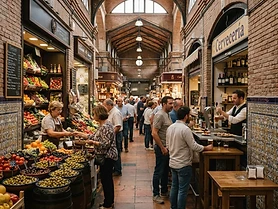
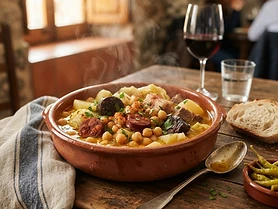
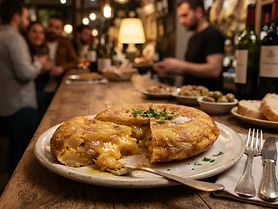
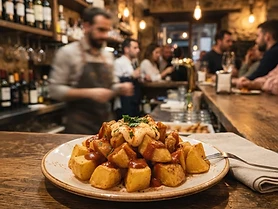
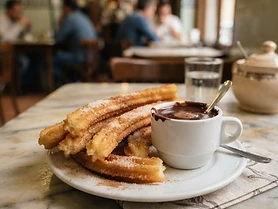
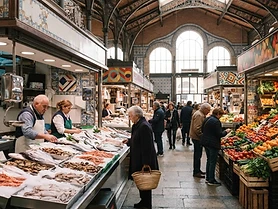
The cuisine draws from the deep traditional larders of Madrid and the Mediterranean basin. Cocido madrileño, a chickpea stew simmered with pork cuts, chorizo, and greens, appears on many tables during the cooler months. Callos a la madrileña, tripe braised with spicy sausage and smoked paprika, provides the heavy sustenance common to the city center. Outside the traditional taverns, the neighborhood shops stock the ingredients of the immigrant communities, particularly lentils, chickpeas, and flatbreads. Vermú de grifo, the local fortified wine drawn from a tap and served with a slice of orange and an olive, remains the standard afternoon drink.
Madrid: the whole region
Madrid is a province with one great city in it, and that city is worth three or four days on its own: three major museums within a few hundred metres of each other, a working market culture, a nightlife that starts late and does not stop,…
Minimum 3 days · better 5-6 days · deep 8-10 days



In Madrid









In Madrid










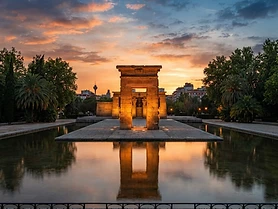


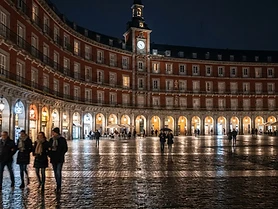

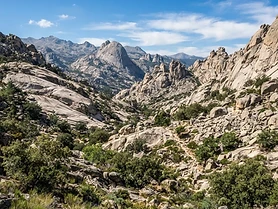

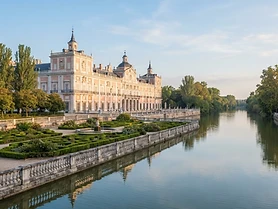
Logistics are verified only. We don't publish schedules we haven't confirmed.
Experiences worth booking ahead
- Madrid Tapas & Paella Cooking Experience with Local Market Visit5.0 (610)3.5 hrsFrom €95
- Hot Air Balloon over Segovia with Optional Transfers from Madrid5.0 (397)4 hrsFrom €205
- Hotel Madrid City Private Transfer To Madrid Barajas Airport4.8 (118)1 hrsFrom €24
- Madrid Hidden Street Art Tour5.0 (17)2 hrsFrom €28
Spain Field Guide may earn a commission when you book through selected links. Recommendations are editorial and independent of commission.
Ready to build Lavapiés into a trip?
You've found a place worth going. When you're ready to turn discovery into an itinerary, Travel Itinerary Co picks up where the Field Guide leaves off — with your saved places already in hand.
Build this into a tripContinues on Travel Itinerary Co
Spain Field Guide may earn a commission when you book through selected links. Recommendations are editorial and independent of commission.