Camino del Norte
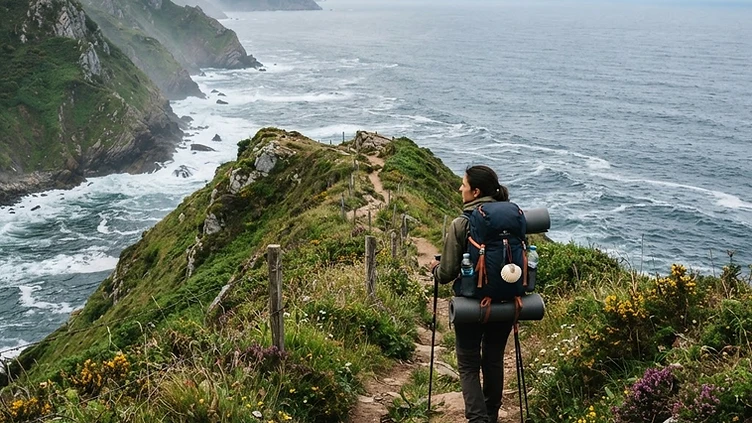
The best Camino if you've already done the Francés or you want coast over plains. It's demanding — long stages, real climbs — so it suits experienced walkers and rewards them with the best scenery on the network.
The rugged Atlantic Camino — green cliffs, surf towns, and Basque/Galician coast all the way from Irún. Long, hilly, and spectacular, with a fraction of the Francés crowds.
At a Glance
- — You want short easy days
- — You need the social density of the Francés
- — You're on a tight schedule
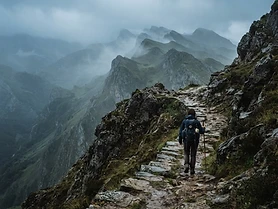
The Camino del Norte follows the Atlantic coast from Irún to Santiago — roughly 825 km through the Basque Country, Cantabria, Asturias, and western Galicia. It's the most physically demanding of the main routes: long stages, constant coastal climbs, and fewer pilgrim-specific services than the Francés. In return it delivers the best scenery on the entire network — green cliffs, surf breaks, fishing harbors, and the Picos de Europa in the distance — and a deep quiet the Francés lost years ago. Most walkers budget 5-6 weeks. Pair with the Primitivo in Oviedo to cut inland for a shorter, higher, wilder finish.
How it got here
Pilgrims walked these coastal paths toward Santiago de Compostela long before the Camino Francés became the primary artery of pilgrimage. This northern route tracked the edges of medieval kingdoms like Asturias and the Basque territories, where local lords provided protection to travelers in exchange for tithes. The route traces a path through zones that resisted complete consolidation during the Reconquista, keeping the road isolated and distinct from the interior movements of the royal courts. These maritime fringes retained an independent character, as the rugged topography discouraged centralized oversight and allowed local traditions to harden into the distinct regional identities of the northern coast.
Where it sits
The trail hangs between the Cantabrian Sea and the mountain chains that block access to the interior plateaus. Green pastures and eucalyptus forests dominate the slopes, descending sharply into surf-worn inlets and fishing ports. Rain falls with regularity throughout the year, keeping the cliffs slick and the vegetation dense even in high summer. Cold winds roll off the Atlantic, turning the landscape into a sequence of dramatic climbs and sheltered valleys. Pilgrims reach the coast from the border with France, following the contours of the shoreline through four provinces before the path swings toward the Galician interior.
What to eat and drink
Coastal kitchens rely on the morning catch from the Atlantic. Marmitako, a stew of bonito tuna, potatoes, peppers, and onion, serves as a staple among the fishing villages of the Basque coast. Further west, empanada gallega provides a heavy, portable meal of pastry filled with seasoned cod or meat. Local cider, sidra natural, pours from high above the glass to aerate the fermented apple juice, a practice common in Asturian bars. Restaurants and taverns prioritize simple preparation, serving grilled sea bass and hake alongside local cheeses and the dense, crusty loaves of bread baked in wood-fired ovens.
What's Nearby

Pair It With


Logistics are verified only. We don't publish schedules we haven't confirmed.
Ready to build Camino del Norte into a trip?
You've found a place worth going. When you're ready to turn discovery into an itinerary, Travel Itinerary Co picks up where the Field Guide leaves off — with your saved places already in hand.
Build this into a tripContinues on Travel Itinerary Co
Spain Field Guide may earn a commission when you book through selected links. Recommendations are editorial and independent of commission.