Empanada Gallega

Buy a wedge from a market panadería in Santiago or Vigo — the filling should be moist, the dough savoury not sweet.
Galicia's filled pie: a bread or pastry dough folded around seasoned tuna, onion and pepper (or conger eel, or pork), baked in a wide round and cut into wedges. Eaten cold, as travel food, at ferias and on beaches.
At a Glance
- — You dislike tuna in pastry
This savory Galician pie is built from a dense, bread-like dough folded around a filling of tuna, onion, and peppers, or occasionally conger eel or pork. Baked in a large round and sliced into wedges, it is the classic travel food for picnics on the beach or long afternoons at a local market. The crust should be savory rather than sweet, holding a moist, flavorful center that keeps even when cold.
How it got here
Galicia emerged as a distinct maritime culture defined by its reliance on the Atlantic and the Celtic heritage of the northwest peninsula. The practice of baking savory pies became an essential method for preserving proteins for sailors and farmers. Monastic records note the cultivation of wheat and rye alongside the harvest of the sea, creating a supply chain that fed coastal populations for generations. This crust acted as a durable vessel for fish and lard, providing sustenance during long voyages or shifts in the fields. Today, the preparation retains these original requirements of utility and longevity, serving as an edible record of domestic survival in a damp, unpredictable climate.
Where it sits
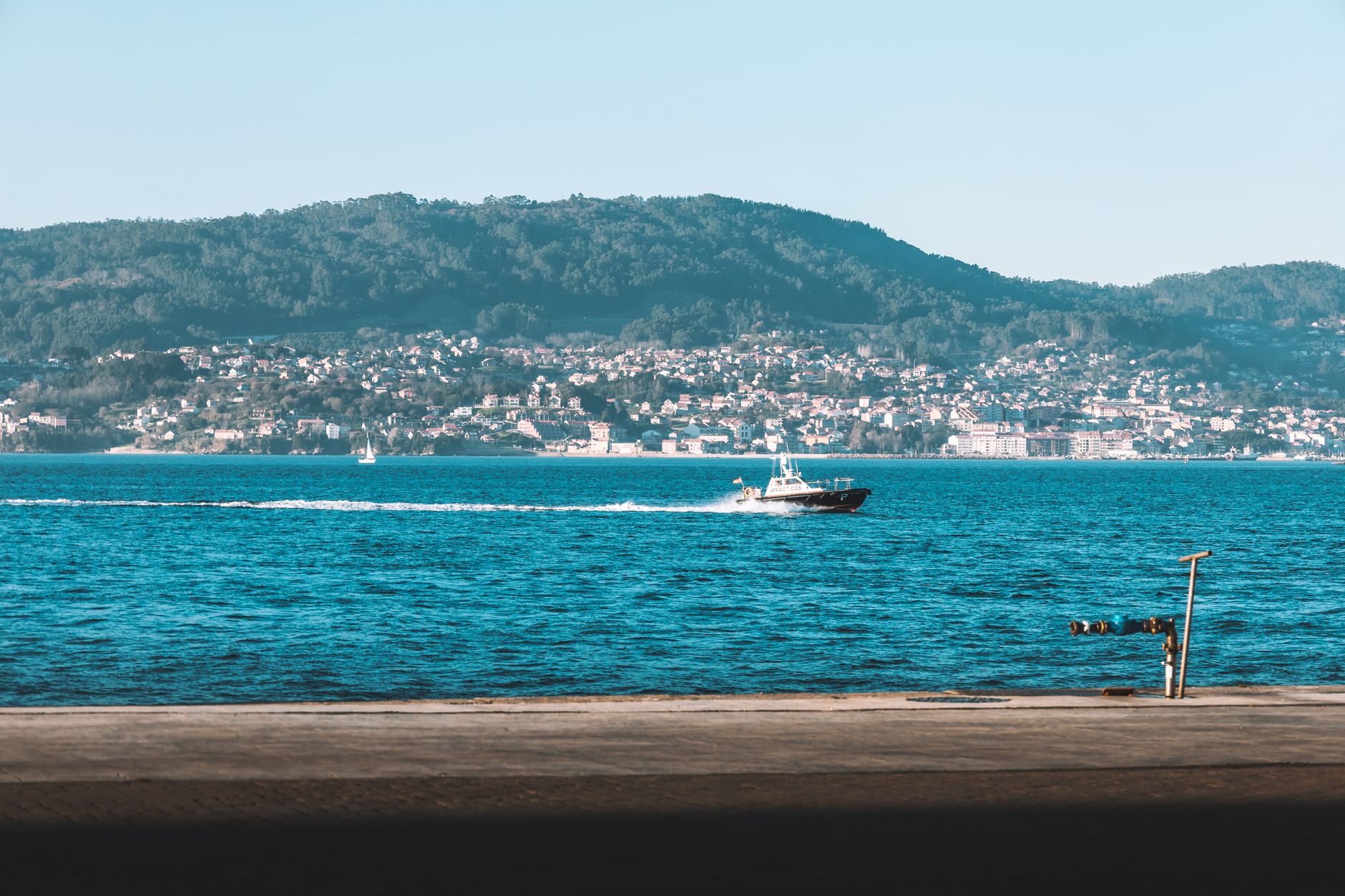
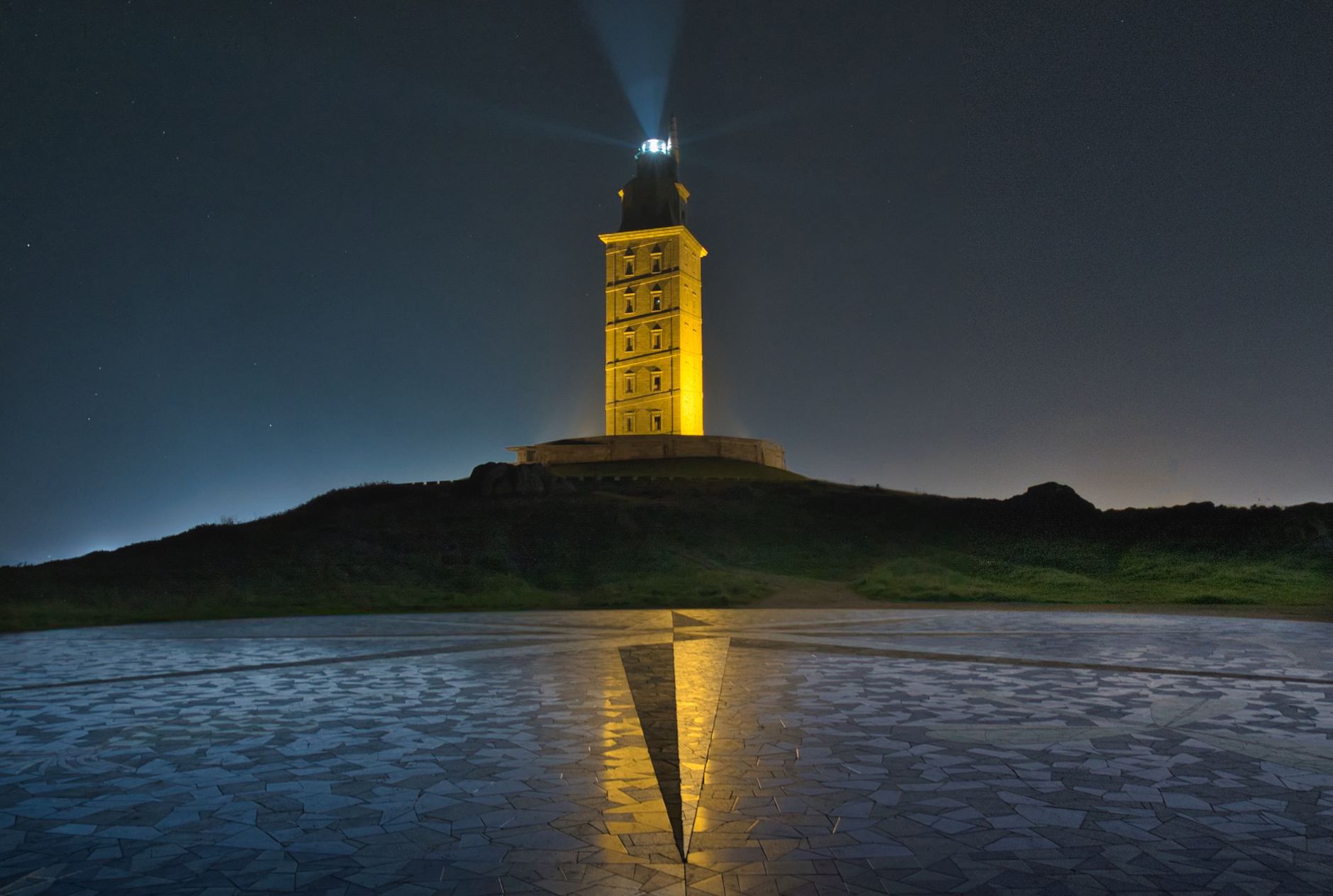
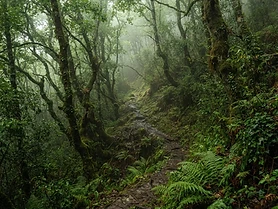
The Galician landscape shifts from granite mountains to deep, water-carved rías. Rain defines the cycle of the land, nourishing the emerald pastures and dense forests that separate isolated stone hamlets. Summer brings moderate temperatures and a heavy presence of coastal fog that obscures the horizon. Roads wind through the rugged terrain, linking the inland hills to the active ports where fishing remains the primary industry. Visitors encounter a quiet, agrarian rhythm away from the major cities, where the scent of eucalyptus and salt defines the atmosphere during the humid autumn months.
What to eat and drink
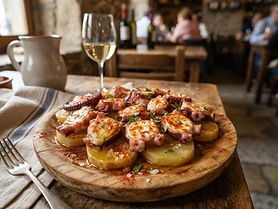
Pulpo á feira, octopus boiled in copper pots and dressed with paprika, coarse salt, and olive oil, defines the Galician table. Caldo gallego, a hearty broth of potatoes, white beans, and grelos or cabbage, provides warmth during the wet winters. These dishes pair with Albariño, a crisp white wine grown on the granitic soils of the Rías Baixas. When served alongside the savory pie, these elements form the core of a diet built from the products of the mountain soil and the cold Atlantic current.
Galicia: the whole region
Galicia is wet, green, cheap and unlike anywhere else in Spain: a drowned coast of rias, granite villages, seafood that justifies the trip on its own, and Santiago at the middle of it. The rain is not a risk, it is a certainty — plan…
Minimum 5 days · better 8-10 days · deep 2 weeks

Pair It With

In Galicia


In Galicia


In Galicia





Logistics are verified only. We don't publish schedules we haven't confirmed.
Appears In
Ready to build Empanada Gallega into a trip?
You've found a place worth going. When you're ready to turn discovery into an itinerary, Travel Itinerary Co picks up where the Field Guide leaves off — with your saved places already in hand.
Build this into a tripContinues on Travel Itinerary Co
Spain Field Guide may earn a commission when you book through selected links. Recommendations are editorial and independent of commission.