Torre de Hércules
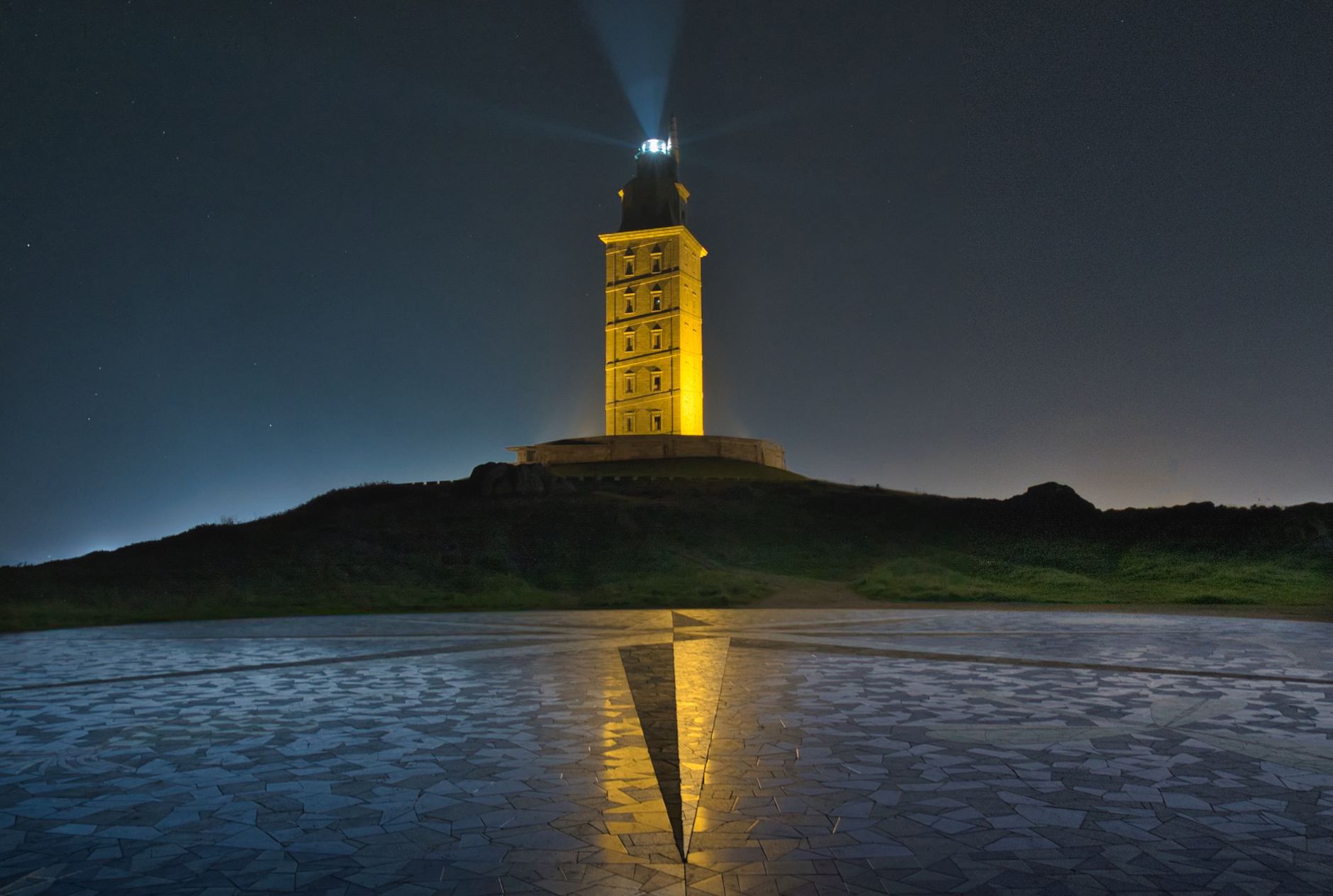
Worth a special trip — the oldest functioning lighthouse in the world, still doing its job after nearly two millennia.
Climbing a Roman lighthouse that's been continuously active since the 2nd century is rare enough to justify the visit, and the cliffside setting outside A Coruña adds to it.
At a Glance
- — afraid of heights or stairs
- — expecting elaborate interior displays
Standing defiantly on a wind-battered cliff edge near A Coruña, this is the only Roman lighthouse in the world that remains fully operational after nearly two thousand years. The climb to the top offers a panoramic view of the churning Atlantic, a reminder of the thousands of ships that have relied on its beacon through the centuries. The surrounding park is wild and grassy, smelling of sea salt and crushed heather. It is a rare, tangible link to the ancient Mediterranean world, still performing its humble, essential task as the tides shift beneath the crags.
How it got here
Architects under the Roman Empire erected the tower during the first or second century to guide maritime traffic toward the port of Brigantium. It functioned for centuries before the Duke of Lerma ordered a major restoration in 1788 to encase the original Roman masonry in protective stone. This transformation gave the structure its current appearance while preserving the core of the ancient construction. UNESCO designated the site a World Heritage landmark in 2009 for its role as a permanent maritime signal. It links modern Galicia to the maritime routes established by Rome across the Atlantic coast of the Iberian Peninsula.
Where it sits
The tower occupies a rocky peninsula at the entrance to the bay of A Coruña. Wind scours the granite coastline throughout the year and creates a landscape of exposed cliffs and hardy coastal vegetation. Paths wrap around the tower through an open parkland that feels isolated despite the proximity to the city. During winter storms the Atlantic sprays the base of the cliffs with high intensity. The summer brings calmer tides and cooler temperatures than the interior of Spain. Visitors approach the site by walking from the city edges along the paved seaside promenades.
What to eat and drink
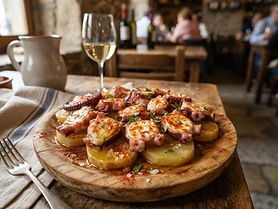
The cuisine of A Coruña relies on the cold Atlantic waters and the fertile soils of rural Galicia. Pulpo á feira, octopus boiled in copper pots and dressed with coarse salt, paprika, and olive oil, defines the local standard. Empanada gallega, a thick crust pastry filled with cockles or shredded cod, provides the traditional meal for travelers. Diners drink Estrella Galicia, a pale lager brewed in the city, or Ribeiro, a white wine from the nearby valleys. These acidic, crisp wines cut through the richness of the local shellfish and the grease of pork dishes found in the hinterlands.
Galicia: the whole region
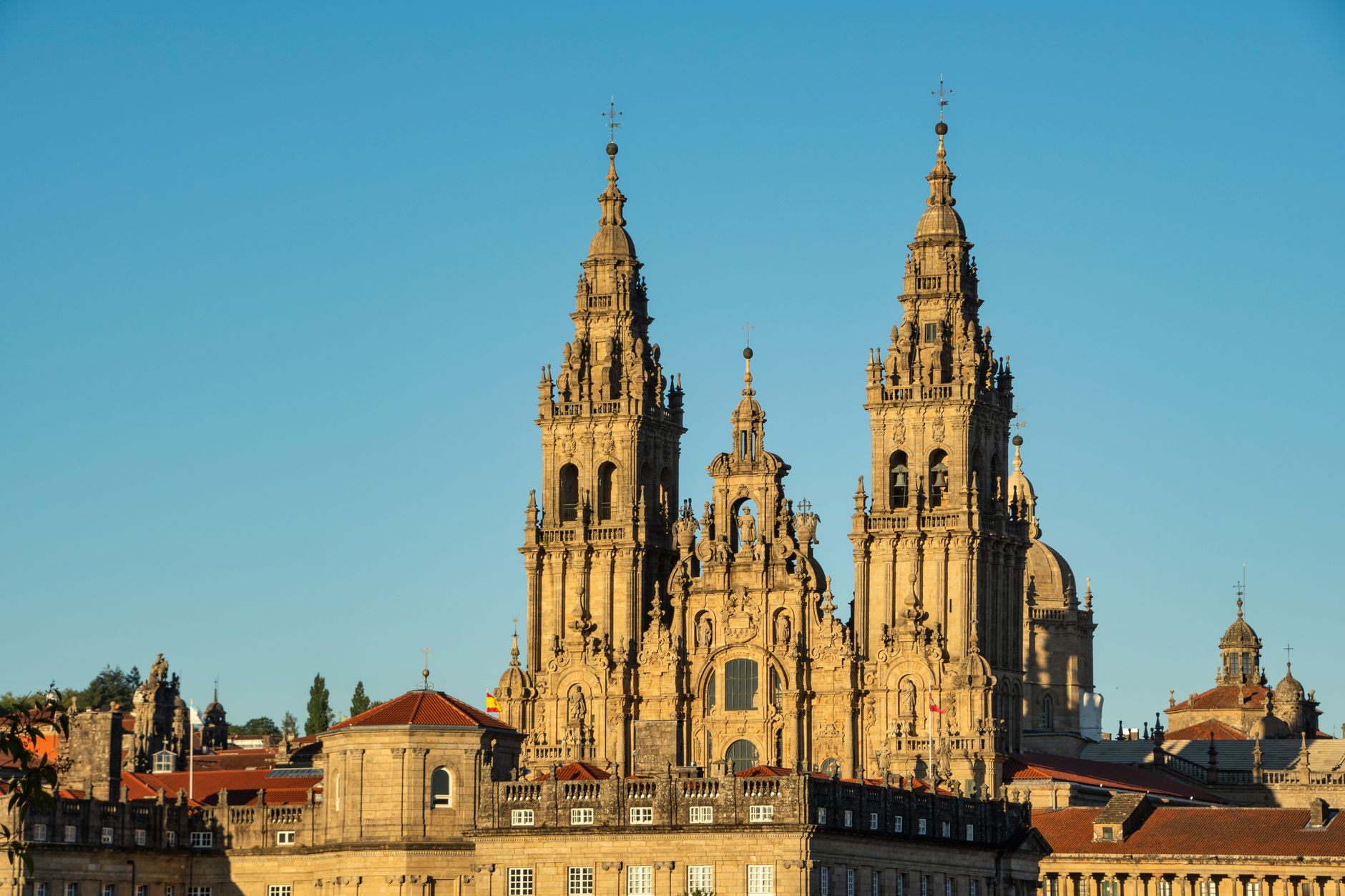
Galicia is wet, green, cheap and unlike anywhere else in Spain: a drowned coast of rias, granite villages, seafood that justifies the trip on its own, and Santiago at the middle of it. The rain is not a risk, it is a certainty — plan…
Minimum 5 days · better 8-10 days · deep 2 weeks

In Galicia




In Galicia


In Galicia





Logistics are verified only. We don't publish schedules we haven't confirmed.
Appears In
Experiences worth booking ahead
Spain Field Guide may earn a commission when you book through selected links. Recommendations are editorial and independent of commission.
Ready to build Torre de Hércules into a trip?
You've found a place worth going. When you're ready to turn discovery into an itinerary, Travel Itinerary Co picks up where the Field Guide leaves off — with your saved places already in hand.
Build this into a tripContinues on Travel Itinerary Co
Spain Field Guide may earn a commission when you book through selected links. Recommendations are editorial and independent of commission.