Pulpo a la Gallega
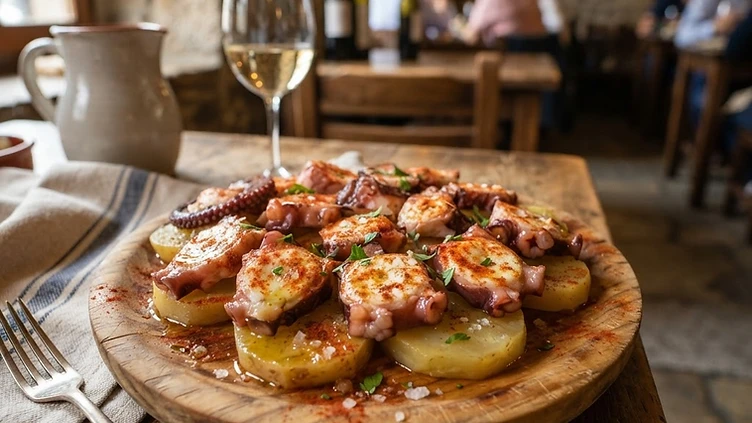
Order it in Galicia, ideally at a pulpería, with a glass of Albariño.
Galician octopus on wooden boards, with paprika, salt, and olive oil — the dish that defines Galician seafood culture.
At a Glance
- — You don't eat octopus
Boiled until just tender, the octopus is sliced onto wooden platters, drizzled with olive oil, and showered in a generous, smoky dust of pimentón and sea salt. It is the fundamental taste of the Galician coastline, best served in a simple, bustling pulpería where the steam from the pots fills the room and the wine is poured into plain porcelain bowls. There is no pretense here; just the brine of the Atlantic and the sharp, bright contrast of the paprika against the firm, sweet meat.
How it got here
Octopus arrived at the inland fairs of Galicia through the trade routes connecting the Atlantic coast with the interior mountain regions. Historically, coastal communities dried octopus to preserve the meat for transport to livestock markets. Traders carried the dried cephalopod to inland festivals where it was rehydrated and boiled to feed the throngs of people buying and selling cattle. This practice solidified the octopus as a staple of communal gatherings across the Galician hinterland. The dish persists as a social anchor for these rural markets, connecting the coastal harvest to the agrarian lifestyle of the interior where the tradition of the public fair continues to dictate local rhythms.
Where it sits
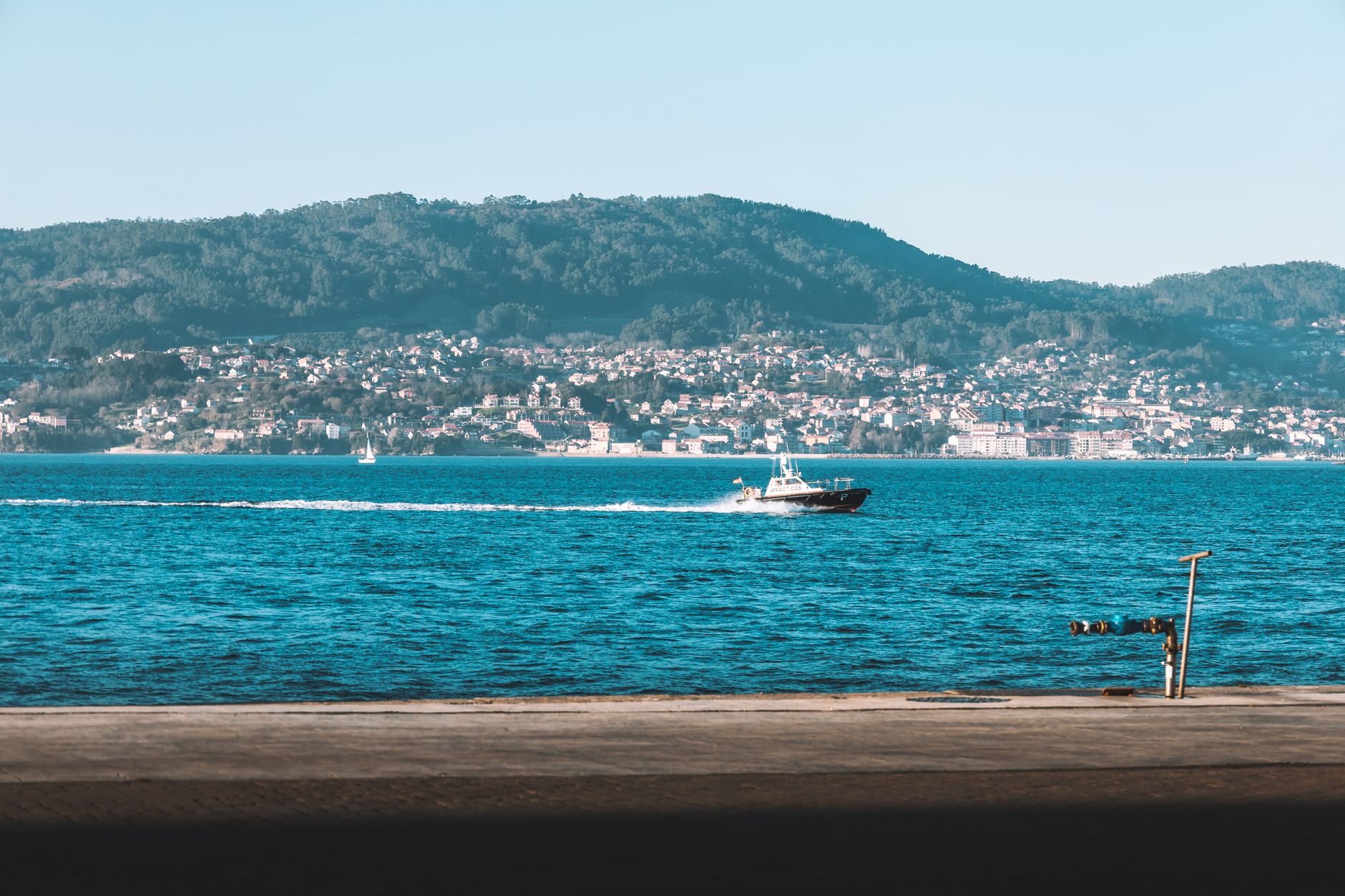
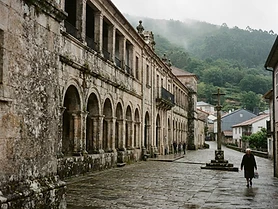
Galicia remains a landscape of granite hills and deep river valleys carved into the Atlantic fringe of the Iberian Peninsula. The climate maintains a constant state of moisture, turning the landscape into a dense patchwork of green pastures and eucalyptus forests. Winter brings relentless rain from the ocean while summers stay mild, rarely climbing into extreme heat. Access requires navigating narrow, winding roads that follow the contours of the estuaries or climb into the mountainous interior. The isolation of these terrain features helped preserve distinct culinary customs that look more toward the maritime bounty than the agricultural plains of the Spanish interior.
What to eat and drink
Pulpo a la Gallega requires boiling the octopus in copper pots before seasoning it with olive oil, coarse salt, and pimentón. Empanada gallega, a thick pastry crust stuffed with cod or pork, serves as a common companion to the seafood. Lacón con grelos, a boiled dish of cured pork shoulder and turnip greens, provides the necessary substance for the cooler months. Diners wash these down with Albariño, a crisp and acidic white wine grown on the granite soils of the Rías Baixas. These combinations rely on the simple produce pulled directly from the local soil and the cold, salt-rich waters of the coast.
Galicia: the whole region
Galicia is wet, green, cheap and unlike anywhere else in Spain: a drowned coast of rias, granite villages, seafood that justifies the trip on its own, and Santiago at the middle of it. The rain is not a risk, it is a certainty — plan…
Minimum 5 days · better 8-10 days · deep 2 weeks

Pair It With


In Galicia


In Galicia


In Galicia







Linked from elsewhere
Entries that name this place in their own nearby lists.

Logistics are verified only. We don't publish schedules we haven't confirmed.
Appears In
Ready to build Pulpo a la Gallega into a trip?
You've found a place worth going. When you're ready to turn discovery into an itinerary, Travel Itinerary Co picks up where the Field Guide leaves off — with your saved places already in hand.
Build this into a tripContinues on Travel Itinerary Co
Spain Field Guide may earn a commission when you book through selected links. Recommendations are editorial and independent of commission.