A Guarda

Worth a night if you are driving the Galician coast south. Otherwise a long half-day from Vigo.
A border fishing town with a hillfort view, an hour south of Vigo and nothing like it.
At a Glance
- — You want a beach holiday
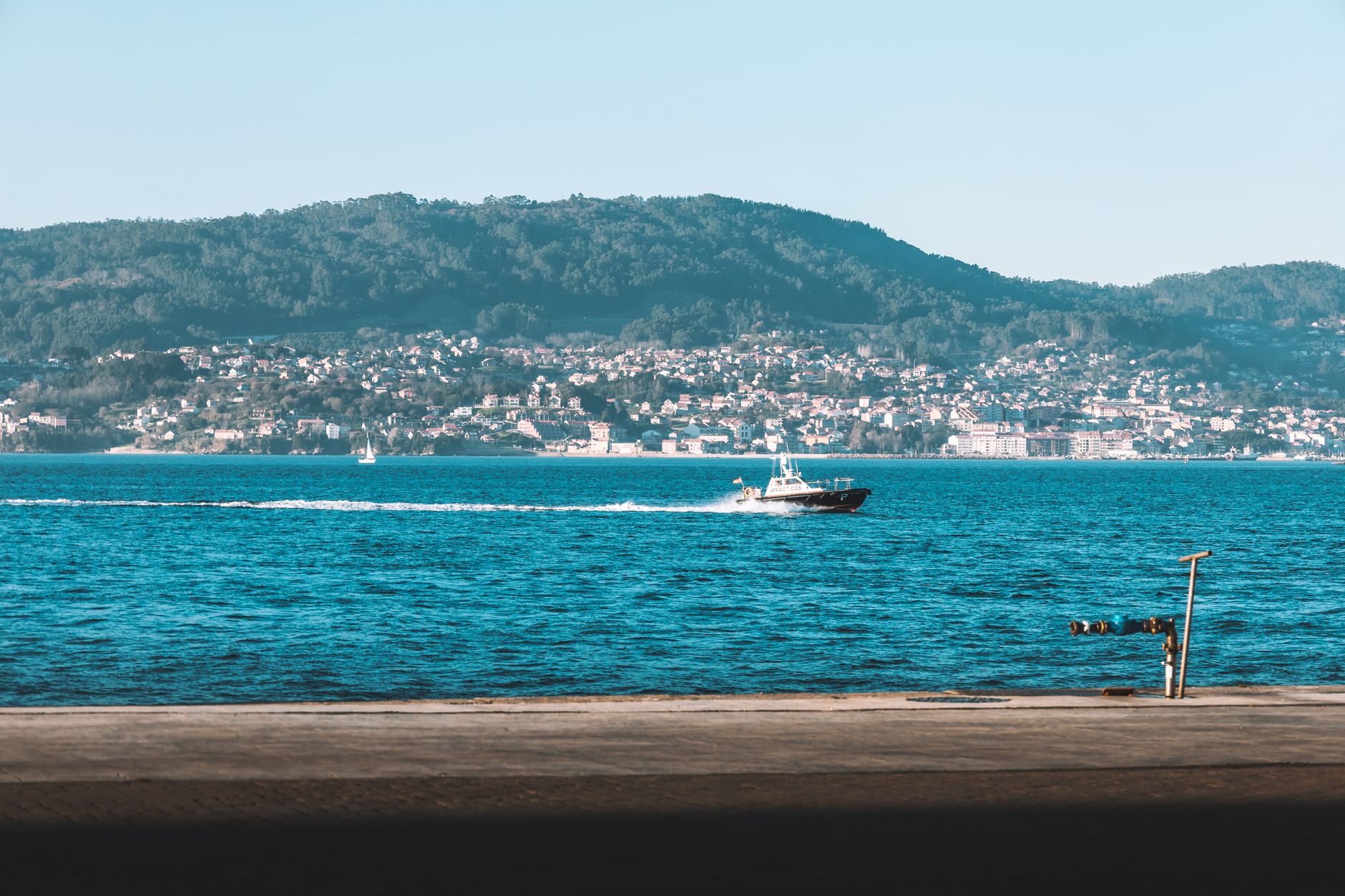
A Guarda sits where the Miño meets the Atlantic, close enough to Portugal that you can see it from the quay and cross it in twenty minutes. The town has a working fishing harbour and a seafood trade that feels local rather than touristic, and above it rises Monte de Santa Trega, an Iron Age hillfort with a view straight down the river to the sea. Border towns on this coast have their own rhythm: Galician and Portuguese both spoken, prices moving between two economies, and none of the ceremony of a frontier. Come for a night, eat shellfish, and walk up the hill.
How it got here
The Castro de Santa Trega dominates the headland, a Celtic hillfort that reached its height between the first century BC and the first century AD. Thousands of inhabitants lived in circular stone dwellings here while the Roman expansion moved north. Following the Roman withdrawal, the coastal settlements of the Baixo Miño endured centuries of instability and Norse raids. The town grew as a maritime port tied to the rhythms of the estuary, relying on fishing and the control of the river crossing. The medieval era left few permanent structures in the lower town, but the granite walls of the hillfort still mark the occupation of this strategic coastal lookout.
Where it sits
The town marks the end of the Galician coast where the Miño river empties into the Atlantic. Rolling hills covered in pine and eucalyptus drop sharply into the water, creating a landscape of granite outcrops and narrow river channels. The proximity to Portugal dictates the pace, with small ferries crossing the current throughout the daylight hours. Summer brings Atlantic mists that keep the temperatures moderate while winter brings consistent rain and rough seas. The narrow streets of the lower harbour remain crowded with working boats, maintaining a direct connection to the seafaring traditions of the province.
What to eat and drink
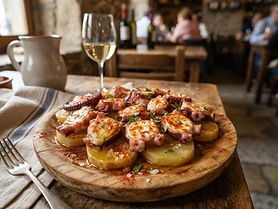
Percebes, or gooseneck barnacles harvested from the exposed coastal rocks, define the local plate. These crustaceans require boiling in seawater to retain their brine. The town also relies on the abundance of the estuary, specifically lamprey in season, which arrive after migrating from the ocean to spawn. Locals drink Albariño, a crisp white wine produced in the surrounding O Rosal valley. The acidity of the wine cuts through the richness of the shellfish. For those preferring heavier plates, empanada gallega filled with tuna or cockles provides the standard sustenance for the working day.
Galicia: the whole region
Galicia is wet, green, cheap and unlike anywhere else in Spain: a drowned coast of rias, granite villages, seafood that justifies the trip on its own, and Santiago at the middle of it. The rain is not a risk, it is a certainty — plan…
Minimum 5 days · better 8-10 days · deep 2 weeks
What's Nearby


Pair It With


In Galicia


In Galicia


In Galicia






Linked from elsewhere
Entries that name this place in their own nearby lists.
Logistics are verified only. We don't publish schedules we haven't confirmed.
Appears In
Experiences worth booking ahead
- Marqués De Casa Concha Wine Tasting at Concha y Toro4.9 (1,258)7 hrsFrom €123
- Changing of the Guard Small-Group Walking Tour in London5.0 (283)2 hrsFrom €23
- Milan Last Supper and S. Maria delle Grazie Skip the Line Tour4.8 (1,274)1.5 hrsFrom €69
- Changing of the Guard Guided Tour at Buckingham Palace4.4 (1,125)2 hrsFrom €17
Spain Field Guide may earn a commission when you book through selected links. Recommendations are editorial and independent of commission.
Ready to build A Guarda into a trip?
You've found a place worth going. When you're ready to turn discovery into an itinerary, Travel Itinerary Co picks up where the Field Guide leaves off — with your saved places already in hand.
Build this into a tripContinues on Travel Itinerary Co
Spain Field Guide may earn a commission when you book through selected links. Recommendations are editorial and independent of commission.