Camino Portugués Coastal
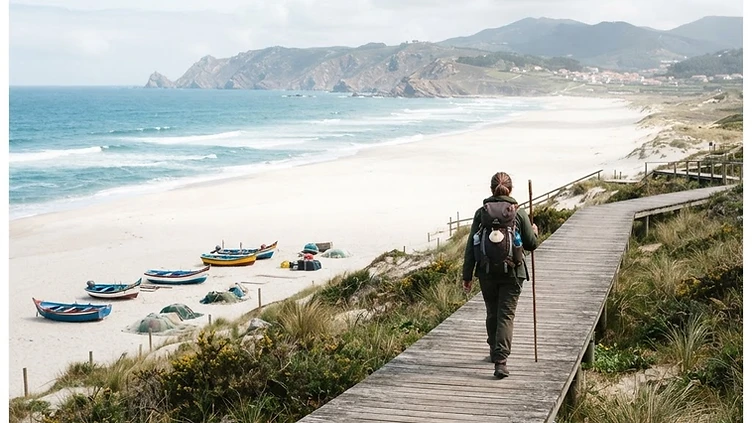
Choose the Coastal if you want sea air and boardwalks over inland wine country. It's a small detour that re-merges, so you can mix and match by the weather.
The Atlantic alternative to the Central Portugués — boardwalks and fishing villages up the Portuguese coast before cutting inland to rejoin the Central route into Santiago.
At a Glance
- — You want the dense pilgrim social scene of the Francés
The Coastal Portugués traces the Atlantic from Porto north — Matosinhos, Vila do Conde, the boardwalks of the Litoral Norte, and the fortified port of Viana do Castelo — before swinging inland at Redondela to meet the Central route for the final push into Santiago. It adds sea light, fishing-village lunches, and a noticeably quieter first week, with the option to hop to the Central whenever you like. Budget a couple extra days, and watch the tides on the Baiona stretch.
How it got here
Pilgrims have tracked the Atlantic shoreline toward Santiago de Compostela since the Middle Ages. This route follows the movement of people and goods between the Minho province of Portugal and the Rías Baixas of Galicia. The path bypassed the interior mountains, relying instead on the established maritime connections of Roman port cities. Coastal towns maintained defensive walls against pirate raids and maritime conflicts that spanned centuries. The modern pilgrim path emerged from these ancient trade links and fishing circuits. It connects local parishes that formed the backbone of the northwest Iberian economy before the development of modern road infrastructure shifted trade away from the sea.
Where it sits
The trail moves over wooden boardwalks across coastal marshes and sandy dunes before reaching the granite hills of Galicia. Mist clings to the estuaries during the autumn months and Atlantic winds dictate the pace of travel. Pine forests and eucalyptus groves separate the fishing villages from the inland vineyards. The path crosses the Miño river by ferry at A Guarda, marking the entry into Spain. Paths stay quiet compared to the interior routes, though they grow crowded as the coastal trail merges with the central line near the final approach to the cathedral city of Santiago.
What to eat and drink
Pulpo á feira, octopus boiled in copper pots and dressed with paprika, olive oil, and sea salt, defines the Galician coast. Empanada gallega, a savory pie filled with tuna, cod, or pork, serves as the standard trail meal for local laborers and pilgrims. The region produces Albariño, a crisp white wine made from grapes grown on granite soils that pairs with the abundance of local shellfish. Caldo gallego, a hearty broth of kale, white beans, potatoes, and pork fat, warms the damp evenings when the maritime climate brings chill from the northern Atlantic.
What's Nearby

Pair It With


Logistics are verified only. We don't publish schedules we haven't confirmed.
Ready to build Camino Portugués Coastal into a trip?
You've found a place worth going. When you're ready to turn discovery into an itinerary, Travel Itinerary Co picks up where the Field Guide leaves off — with your saved places already in hand.
Build this into a tripContinues on Travel Itinerary Co
Spain Field Guide may earn a commission when you book through selected links. Recommendations are editorial and independent of commission.