Asturian Cider Country
Worth a day of your Asturias trip if you are driving, and worth building a night around if cider interests you. Skip it if you want coast and only coast.
To see how a drink shapes an entire inland region, and to drink cider a few kilometres from the trees it came from.
Tazones · Nava · Villaviciosa
At a Glance
- — You want a beach day
- — You have no car
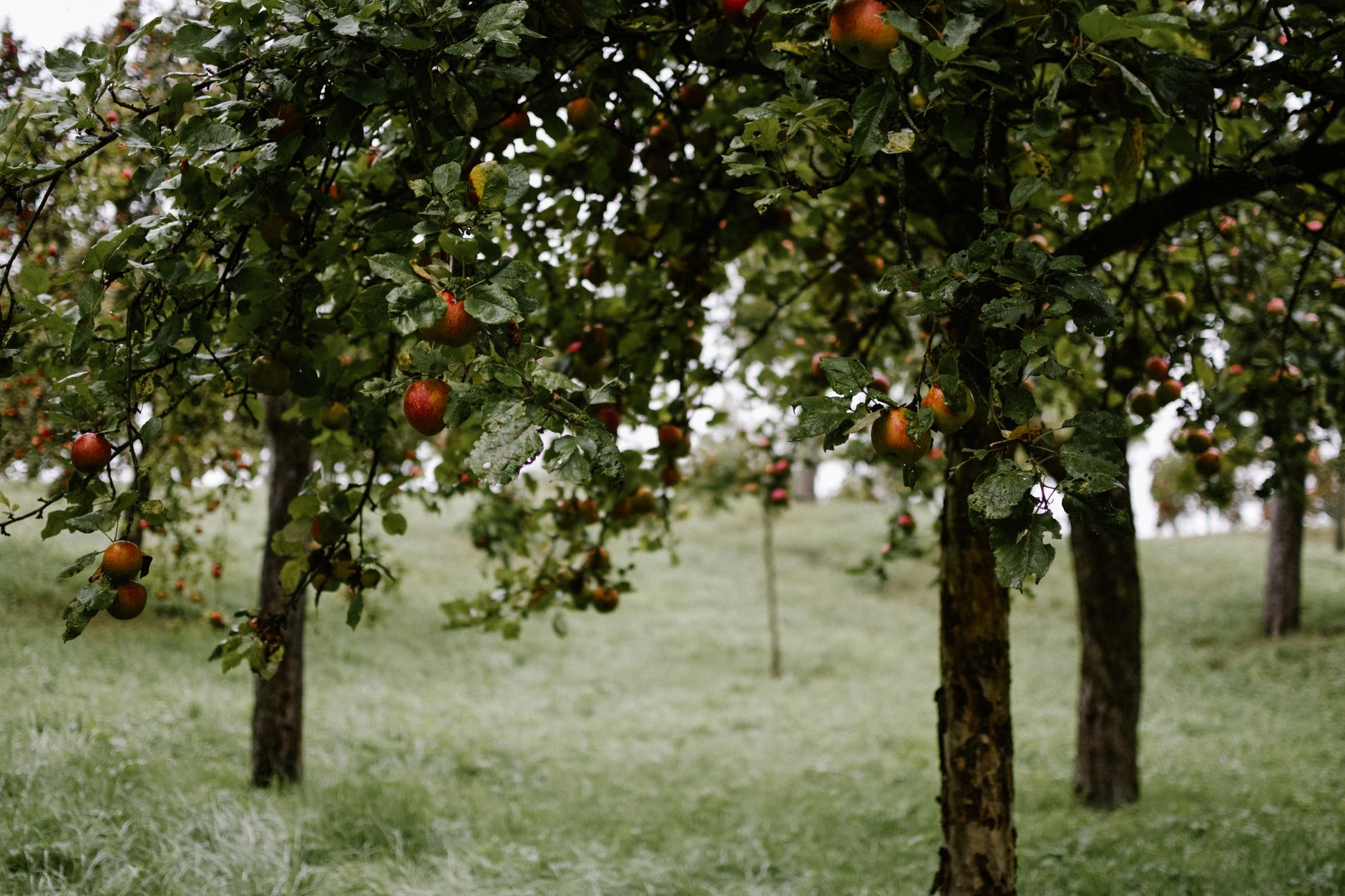
Apple trees here are not an ornamental crop. They grow in small plots around villages and along lanes, and the cider made from them is blended rather than varietal: sharp, bitter and sweet apples together, because no single apple makes a balanced cider. The heart of it is the Comarca de la Sidra, the country between Villaviciosa and Nava and the ridges behind them, where most villages have a lagar and most families have an opinion about the pour. It is a working agricultural landscape rather than a scenic one, which is exactly why it repays a slow drive: the trees, the press houses, the roadside cider houses.
How it got here
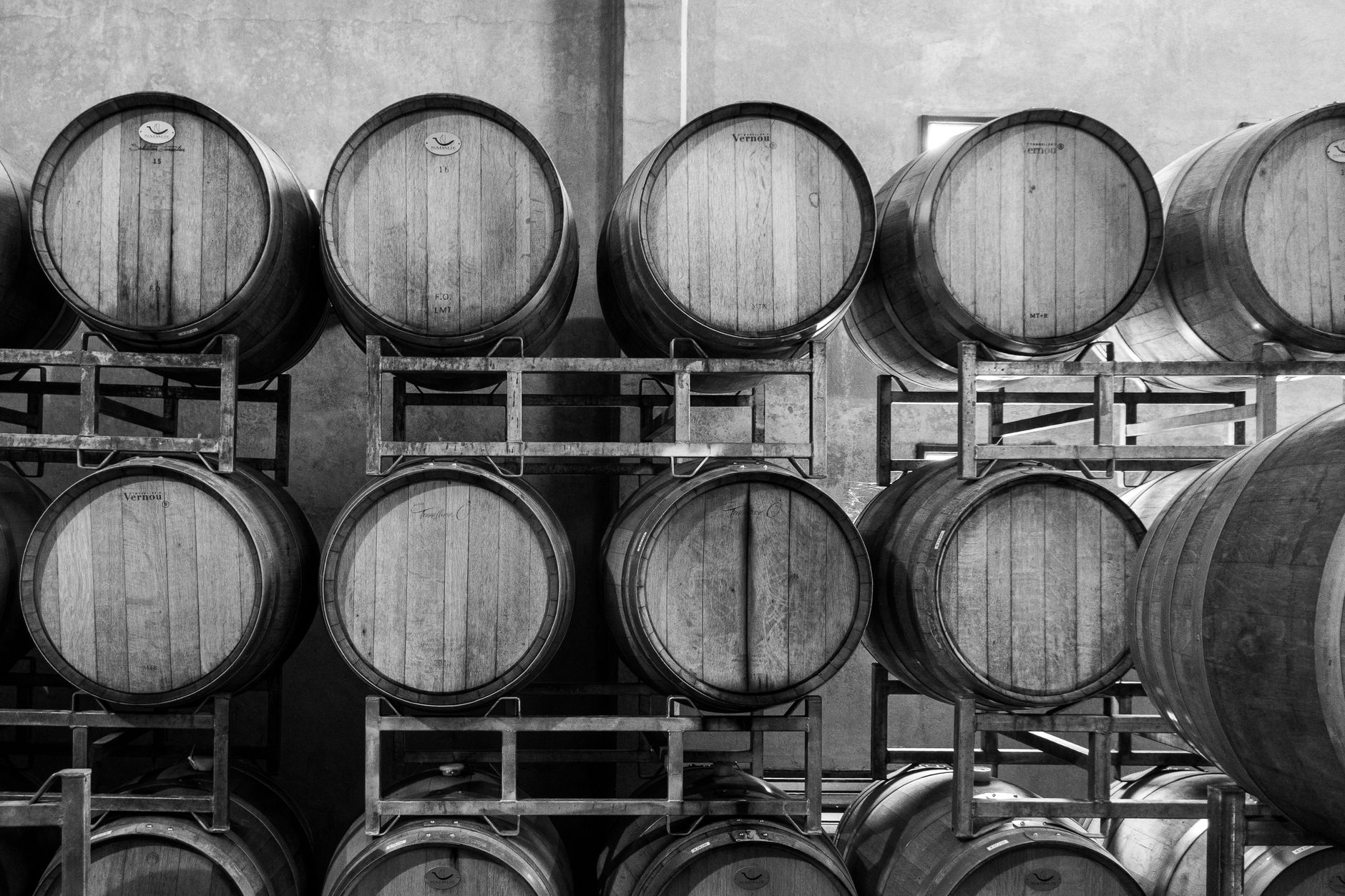
Cider production in Asturias follows a tradition established by the Silures, the ancient Celtic tribes who occupied these valleys before the Roman conquest. Archaeological findings of carbonized apple seeds in settlements confirm the fruit was a primary resource long before the Middle Ages. The establishment of monasteries during the medieval period formalized the cultivation of orchards, as monks integrated cider into the local economy to supplement sparse harvests. Through the centuries, the lagar, or press house, became the center of communal life in the villages of the Comarca de la Sidra, preserving methods of extraction that define the identity of the rural interior.
Where it sits
The terrain rises from the Cantabrian coast into a series of green ridges and narrow valleys. Apple orchards occupy small parcels of land on slopes where machines struggle to maneuver, keeping agriculture small-scale. Narrow roads wind between Villaviciosa and Nava, connecting villages where traditional stone structures still house the presses. Winter brings rain and low clouds that persist for days, while summer temperatures remain moderate due to the proximity to the sea. The landscape avoids the scale of major transit routes, maintaining a quiet pace defined by the cycle of harvest and the slow maintenance of the trees.
What to eat and drink
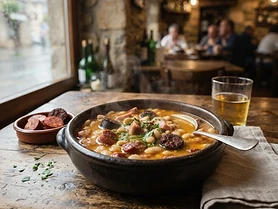
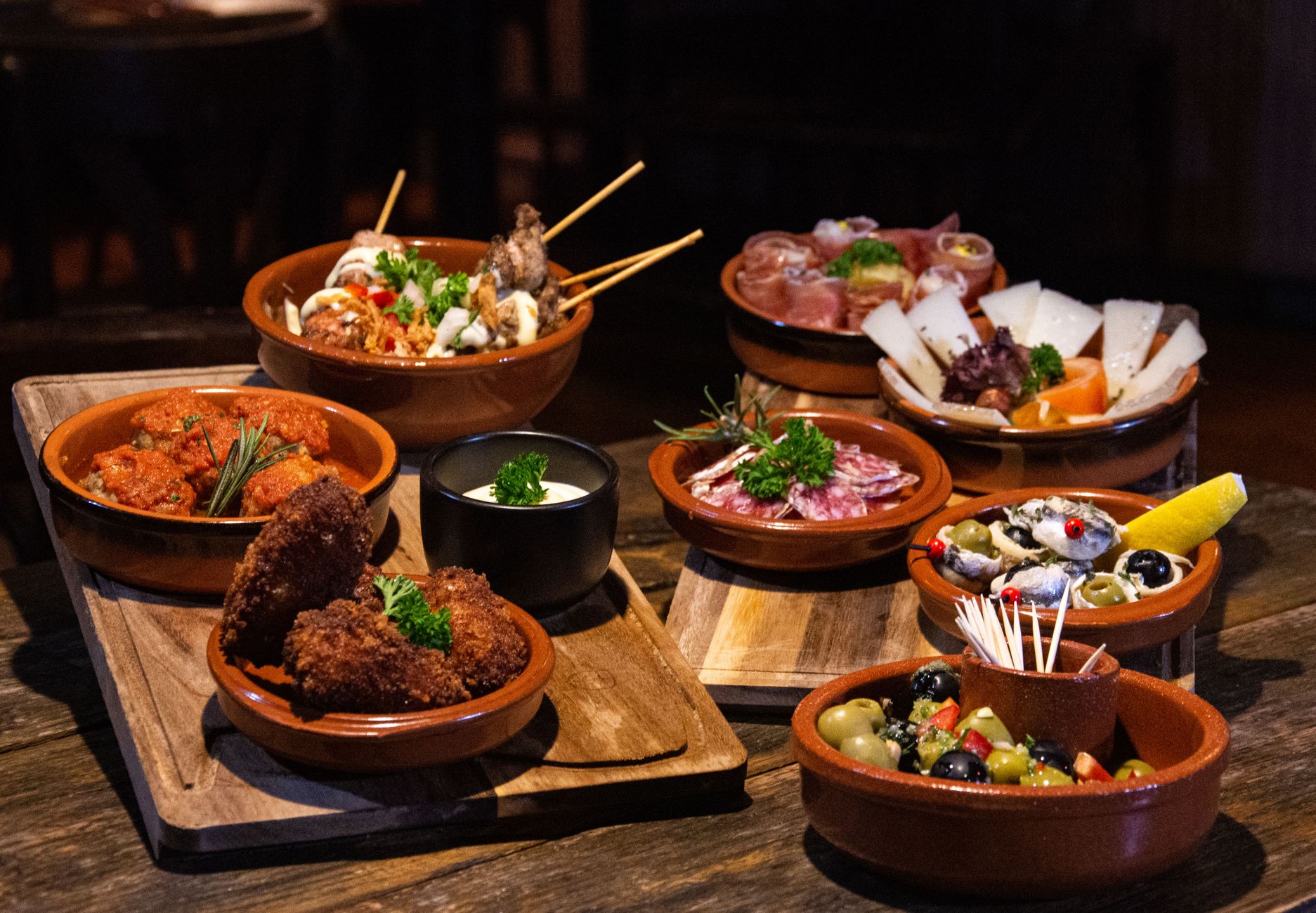
Sidra natural is the foundation, served at room temperature and poured from a height to aerate the liquid before consumption. The pouring, or escanciado, releases the carbonation trapped during fermentation. To accompany the drink, local tables serve fabada asturiana, a heavy stew of white faba beans cooked slowly with chorizo, morcilla, and pork shoulder. Cabrales, a blue cheese made from a blend of cow, goat, and sheep milk and aged in limestone mountain caves, provides the standard finish to a meal. These dishes define the calorie-dense diet required by the climate of the green coast.
Asturias: the whole region
Asturias fits a whole coast, a mountain range and a serious kitchen into a province you can cross in two hours. Cider poured from a height, blue cheese, working fishing ports, and the Picos de Europa standing over all of it. It rains often…
Minimum 4 days · better 7 days · deep 10-12 days
What's Nearby



Pair It With




In Asturias


In Asturias

In Asturias





Linked from elsewhere
Entries that name this place in their own nearby lists.

Logistics are verified only. We don't publish schedules we haven't confirmed.
Appears In
Ready to build Asturian Cider Country into a trip?
You've found a place worth going. When you're ready to turn discovery into an itinerary, Travel Itinerary Co picks up where the Field Guide leaves off — with your saved places already in hand.
Build this into a tripContinues on Travel Itinerary Co
Spain Field Guide may earn a commission when you book through selected links. Recommendations are editorial and independent of commission.