Manchego Cheese
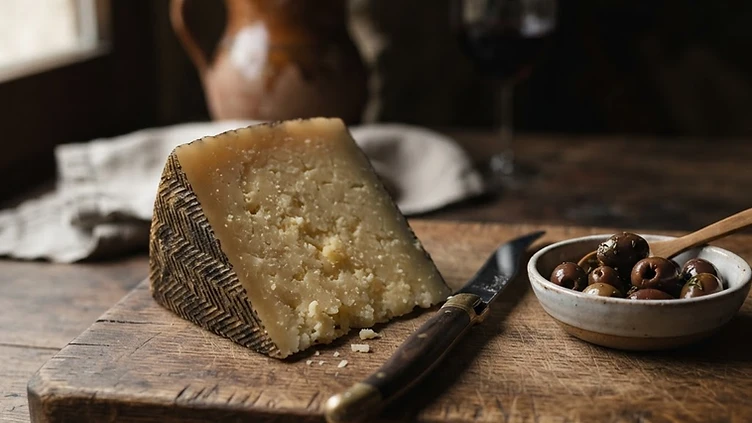
Buy it where it's made — a Manchego D.O. stamp with a hellebore-leaf label. Eat it with quince paste (membrillo) and a glass of La Mancha red.
Spain's most famous cheese — a firm sheep's-milk wheel from La Mancha, aged from 2 months (fresco) to 2 years (curado viejo), with a protected origin.
At a Glance
- — You don't eat dairy
A firm, ivory-colored wheel of sheep's milk cheese, defined by the distinct zig-zag pattern of its rind and the grassy, nutty punch of its aging process. Whether eaten 'fresco' for a mild, milky tang or 'curado' for a sharp, crystalline bite, it is the fundamental snack of the Spanish plateau. Paired with a slice of thick, sweet quince paste and a glass of robust, high-plateau Tempranillo, it transforms from a simple snack into a perfect, harmonious representation of the harsh and generous land of La Mancha.
How it got here
Sheep farming defined the economic life of the La Mancha plateau since the Middle Ages. The harsh climate and vast grazing lands compelled local pastoralists to focus on milk production, turning the seasonal bounty of the Manchega breed into a durable foodstuff. This cheese evolved out of necessity, requiring a firm texture to survive transport across the arid plains to urban markets. The production practices follow strict traditional methods formalized through centuries of rural practice, solidifying the status of the product as the primary agricultural export of the community. Current methods maintain the specific enzymatic profile and aging techniques passed down through generations of farmers working the same calcareous soil.
Where it sits
The landscape stretches as a high, flat limestone tableland, stripped of cover by relentless winds. Low scrub and sparse cereal fields define the horizon for miles. Winters bring sharp frost and bitter cold, while summers turn the ground into baked, cracked clay. Travel across these plains requires navigating long, straight stretches of road that slice through endless horizons. The light shifts from a pale, dusty yellow in the afternoon to deep indigo at dusk. Only the small pockets of olive groves or vineyards break the monotony of the plateau, where the air stays thin and dry throughout the year.
What to eat and drink
Slices of Manchego accompany membrillo, a firm paste made from boiled quince, sugar, and lemon. This combination provides a sharp balance of savory fat and floral sweetness. Locals serve this with crusty bread and a glass of Cencibel wine, the regional name for the Tempranillo grape that thrives in these dry vineyards. Duelos y quebrantos, a rustic scramble of eggs, chorizo, and bacon, provides the necessary calories for long days working the fields. The diet relies on the modest yield of the plateau, focusing on high-protein staples that sustain life in a difficult, arid climate.
Castilla-La Mancha: the whole region
The picture-book Spain: flat horizons, windmills on ridges, and Toledo and Cuenca at either end of it, both built on such improbable ground that the towns themselves are the attraction. Toledo carries the weight of three religions and the…
Minimum 4 days · better 6-7 days · deep 10 days

Pair It With


In Castilla-La Mancha



In Castilla-La Mancha






Linked from elsewhere
Entries that name this place in their own nearby lists.
Logistics are verified only. We don't publish schedules we haven't confirmed.
Appears In
Ready to build Manchego Cheese into a trip?
You've found a place worth going. When you're ready to turn discovery into an itinerary, Travel Itinerary Co picks up where the Field Guide leaves off — with your saved places already in hand.
Build this into a tripContinues on Travel Itinerary Co
Spain Field Guide may earn a commission when you book through selected links. Recommendations are editorial and independent of commission.