Pisto Manchego

Spain's ratatouille. Best served in a La Mancha venta with a fried egg on top and Manchego on the side.
La Mancha's slow-cooked tomato, pepper, courgette and onion stew, finished with olive oil and often a fried egg. The Spanish cousin of ratatouille, eaten as a main or a tapa.
At a Glance
- — You dislike stewed vegetables
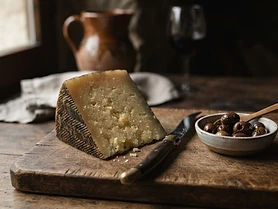
This rustic vegetable stew from La Mancha is Spain’s answer to ratatouille, relying on the slow-cooked marriage of tomatoes, peppers, zucchini, and onions. Finished with a heavy pour of local olive oil, it is often topped with a fried egg that breaks to enrich the sauce. It is best served in a roadside venta, accompanied by a hunk of crusty bread and a wedge of firm, aged Manchego cheese.
How it got here
Castilla-La Mancha occupies the southern half of the Meseta Central, a vast plateau defined by the struggle between drought and agriculture. Pisto emerged from the necessity of preserving the garden harvest that defined the economy of small Manchego households for centuries. Farmers cultivated tomatoes, peppers, and onions in the rich, silty soils near the Guadiana and Júcar rivers. This stew preserved the surplus of a brief, intense growing season for the long months of winter. It stands as a testament to a rural tradition where nothing edible went to waste and the hearth served as the only reliable tool for transformation.
Where it sits
Flat horizons define the landscape of La Mancha, where low scrub, cereal fields, and endless rows of vines stretch under a harsh, unfiltered sun. The terrain lacks the cover of forests, leaving the earth exposed to the biting winds of the plateau. Travel between the scattered settlements moves through wide, dusty plains that turn deep ochre in the heat of August and frozen gray when the winter fog rolls in. The rhythm of life here follows the cycles of the harvest, and the roads remain quiet until the tractors emerge to move the grain or the grapes.
What to eat and drink
Pisto Manchego requires a heavy pour of local extra virgin olive oil and the slow reduction of summer vegetables until they melt together. It arrives at the table with a fried egg, the yolk acting as a sauce for the peppers and zucchini. To finish the meal, diners cut into wedges of firm, aged Manchego cheese, which is pressed from the milk of the Manchega sheep breed. A glass of deep, structured red wine made from the Cencibel grape provides the necessary tannin to balance the sweetness of the stewed tomatoes and the sharp edge of the aged sheep cheese.
Castilla-La Mancha: the whole region
The picture-book Spain: flat horizons, windmills on ridges, and Toledo and Cuenca at either end of it, both built on such improbable ground that the towns themselves are the attraction. Toledo carries the weight of three religions and the…
Minimum 4 days · better 6-7 days · deep 10 days
What's Nearby


Pair It With


In Castilla-La Mancha


In Castilla-La Mancha






Linked from elsewhere
Entries that name this place in their own nearby lists.
Logistics are verified only. We don't publish schedules we haven't confirmed.
Ready to build Pisto Manchego into a trip?
You've found a place worth going. When you're ready to turn discovery into an itinerary, Travel Itinerary Co picks up where the Field Guide leaves off — with your saved places already in hand.
Build this into a tripContinues on Travel Itinerary Co
Spain Field Guide may earn a commission when you book through selected links. Recommendations are editorial and independent of commission.