Las Hurdes

Worth a detour, and best in spring when the water runs. Two days of driving slowly between very small places.
A landscape of terraces and slate built by poverty and isolation, now one of the emptiest corners of Extremadura.
At a Glance
- — You need a lot to see in a short time — this is a place of small things
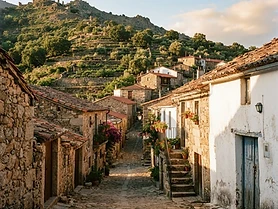
Las Hurdes is a set of narrow valleys in the mountains between Cáceres and Salamanca, and until the twentieth century it was among the poorest and most isolated places in Spain: villages of slate and chestnut, terraces built up the hillsides for a few rows of olives and peppers, no road in. That history is why it still looks like nowhere else, and why a royal visit in 1922 and Buñuel's documentary about it in 1933 are part of the local story. Today there are swimming holes, waterfalls, walnuts and honey, and a scatter of small hotels. The roads are slow and the villages are tiny. Give it two days.
How it got here
For centuries, the narrow valleys of Las Hurdes existed in profound isolation from the administrative and social currents of the Extremaduran plains. King Alfonso XIII visited in 1922, and the subsequent cinematic portrayal by Luis Buñuel focused international attention on the extreme poverty found within its slate villages. These accounts fixed a perception of the region as a place outside of time, defined by subsistence farming on terraced slopes. The infrastructure that finally integrated these communities into the provincial economy of Cáceres only appeared in the mid-twentieth century. This delayed development preserved the vernacular slate architecture that defines the visual character of the valley settlements today.
Where it sits
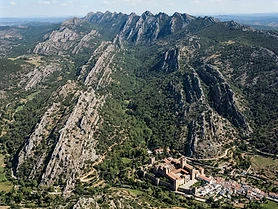
The terrain transitions abruptly from the high peaks of the Sierra de Francia to deep, sunless ravines cut by the rivers Malvellido and Hurdano. Oak and chestnut forests cover the higher altitudes, while olive trees cling to dry-stone terraces carved into the hillsides. Access relies on winding, slow-moving roads that drop into the valley floors. Winters bring heavy rains that feed the waterfalls and natural pools, while summers dry the landscape into a pale, dusty yellow. Traffic remains minimal even in the peak of the warmer months, as the sheer distance between the villages prevents the buildup of typical tourist crowds.
What to eat and drink
The local diet relies on the produce of the mountain forests and rivers. Honey from the local beehives provides a base for many desserts and regional cakes. Pimentón de la Vera, a smoked paprika produced nearby, seasons the heavy stews prepared with garden vegetables and mountain game. Cabrito, young goat roasted with garlic and rosemary, provides the primary meat dish, while trout pulled from the fast-moving mountain streams are typically fried with local ham. A glass of pitarra, the traditional artisan wine made in small quantities within the family cellars of the region, accompanies most farmhouse meals.
Extremadura: the whole region
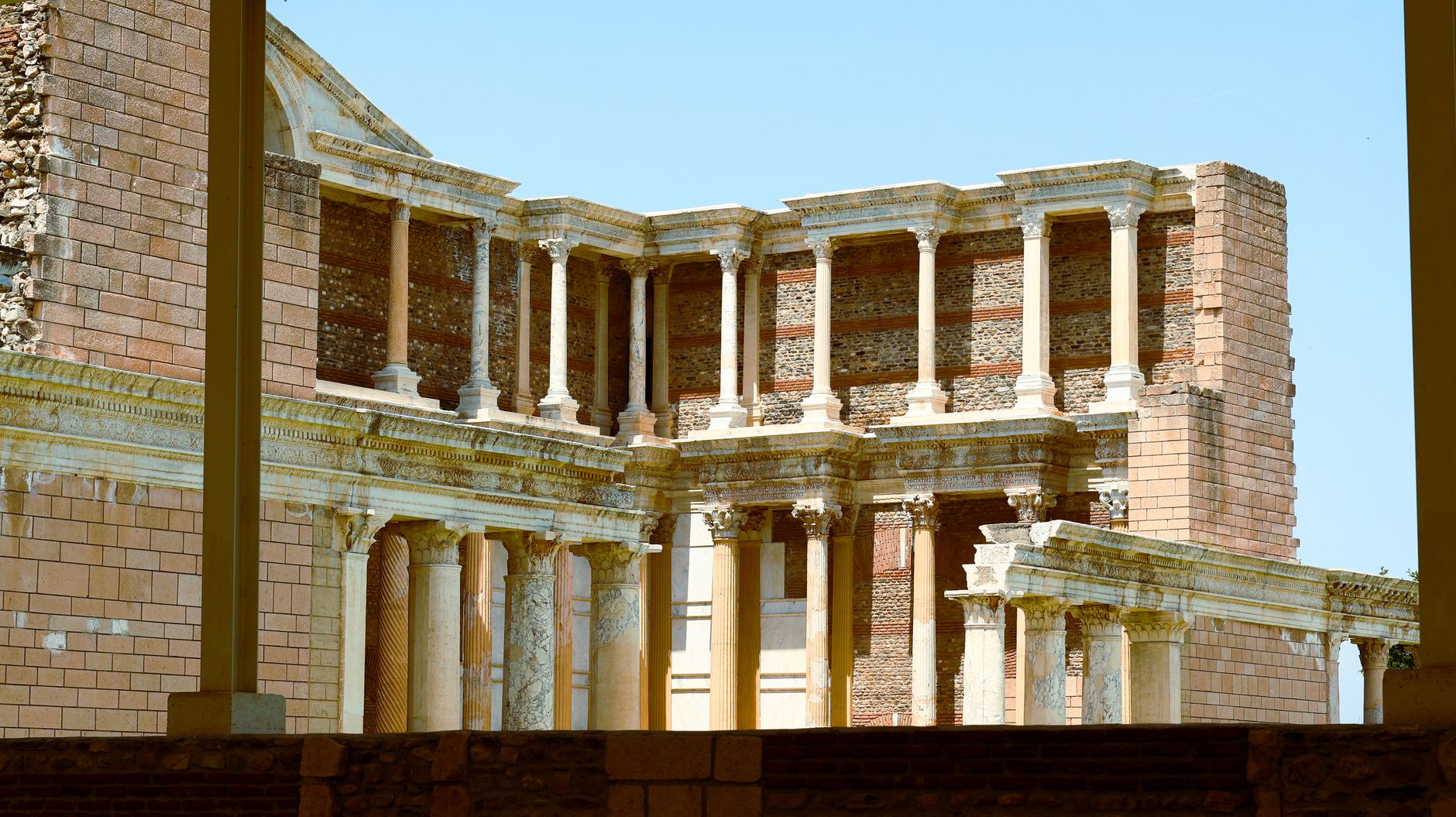
The emptiest region in Spain, and the one where the scale of the country is clearest: dehesa plains running to the horizon in every direction, hilltop towns built from the stone under them, and the best Roman remains in the country at…
Minimum 4 days · better 7-8 days · deep 12 days
In and around Las Hurdes


In Extremadura


In Extremadura




Linked from elsewhere
Entries that name this place in their own nearby lists.

Logistics are verified only. We don't publish schedules we haven't confirmed.
Appears In
Experiences worth booking ahead
Spain Field Guide may earn a commission when you book through selected links. Recommendations are editorial and independent of commission.
Ready to build Las Hurdes into a trip?
You've found a place worth going. When you're ready to turn discovery into an itinerary, Travel Itinerary Co picks up where the Field Guide leaves off — with your saved places already in hand.
Build this into a tripContinues on Travel Itinerary Co
Spain Field Guide may earn a commission when you book through selected links. Recommendations are editorial and independent of commission.