Cáceres
A rewarding overnight for travelers crossing the quieter southwest. The old town at night is empty and beautiful.
A walled medieval old town so well preserved it's a UNESCO site, with almost no crowds. One of Spain's best-kept secrets.
At a Glance
- — You're not crossing Extremadura
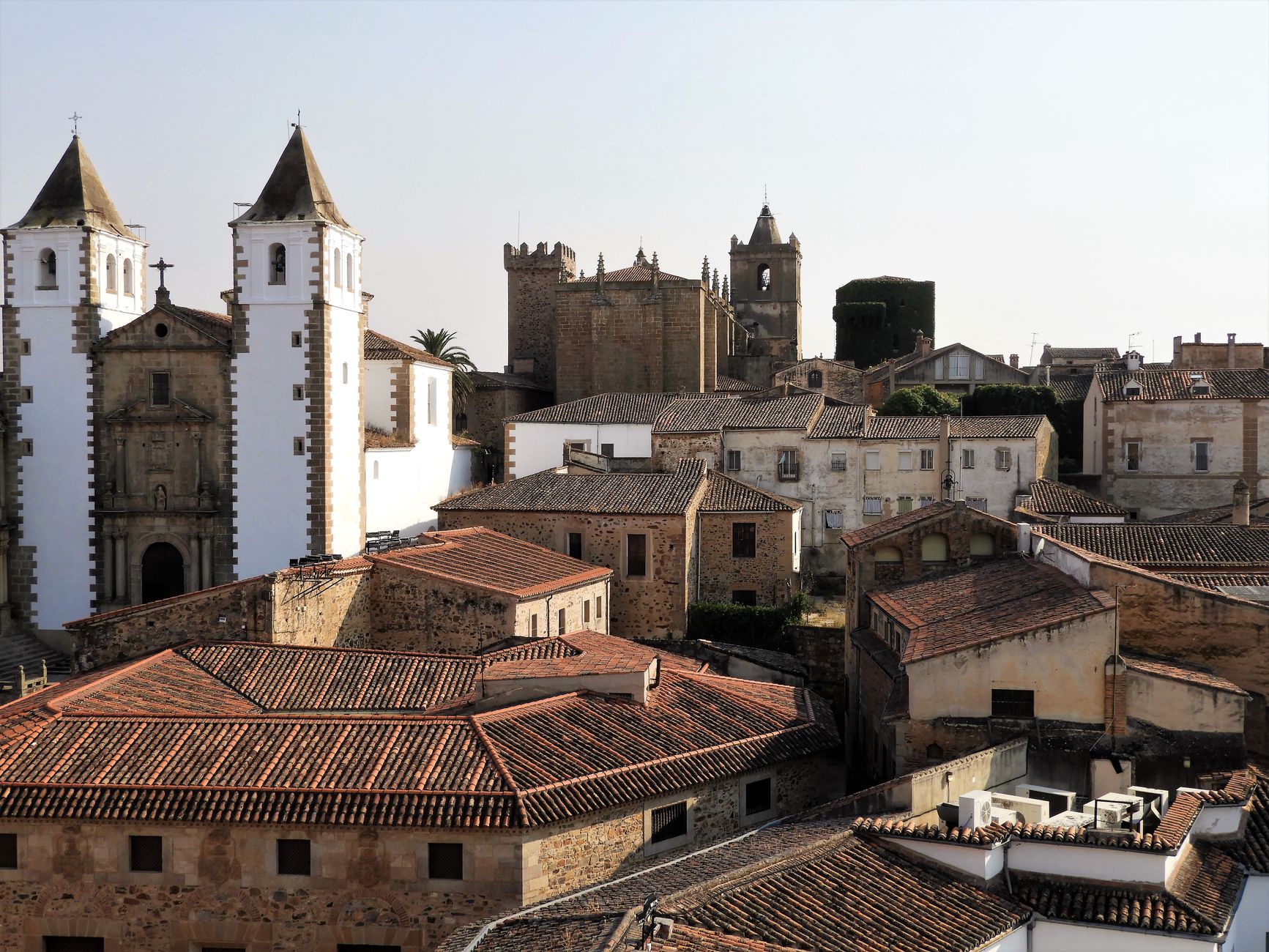
Massive stone walls enclose a medieval maze so perfectly preserved that it often stands in for fantasy kingdoms on screen. Within the shadow of the old towers, the city is quiet, spare, and entirely free of the typical tourist swell, making a night walk through its narrow, unlit alleys a deeply atmospheric experience. It remains one of the southwest’s best-kept secrets, offering a serene, melancholic beauty to those willing to wander away from the coast and into the wild, rugged heart of Extremadura.
How it got here
Roman soldiers established Norba Caesarina here in the first century BC. The Almohad Caliphate constructed the present walls and towers in the twelfth century, utilizing stacked stone and rammed earth to secure the site. Forces under Alfonso IX of León captured the town in 1229. Following this Christian conquest, the nobility constructed fortified palaces within the defensive circuit. These stone façades bear the crests of families who gained wealth through the Mesta, the powerful sheep herders guild that controlled the wool trade across the Castilian interior. The concentration of heraldry on the heavy granite walls marks the centuries when this trade dictated the local economy and architectural permanence.
Where it sits
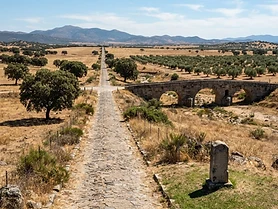
The city stands on a rise above the plains of western Extremadura. To the north and east, the landscape transitions into the scrubland and oak forests of the Sierra de San Pedro. Summer heat turns the surrounding grasslands to gold by June while winter brings biting winds and gray skies. Access routes follow the valleys that cut through the low sierras. Movement through the old quarter requires walking over granite paving stones. The heavy walls block the sun and dampen noise, creating a stillness that persists during the quiet hours of the afternoon when few people walk the narrow streets.
What to eat and drink
Local cooking relies on the pig and the pastures of the dehesa. Jamón ibérico from the black-footed pigs that forage on acorns provides the primary cured meat. Torta del Casar, a pungent sheep milk cheese with a liquid center and a dense crust, comes from nearby farms. Migas extremeñas, fried breadcrumbs seasoned with garlic, pimentón, and pork fat, serve as a staple dish. Cooks often use pimentón de la Vera, a smoked paprika produced in the northern valleys of the province, to flavor stews and sausages. Red wines from the Ribera del Guadiana designate the primary regional vintage paired with these heavy meals.
Extremadura: the whole region
The emptiest region in Spain, and the one where the scale of the country is clearest: dehesa plains running to the horizon in every direction, hilltop towns built from the stone under them, and the best Roman remains in the country at…
Minimum 4 days · better 7-8 days · deep 12 days
What's Nearby


Pair It With


In Extremadura


In Extremadura





Linked from elsewhere
Entries that name this place in their own nearby lists.

Logistics are verified only. We don't publish schedules we haven't confirmed.
Appears In
Experiences worth booking ahead
Spain Field Guide may earn a commission when you book through selected links. Recommendations are editorial and independent of commission.
Ready to build Cáceres into a trip?
You've found a place worth going. When you're ready to turn discovery into an itinerary, Travel Itinerary Co picks up where the Field Guide leaves off — with your saved places already in hand.
Build this into a tripContinues on Travel Itinerary Co
Spain Field Guide may earn a commission when you book through selected links. Recommendations are editorial and independent of commission.