Mérida

A must-stop for Roman-history travelers. Half a day is enough; the theater is the highlight.
The best Roman ruins in Spain — a theater, an amphitheater, and a bridge still in use after 2,000 years.
At a Glance
- — Roman ruins don't interest you
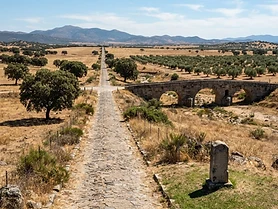
Roman ruins are woven directly into the fabric of daily life here, with a towering theater and an amphitheater still standing as the legacy of an ancient provincial capital. The bridge spanning the Guadiana River is a feat of engineering that has held firm for two millennia, long enough to see the city evolve around its stone arches. It is a profound, open-air museum where the weight of antiquity feels immediate and unavoidable, best appreciated in the cool air of the morning before the inland heat sets in.
How it got here
Augustus founded Emerita Augusta in 25 BC for veterans of the Cantabrian Wars. It became the capital of Lusitania and grew into one of the largest cities in the Roman Empire. The city walls, aqueducts, and the theater defined the administration of the province. Following the collapse of imperial authority, the Suebi and Visigoths assumed control before the arrival of the Moors in the eighth century. Alfonso IX of León conquered the city in 1230, marking the beginning of centuries of repopulation efforts that integrated Roman stone into the medieval town layout, keeping the ancient ruins central to the modern civic grid.
Where it sits
The city occupies a flat stretch of the Guadiana valley floor in the province of Badajoz. The surrounding country consists of dry plains and rolling olive groves that bake under intense sun during July and August. The river provides the primary hydrological artery for the province, carving through the ancient masonry of the Roman bridge before winding westward toward Portugal. Winter brings damp air and fog off the water, while spring transforms the brown landscape into short-lived fields of wheat. Transit routes follow the old Roman roads, making it a natural crossroads between the north and the south.
What to eat and drink
The cuisine relies heavily on the pig, particularly the black-footed Iberian hogs that forage in the nearby dehesa. Jamón ibérico de bellota, cured ham from acorn-fed swine, dominates local larders. Caldillo, a thick soup made from pig liver and paprika, persists as a traditional breakfast. During summer months, people eat gazpacho extremeño, a cold broth of bread, garlic, and vinegar. The local wine production centers on the Ribera del Guadiana denomination, producing robust reds that balance the heavy pork dishes. Sweets often utilize honey and almonds, residues of the long period of Islamic agricultural influence in the valley.
Extremadura: the whole region
The emptiest region in Spain, and the one where the scale of the country is clearest: dehesa plains running to the horizon in every direction, hilltop towns built from the stone under them, and the best Roman remains in the country at…
Minimum 4 days · better 7-8 days · deep 12 days
What's Nearby

Pair It With

In Extremadura


In Extremadura



Linked from elsewhere
Entries that name this place in their own nearby lists.

Logistics are verified only. We don't publish schedules we haven't confirmed.
Appears In
Experiences worth booking ahead
- Las Coloradas, Río Lagartos and Playa Cancunito Tour from Mérida4.8 (240)13 hrsFrom €99
- Tour Valladolid, Cenote Suytun and Cenote Oxman from Mérida5.0 (131)12 hrsFrom €81
- Uxmal, two Amazing Cenotes & Local Food Tour from Mérida4.9 (138)8 hrsFrom €74
- Celestún Biosphere Tour: Flamingos & Beach Day from Mérida4.8 (150)7.5 hrsFrom €59
Spain Field Guide may earn a commission when you book through selected links. Recommendations are editorial and independent of commission.
Ready to build Mérida into a trip?
You've found a place worth going. When you're ready to turn discovery into an itinerary, Travel Itinerary Co picks up where the Field Guide leaves off — with your saved places already in hand.
Build this into a tripContinues on Travel Itinerary Co
Spain Field Guide may earn a commission when you book through selected links. Recommendations are editorial and independent of commission.