Liébana
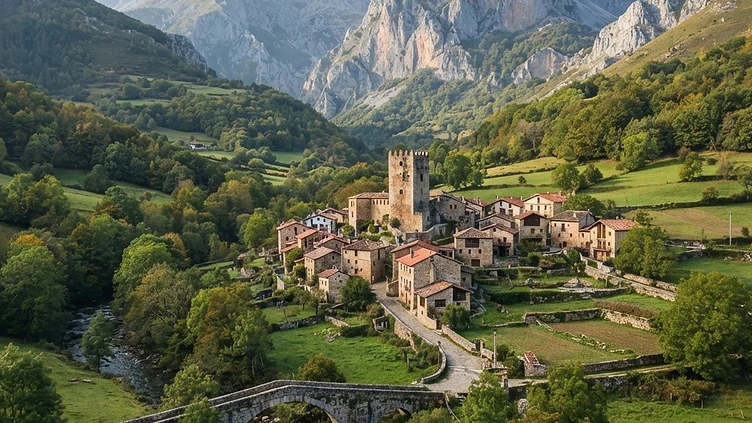
Three days: two on foot in the Picos, one eating. It fills up in August and on Easter week — go in June or September if you can.
Mountains, a monastery with a claim on the True Cross, and the strongest blue cheese in Spain, all inside one valley.
At a Glance
- — You want space in August — Potes is a bottleneck then.
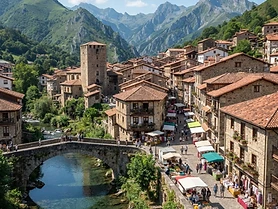
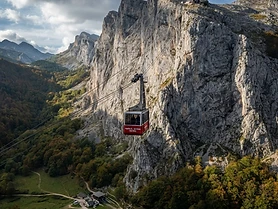
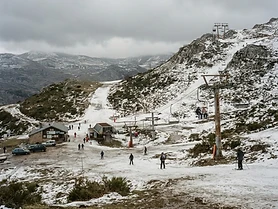
Liébana is a closed basin between the Picos de Europa and the Cantabrian mountains, entered through the Hermida gorge, and it stays warm and dry while the coast is wet and the peaks are cold. Potes is the market town — stone bridges, towers, and the road that climbs from it to Fuente Dé, where a cable car lifts you 750 metres into the Picos in four minutes. Santo Toribio de Liébana holds a fragment of the True Cross and was one of medieval Christianity's four holy places, which is why the churches here are grander than the population warrants. Then the cheese: Picón Bejes-Tresviso, blue, sharp, and made in the villages up the valley.
How it got here
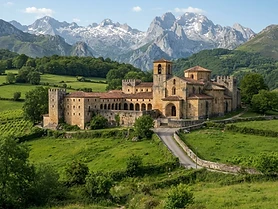
The Monastery of Santo Toribio de Liébana explains the presence of monumental architecture in a remote mountain valley. Its prestige grew from the fourteenth century onwards when it claimed to house the Lignum Crucis, a large fragment of the True Cross. This relic turned the comarca into a destination for pilgrims who travelled through the Hermida gorge to seek indulgences. The monastery provided the valley with ecclesiastical status that isolated it from the usual feudal pressures of the coast. Today, the scale of the stone churches throughout the surrounding villages echoes this medieval prominence and the consistent influx of travellers who followed the religious routes.
Where it sits
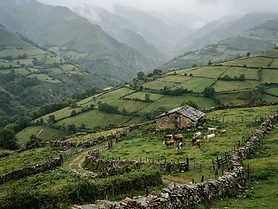
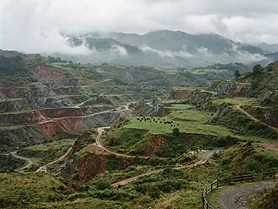
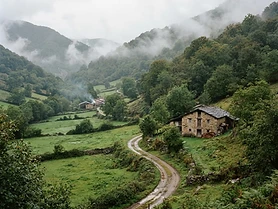
The valley forms a deep bowl surrounded by the limestone massifs of the Picos de Europa. Cold air stalls against the high walls of the gorge, trapping a microclimate that permits orchards and vineyards that struggle elsewhere at this altitude. The terrain shifts from dense Atlantic forest on the lower slopes to bare rock above the treeline. Travel depends entirely on the road through the Hermida gorge, which forces a slow pace. During the spring melt, the river Deva swells and turns the valley floor loud, while summer heat dries the hillsides into pale, brittle rock.
What to eat and drink
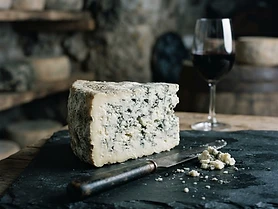
Picón Bejes-Tresviso defines the palate of the valley. This cow, sheep, and goat milk blue cheese ripens in limestone caves, resulting in a sharp, salty paste that crumbles easily. Cocido lebaniego is the standard winter meal, a thick stew of chickpeas, potatoes, and cabbage boiled with local chorizo, morcilla, and tocino. The traditional accompaniment is orujo, a potent pomace brandy distilled from the skins of grapes grown on the lower valley slopes. It often carries the scent of herbs gathered from the mountainside and serves as the primary digestive after long meals of fatty meats.
Cantabria: the whole region
A small region with an unusual amount of everything: a coast of rough Atlantic beaches, the eastern half of the Picos de Europa, the Pas and Liébana valleys, and two of the most important prehistoric and religious sites in Spain in…
Minimum 3 days · better 5-6 days · deep 9 days
In and around Liébana




In Cantabria



In Cantabria










Logistics are verified only. We don't publish schedules we haven't confirmed.
Appears In
Experiences worth booking ahead
Spain Field Guide may earn a commission when you book through selected links. Recommendations are editorial and independent of commission.
Ready to build Liébana into a trip?
You've found a place worth going. When you're ready to turn discovery into an itinerary, Travel Itinerary Co picks up where the Field Guide leaves off — with your saved places already in hand.
Build this into a tripContinues on Travel Itinerary Co
Spain Field Guide may earn a commission when you book through selected links. Recommendations are editorial and independent of commission.