Queso Picón Bejes-Tresviso
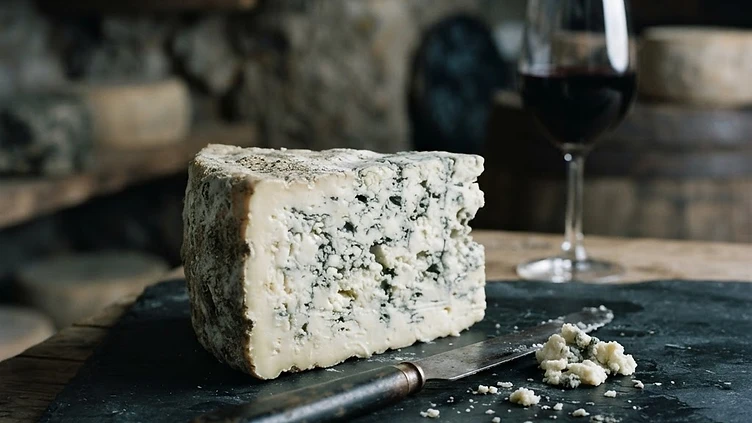
Buy it in a Liébana market or straight from a producer, and taste before buying: the sharpest versions are not for everyone. Serve it warm.
A cave-cured blue cheese from a few Picos de Europa villages — small enough in production that it hardly leaves the region.
Os Pasiegos · Liébana · Santander · Potes
At a Glance
Picón Bejes-Tresviso is made in a handful of villages in the Liébana and Peñarrubia valleys from cow, sheep and goat milk, then cured for two to six months in natural limestone caves whose humidity does the work. It is sharp, dense and blue-veined, eaten in small quantities with bread or on a steak. Production is tiny and it is rarely sold far from Cantabria.
How it got here
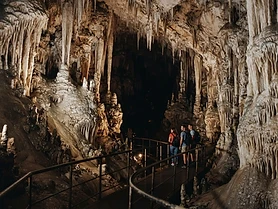
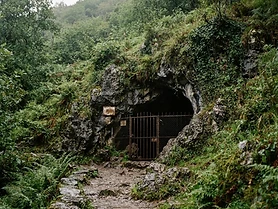
Transhumance defined the economy of the Liébana valley for centuries. Herders moved livestock between the high Picos de Europa pastures and lower valley floors during the winter months. This seasonal rhythm necessitated methods of preserving milk in an environment cut off by deep snow and jagged limestone geography. Families produced this blue cheese inside natural mountain caves where consistent temperature and high humidity facilitated the ripening process. The specific technique of mixing cow, sheep, and goat milk survived because these small mountain communities remained isolated from the industrialization of the wider Spanish dairy industry for most of the twentieth century.
Where it sits
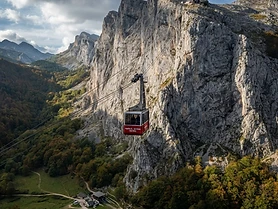
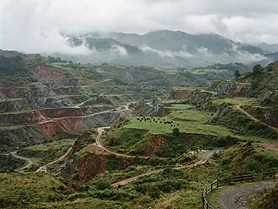
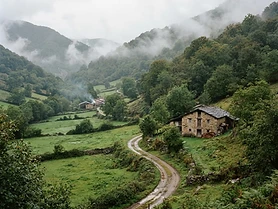
Limestone massifs dominate the sky above the Liébana and Peñarrubia valleys. The terrain shifts from deep river gorges to alpine meadows in a matter of miles. Access follows narrow roads carved into the rock face where fog clings to the slopes for much of the autumn. Spring brings rapid snowmelt that feeds the fast-moving streams cutting through the canyons. Summer heat rarely penetrates the deep shade of these mountain pockets, while autumn mists define the quiet periods before the peaks turn white. Visitors find few crowds in these high villages where the landscape dictates the pace of life.
What to eat and drink
This cheese demands strong accompaniments to balance its sharp saltiness and dense texture. Local tradition dictates eating it with crusty country bread or alongside hearty slices of cold roasted beef. Outside the cheese, the valley serves cocido lebaniego, a heavy stew of chickpeas, cabbage, and meats including blood sausage and pork shoulder. To drink, the region produces orujo, a potent grape pomace spirit distilled in copper stills over open fires, often consumed as a digestif after heavy mountain meals. Cider also plays a role in local life, poured from a height to encourage aeration in the glass.
Cantabria: the whole region
A small region with an unusual amount of everything: a coast of rough Atlantic beaches, the eastern half of the Picos de Europa, the Pas and Liébana valleys, and two of the most important prehistoric and religious sites in Spain in…
Minimum 3 days · better 5-6 days · deep 9 days
In Cantabria


In Cantabria













More regional product in Cantabria
Logistics are verified only. We don't publish schedules we haven't confirmed.
Ready to build Queso Picón Bejes-Tresviso into a trip?
You've found a place worth going. When you're ready to turn discovery into an itinerary, Travel Itinerary Co picks up where the Field Guide leaves off — with your saved places already in hand.
Build this into a tripContinues on Travel Itinerary Co
Spain Field Guide may earn a commission when you book through selected links. Recommendations are editorial and independent of commission.