Potes
Stay in or near Potes for two or three nights. Avoid August if you want the streets to yourself.
The natural base for Liébana and the Picos, with the best market in the valley.
At a Glance
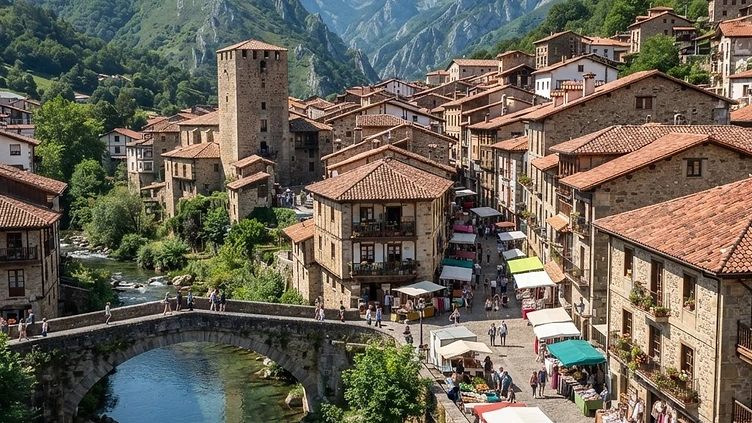
Potes is where Liébana does its business: a tight town of stone bridges over two rivers, a tower, arcaded streets and a market on Mondays that has run for centuries. It is also the junction for everything in the valley — the road up to Fuente Dé and the Picos, the road to Santo Toribio, and the passes east and south. The old quarter is genuinely handsome, and in August it is completely full, with queues for parking and restaurants. Base here, but book ahead and expect company in the high season.
How it got here
Liébana remained isolated by the Picos de Europa for much of its recorded past. The valley maintained an identity tied to the monastery of Santo Toribio de Liébana, which protected the Lignum Crucis and drew medieval pilgrims into the mountains. Potes acted as the central trade hub for these remote mountain communities. The town grew around the confluence of the rivers Quiviesa and Deva, where the lords of the house of Infantado built the Torre del Infantado in the fifteenth century to secure their dominance over local commerce and control the passage of goods through the valley floor.
Where it sits
The valley sits within a natural limestone fortress where the Cantabrian mountains rise sharply from the riverbanks. Narrow roads climb from the coast through the Desfiladero de la Hermida, a deep gorge that acts as the primary gateway into the territory. Cold winters bring heavy snow to the peaks and silence the higher tracks, while the summer months draw travelers who fill the narrow stone streets and alleys. The town serves as the logistics core for the surrounding hamlets, acting as the final point of supply before the terrain turns into trackless, high mountain pastures.
What to eat and drink
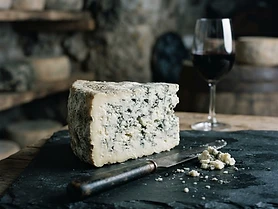
Cocido lebaniego is the essential winter dish of the valley. This heavy stew relies on small, tender chickpeas grown in local soil, simmered with chorizo, morcilla, and cured pork fat. The meal follows with the compango, the meats served after the broth. For a sharper finish, the distillers of the valley produce orujo, a potent pomace brandy traditionally distilled in copper pots over open wood fires. Diners finish their plates with local cheeses such as queso de Tresviso, a pungent, blue-veined variety aged in mountain caves to develop a sharp and spicy character.
Cantabria: the whole region
A small region with an unusual amount of everything: a coast of rough Atlantic beaches, the eastern half of the Picos de Europa, the Pas and Liébana valleys, and two of the most important prehistoric and religious sites in Spain in…
Minimum 3 days · better 5-6 days · deep 9 days
In Cantabria



In Cantabria












Linked from elsewhere
Entries that name this place in their own nearby lists.
Logistics are verified only. We don't publish schedules we haven't confirmed.
Experiences worth booking ahead
- Picos de Europa and Potes Guided Tour from Santander-small groups4.7 (125)9 hrsFrom €90
- Full Day Private 4WD Tour from Santander to Picos de Europa. Excellent meals.5.0 (35)From €430
- CERTAL Exclusive Tour: LA RIBERA Market + GASTROBARS Bilbao (3h)4.6 (14)3 hrsFrom €60
- Potosi - Active Mine Tour - Half Day -4.4 (13)3.5 hrsFrom €32
Spain Field Guide may earn a commission when you book through selected links. Recommendations are editorial and independent of commission.
Ready to build Potes into a trip?
You've found a place worth going. When you're ready to turn discovery into an itinerary, Travel Itinerary Co picks up where the Field Guide leaves off — with your saved places already in hand.
Build this into a tripContinues on Travel Itinerary Co
Spain Field Guide may earn a commission when you book through selected links. Recommendations are editorial and independent of commission.