Combarro

A good lunch stop between Pontevedra and Vigo. Eat percebes if you're game.
A waterfront village of stone granaries (hórreos) over the ría. The most photographed spot on the Galician coast.
At a Glance
- — You're not on the Rías Baixas
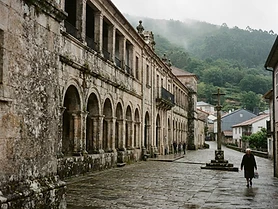
Granite granaries, or hórreos, stand on stone legs at the water's edge, holding their grain above the rising tides of the ría. The village preserves a piece of rural maritime life: narrow stone alleys, hydrangeas, and the traps of crab fishermen. It is a short stop, worth it for a plate of percebes and a look across the bay.
How it got here
Combarro exists as a maritime parish within the municipality of Poio, a stretch of the Rías Baixas that traditionally combined agricultural output with small-scale artisanal fishing. The stone granaries lining the shore attest to a time when grain storage required protection from both moisture and vermin, utilizing the granite architecture common to the province of Pontevedra. The village survived the industrial shifts that modernized much of the Galician coastline, maintaining a layout of narrow alleys and squares that prioritizes pedestrian movement over modern transport. This preservation occurred as maritime commerce centralized in larger ports, leaving smaller settlements to retain their medieval character through continued use of traditional stone dwellings.
Where it sits
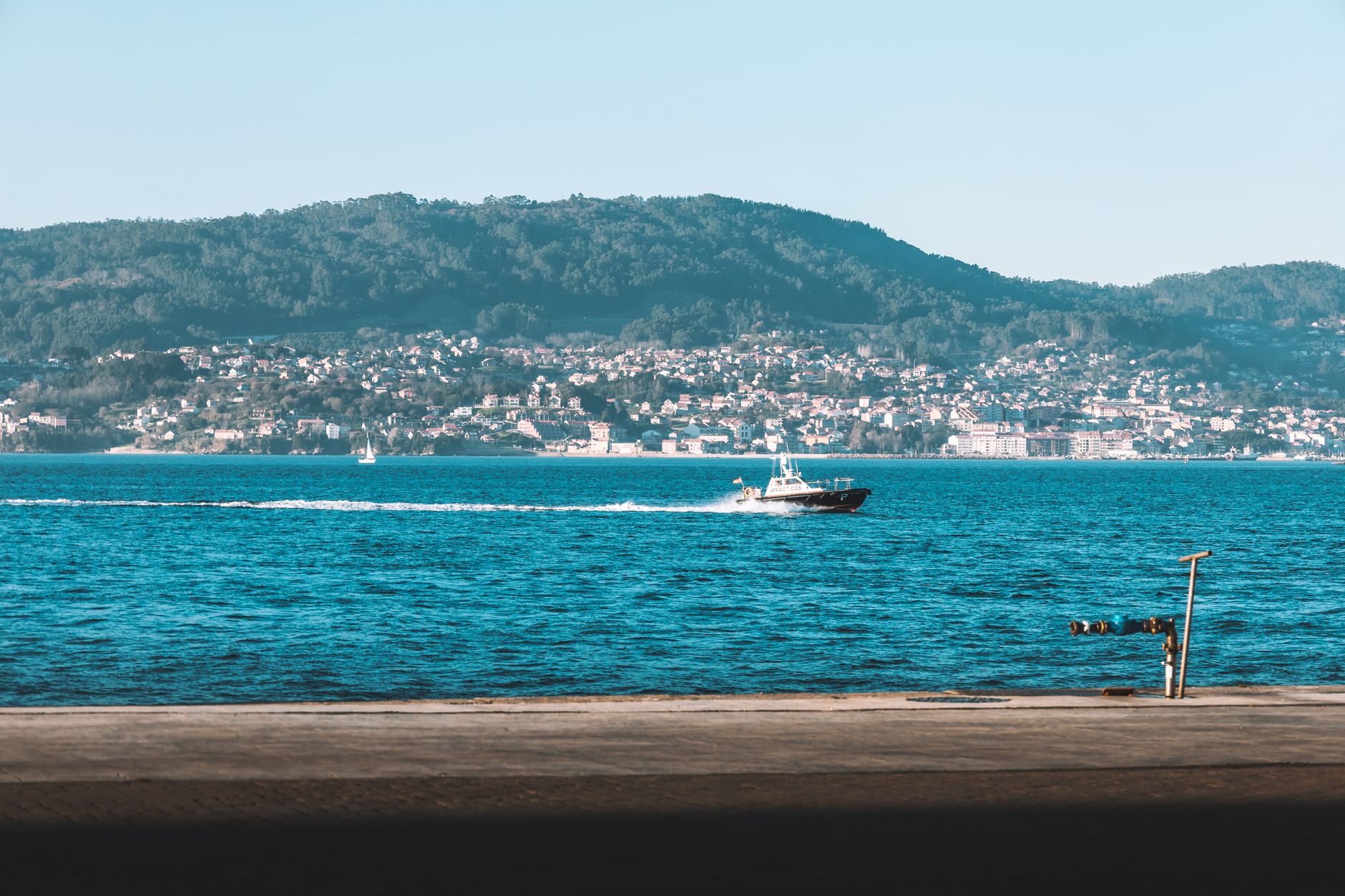
The village hugs the northern shore of the Ría de Pontevedra, where the ocean tide pulls directly against the granite foundations of the houses. Inland, the terrain rises sharply into wooded hills that block the harshest Atlantic winds, creating a microclimate where hydrangeas bloom against gray stone walls. Summer brings visitors who arrive by road from Pontevedra, filling the alleyways until the sun drops behind the hills. Winters turn the Ría into a gray expanse, quiet save for the movement of fishing boats and the periodic maintenance of the shellfishing beds that define the local economy.
What to eat and drink
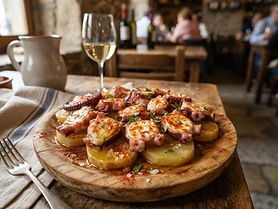
Pulpo á feira remains the standard here, octopus boiled in copper pots, sliced with scissors, and seasoned with paprika, salt, and olive oil. The ría provides the percebes, goose barnacles harvested from the rocks, which arrive steamed simply to preserve their taste of the open sea. Mejillones come steamed or served in a savory vinaigrette. Albariño, the white wine pressed from grapes grown on the acidic, granite-rich soils of the nearby valley of O Salnés, provides the high acidity and saline finish necessary to cut through the richness of the shellfish gathered from the bay.
Galicia: the whole region
Galicia is wet, green, cheap and unlike anywhere else in Spain: a drowned coast of rias, granite villages, seafood that justifies the trip on its own, and Santiago at the middle of it. The rain is not a risk, it is a certainty — plan…
Minimum 5 days · better 8-10 days · deep 2 weeks

Pair It With


In Galicia




In Galicia


In Galicia






Logistics are verified only. We don't publish schedules we haven't confirmed.
Experiences worth booking ahead
Spain Field Guide may earn a commission when you book through selected links. Recommendations are editorial and independent of commission.
Ready to build Combarro into a trip?
You've found a place worth going. When you're ready to turn discovery into an itinerary, Travel Itinerary Co picks up where the Field Guide leaves off — with your saved places already in hand.
Build this into a tripContinues on Travel Itinerary Co
Spain Field Guide may earn a commission when you book through selected links. Recommendations are editorial and independent of commission.