Pontevedra

A worthwhile stop on a Galician loop. The old town is the whole point.
A nearly car-free old town that's one of Galicia's most livable small cities, and a key stop on the Portuguese Camino.
Rías Baixas · Vigo · Combarro
At a Glance
- — You're not on the Portuguese Camino or the Rías Baixas
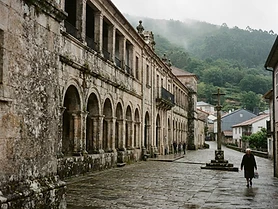
At its center is a dense, car-free heart of stone plazas and granite churches, and the city is a case study in human-scale planning. Pilgrims on the Portuguese Camino pass through quiet, leafy streets that feel largely untouched by the pace of modern life. It is a gentle, walkable stop, and it invites a slow glass of Albariño in a square that feels more like a private courtyard than a public street.
How it got here
The site traces its origins to the Roman period as Ad Duos Pontes, a crossing point over the Lérez river. Medieval growth accelerated in the twelfth century when Ferdinand II of León granted the town royal privileges, encouraging trade and sea-based commerce. The harbor gained importance during the Middle Ages, as local merchants traded wine and salt with the ports of England and Flanders. The stone architecture that defines the old town today emerged during this period of prosperity. These medieval maritime connections shaped the dense street grid and the granite construction that define the current city layout, maintaining a scale established long before modern automotive transport transformed other Spanish centers.
Where it sits
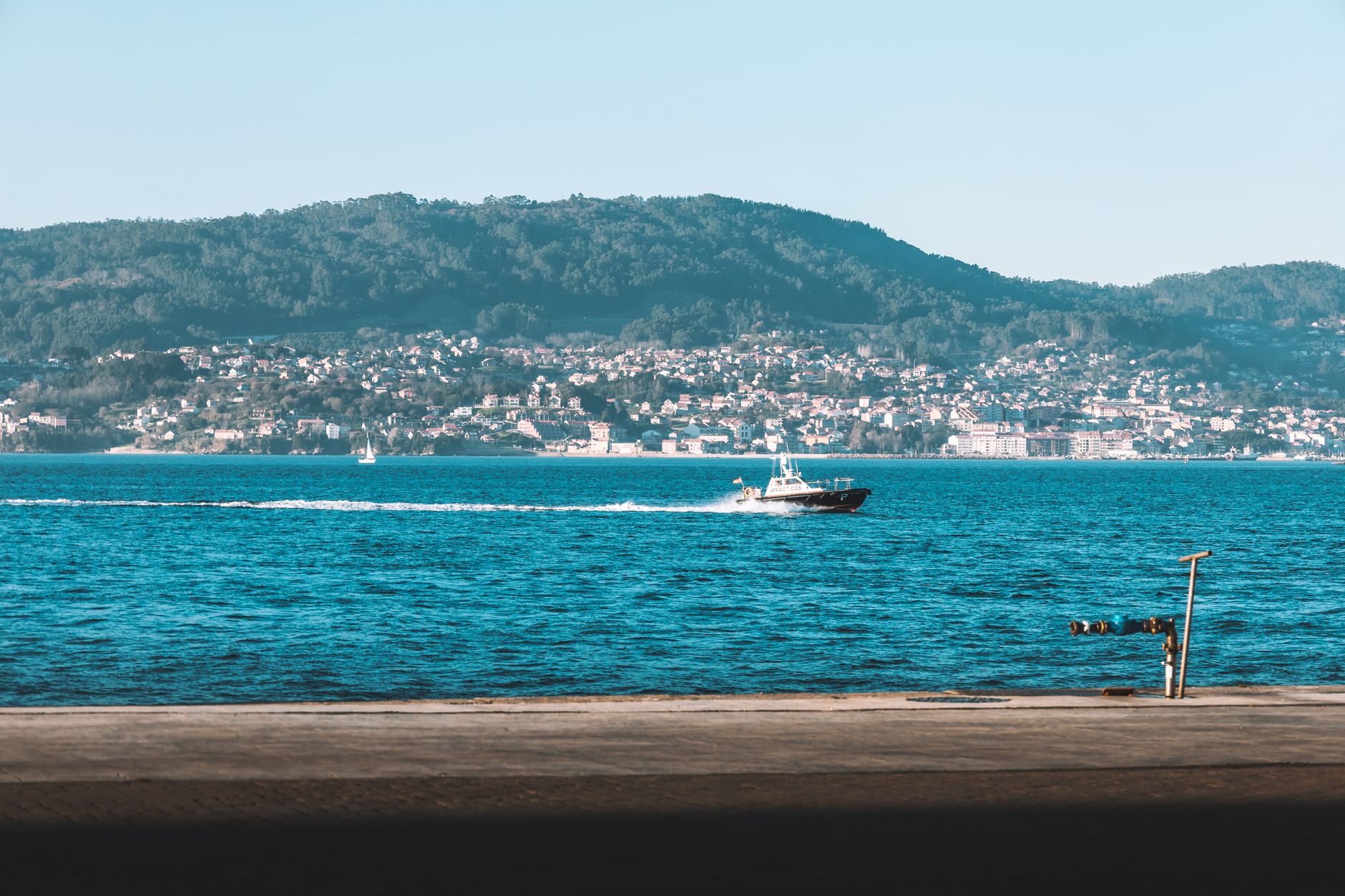
The city occupies the low-lying basin of the Rías Baixas in the southwest corner of Galicia. Green hills of eucalyptus and oak enclose the estuary where the Lérez meets the Atlantic. Constant dampness from the Atlantic winds turns the granite dark with lichen and keeps the surrounding countryside vibrant throughout the year. Winter brings steady rainfall from the sea, while summer afternoons offer moderate temperatures tempered by the proximity to the coast. The town sits at the heart of an estuarine landscape, a hub for the inland valleys and the complex shoreline of rocky inlets and small fishing ports.
What to eat and drink
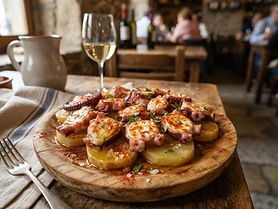
Pulpo á feira, octopus boiled in copper cauldrons and seasoned with paprika, olive oil and coarse salt, provides the standard for local tables. The nearby Ría de Pontevedra supplies mussels and scallops, often prepared in empanada, a savory pie filled with shellfish and onions. Albariño, a crisp white wine from the nearby Salnés Valley, balances the salinity of the fresh seafood. In the autumn months, Padrón peppers appear, fried quickly in oil until blistered. Local bakers produce Tarta de Santiago, an almond flour cake marked with the cross of the saint, to finish the meal alongside coffee.
Galicia: the whole region
Galicia is wet, green, cheap and unlike anywhere else in Spain: a drowned coast of rias, granite villages, seafood that justifies the trip on its own, and Santiago at the middle of it. The rain is not a risk, it is a certainty — plan…
Minimum 5 days · better 8-10 days · deep 2 weeks
What's Nearby


Pair It With

In Galicia




In Galicia


In Galicia





Linked from elsewhere
Entries that name this place in their own nearby lists.



Logistics are verified only. We don't publish schedules we haven't confirmed.
Appears In
Experiences worth booking ahead
Spain Field Guide may earn a commission when you book through selected links. Recommendations are editorial and independent of commission.
Ready to build Pontevedra into a trip?
You've found a place worth going. When you're ready to turn discovery into an itinerary, Travel Itinerary Co picks up where the Field Guide leaves off — with your saved places already in hand.
Build this into a tripContinues on Travel Itinerary Co
Spain Field Guide may earn a commission when you book through selected links. Recommendations are editorial and independent of commission.