Piornedo
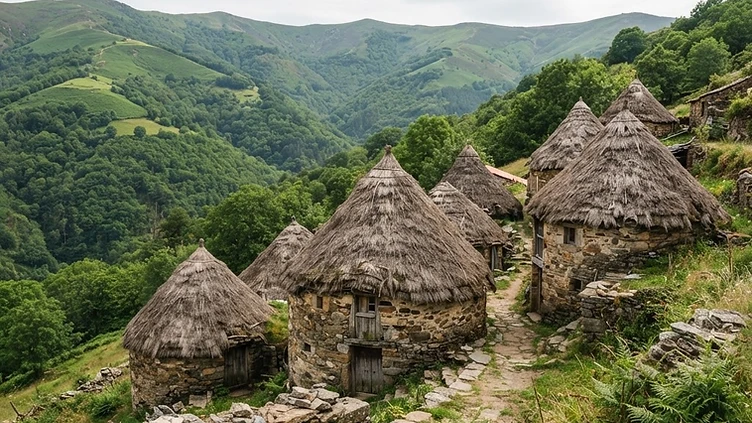
The single reason to come to the Ancares. Come in daylight; the road up is not one to drive at night.
The last architecture of its kind in Spain, still standing in its own village.
At a Glance
Piornedo is a hamlet at 1,100 metres in the Ancares, and it keeps the finest surviving set of pallozas — round or oval stone houses with conical thatched roofs, where family and livestock lived under one roof for warmth. Several are restored, one is a small museum, and the rest are still part of the village. The setting is bare, green and high, with chestnut trees and long views down the valley. The road up is narrow and slow. Bring cash, walk the whole hamlet in an hour, and stay if you want the evening light on the thatch.
How it got here
These pallozas belong to a pre-Roman architectural tradition that persisted in the remote high mountains of the Ancares range long after other regions adopted rectangular timber frames. The isolation of this terrain allowed the inhabitants to maintain a self-sufficient lifestyle, keeping cattle and people under a single thatched roof to withstand the harsh winters of the Lugo interior. While the administrative boundaries of Galicia shifted over centuries, these high settlements functioned as semi-autonomous units of subsistence farming. The survival of these structures demonstrates how the specific environmental constraints of the Cantabrian mountains dictated the domestic organization of the mountain communities until the late twentieth century.
Where it sits
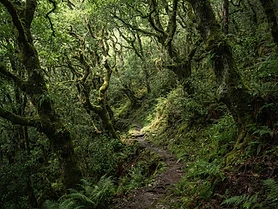
The village sits at the head of a glacial valley where the altitude prevents the growth of cereal crops and pushes the treeline toward scrub and chestnut. Deep snow often blocks the mountain passes during winter months, and the narrow road requires slow passage through dense thickets of oak and fern. The light shifts rapidly against the dark slate walls and straw roofs of the dwellings. Summer heat fails to penetrate this height, keeping the slopes cool even when the lower valleys reach intense temperatures. Quiet descends once the sun drops behind the granite peaks and the valley floor loses the day.
What to eat and drink
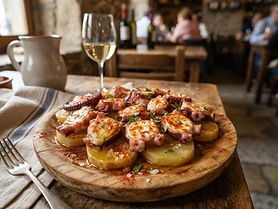
Caldo gallego provides the necessary warmth, a thick soup of white beans, potatoes, chorizo, and turnip greens known as grelos. Lacón con grelos brings boiled pork shoulder together with those same greens, salted and pressed. Slices of empanada contain fillings of cod or pork loin within a dense crust of wheat flour. Local producers supply artisanal cheeses made from the milk of cows grazing the high mountain pastures. To drink, wine from the nearby Ribeira Sacra provides a sharp contrast to the heavy stews, often poured into ceramic bowls rather than glasses in the traditional style.
Galicia: the whole region
Galicia is wet, green, cheap and unlike anywhere else in Spain: a drowned coast of rias, granite villages, seafood that justifies the trip on its own, and Santiago at the middle of it. The rain is not a risk, it is a certainty — plan…
Minimum 5 days · better 8-10 days · deep 2 weeks
In Galicia




In Galicia


In Galicia





Other Worth a Detour in Galicia



Logistics are verified only. We don't publish schedules we haven't confirmed.
Experiences worth booking ahead
Spain Field Guide may earn a commission when you book through selected links. Recommendations are editorial and independent of commission.
Ready to build Piornedo into a trip?
You've found a place worth going. When you're ready to turn discovery into an itinerary, Travel Itinerary Co picks up where the Field Guide leaves off — with your saved places already in hand.
Build this into a tripContinues on Travel Itinerary Co
Spain Field Guide may earn a commission when you book through selected links. Recommendations are editorial and independent of commission.