Ancares, Os
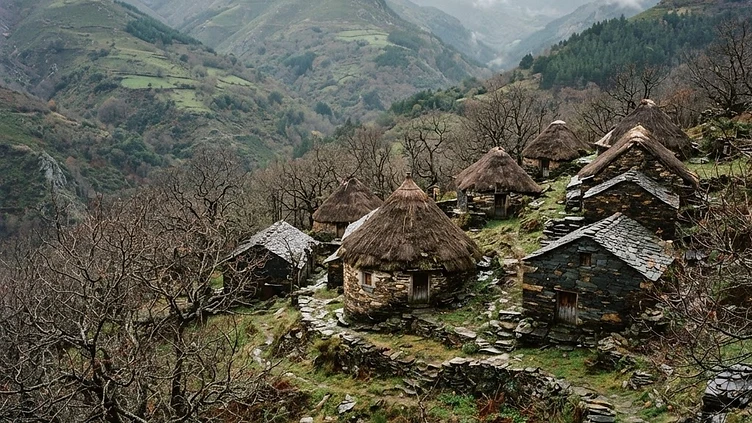
Two days of short drives and short walks. Piornedo alone justifies the detour; the rest of the range is for people who like being cold and left alone.
The last round thatched houses in Spain, in mountains that are genuinely empty outside August.
At a Glance
- — You need reliable weather or a full restaurant at every meal.
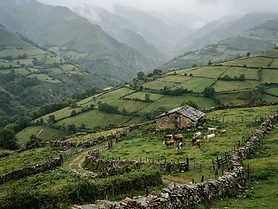
Os Ancares is the range separating Lugo from León, and it holds the oldest surviving rural architecture in Spain: the palloza, a round stone house with a conical thatched roof that kept people and cattle under one roof. Piornedo, on the Galician side, has the best-preserved group of them. The León side around Candín is higher, wetter and emptier. The roads are narrow and slow, the villages sit near a thousand metres, and winter is real — snow, closed passes, shuttered bars. Come between June and October for chestnut woods, river pools and walking, and expect to eat pork, chestnuts and cheese because there is not much else. That is the point of the place.
How it got here
These mountains once formed a natural frontier between the Kingdom of Galicia and the Kingdom of León. The isolation allowed specific rural structures to survive long after they vanished elsewhere. The palloza, a circular dwelling with a thatched roof, originated in the Iron Age and served as a domestic space for families and their livestock until the twentieth century. Piornedo and Campo del Agua contain the most intact examples of this construction. The relative inaccessibility of the mountain passes preserved these Celtic-influenced patterns of life, creating a distinct cultural buffer zone that resists the standard architectural shifts seen in the lowlands of Lugo and León.
Where it sits
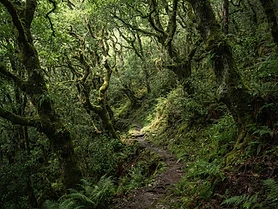
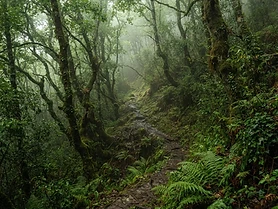
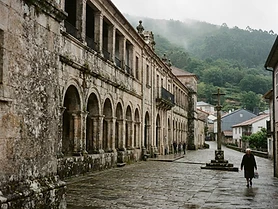
The terrain consists of high, rugged ridges separating Galicia from the plateau of León. Deep river valleys cut through slate and granite, while deciduous forests of oak and chestnut dominate the lower slopes. Snowfall closes the high mountain passes during winter months, forcing local transit to rely on narrow, winding roads through the valleys. Summer brings cool temperatures and clear light, though the villages remain quiet even during the peak of the season. Heavy mist often rolls across the high meadows, blurring the border between the two provinces and highlighting the austere character of the landscape.
What to eat and drink
Dietary tradition centers on caloric density required by the high altitude and winter cold. Caldo gallego, a thick soup of turnip greens, potatoes, white beans and pork fat, acts as the primary sustenance. Residents cure botillo, a heavy sausage made from chopped pork ribs and meat seasoned with pimentón, which requires slow simmering. Meals often include local honey and small, ripened cow cheeses from the dairy farms of the valley. Chestnuts provide a staple starch, roasted or incorporated into stews. The region produces little wine, so local inhabitants rely on robust red table wines from the nearby valleys of the Bierzo.
Galicia: the whole region
Galicia is wet, green, cheap and unlike anywhere else in Spain: a drowned coast of rias, granite villages, seafood that justifies the trip on its own, and Santiago at the middle of it. The rain is not a risk, it is a certainty — plan…
Minimum 5 days · better 8-10 days · deep 2 weeks
In and around Ancares, Os





In Galicia




In Galicia


In Galicia





Logistics are verified only. We don't publish schedules we haven't confirmed.
Appears In
Ready to build Ancares, Os into a trip?
You've found a place worth going. When you're ready to turn discovery into an itinerary, Travel Itinerary Co picks up where the Field Guide leaves off — with your saved places already in hand.
Build this into a tripContinues on Travel Itinerary Co
Spain Field Guide may earn a commission when you book through selected links. Recommendations are editorial and independent of commission.