Navia de Suarna
Worth twenty minutes and a coffee. Do not build a day around it.
A working town at the door of the mountains, with the last services before the emptiness.
At a Glance
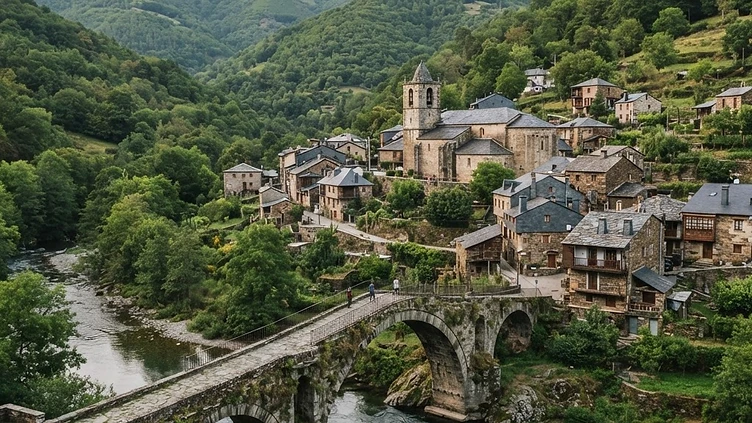
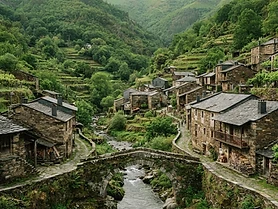
Navia de Suarna is a low, quiet town on the upper Navia river, at the northern approach to the Ancares, with a five-arch medieval bridge, a Romanesque church and a market tradition that now amounts to very little. It is the last place with a shop, a pharmacy and a petrol station before the range gets properly empty, which is its practical value. Stop for the bridge and the river, then keep going uphill.
How it got here
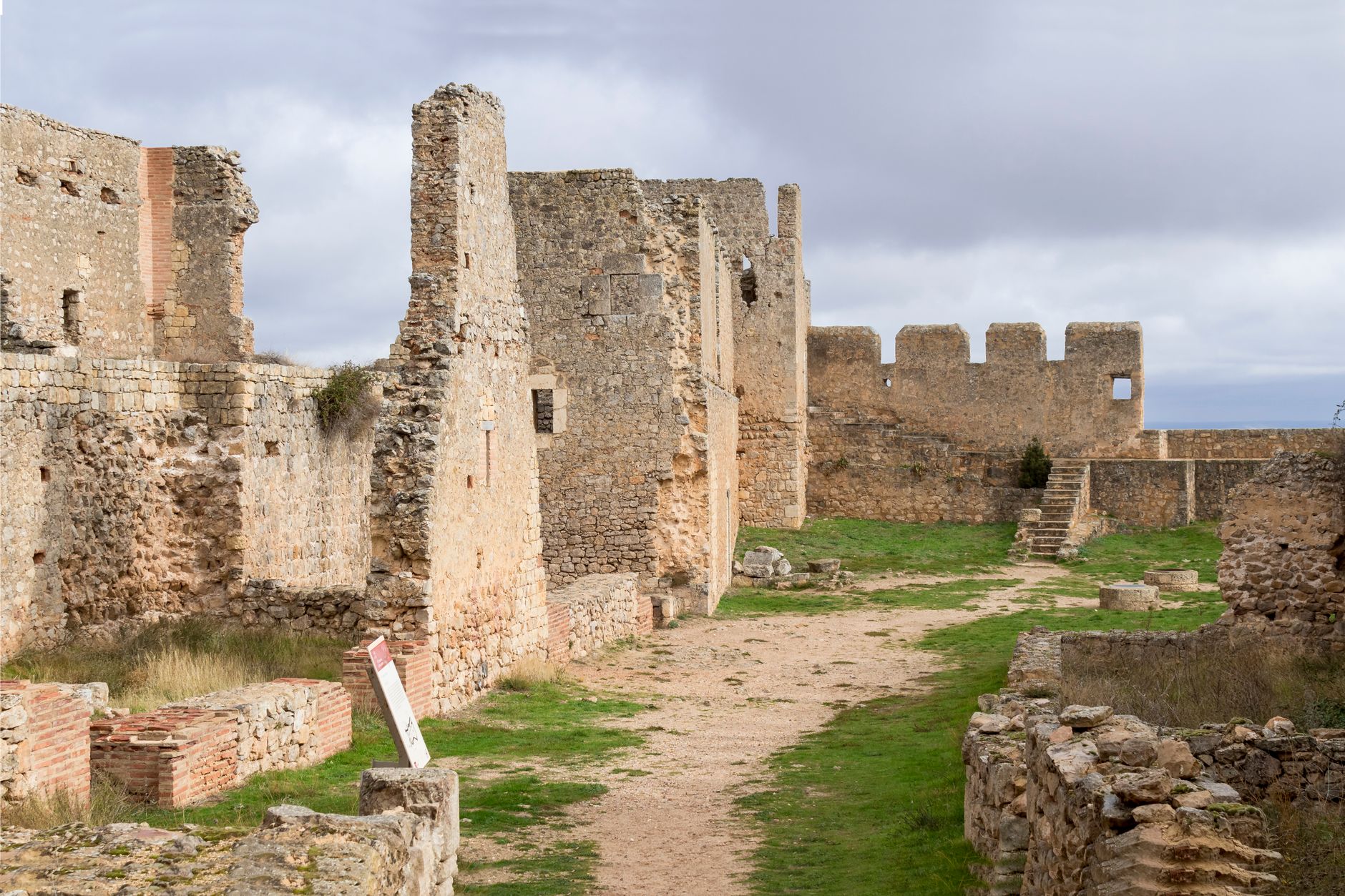
The history of these river valleys tracks the slow consolidation of feudal power in the mountains of eastern Lugo. Navia de Suarna formed part of the domain of the Counts of Altamira who maintained control over the valley paths connecting the Galician interior to the Castilian plains. The stone bridge crossing the river survives as a relic of these medieval transit routes that linked the coast with the high passes. Local authority remained divided between monastic land grants and minor noble houses through the late Middle Ages. Today the quiet streets bear the marks of this slow transition from a fortified defensive outpost to a marginal administrative station in the mountains.
Where it sits
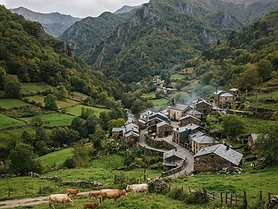
Deep, V-shaped valleys carved by the Navia river define the geography here. Dense deciduous forests of oak and chestnut climb the mountain flanks, giving way to high pastures as the path rises toward the Ancares range. The winters bring heavy snow that shuts down the high mountain crossings for weeks. During autumn, the valley floor fills with morning mist and the damp cold of the Atlantic influence. Traffic remains light because the roads are narrow, winding, and steep. It provides a terminal point for supplies before the road surface deteriorates into the remote highland tracks of the interior.
What to eat and drink
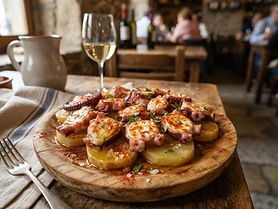
Caldo gallego remains the constant dish of these high valleys, a thick soup made from local potatoes, cabbage, and dried pork fat to sustain the cold winters. Visitors find lacón con grelos, a plate of cured pork shoulder boiled with turnip tops and chorizo. The mountain pastures produce distinctive cow milk cheeses, dense and salty, often eaten with honey. For those traveling in autumn, the harvest yields roasted chestnuts and game meats like wild boar or venison. A glass of local red wine from the Ribeira Sacra or a simple white Albariño matches the heavy, fat-rich cooking of the Lugo mountains.
Galicia: the whole region
Galicia is wet, green, cheap and unlike anywhere else in Spain: a drowned coast of rias, granite villages, seafood that justifies the trip on its own, and Santiago at the middle of it. The rain is not a risk, it is a certainty — plan…
Minimum 5 days · better 8-10 days · deep 2 weeks
In Galicia




In Galicia


In Galicia





Other Quick Stop in Galicia





Logistics are verified only. We don't publish schedules we haven't confirmed.
Experiences worth booking ahead
- Saona Island, Mano Juan & Canto de la Playa Away from Crowds5.0 (168)8 hrsFrom €109
- Rincon de la Vieja/Santa Maria Hike & Hot Springs5.0 (25)From €87
- From Punta Cana: Saona Island & Altos de Chavon Day Trip with Lunch and Open Bar4.2 (360)10 hrsFrom €90
- Morro de São Paulo Tour, Leaving Salvador-Bahia.4.6 (19)From €75
Spain Field Guide may earn a commission when you book through selected links. Recommendations are editorial and independent of commission.
Ready to build Navia de Suarna into a trip?
You've found a place worth going. When you're ready to turn discovery into an itinerary, Travel Itinerary Co picks up where the Field Guide leaves off — with your saved places already in hand.
Build this into a tripContinues on Travel Itinerary Co
Spain Field Guide may earn a commission when you book through selected links. Recommendations are editorial and independent of commission.