Triacastela

A quiet rural stop with real Galician character. A good place to overnight before the last stretch.
It serves as the final gateway to the beautiful limestone landscapes leading to Sarria.
At a Glance
- — you want big city amenities
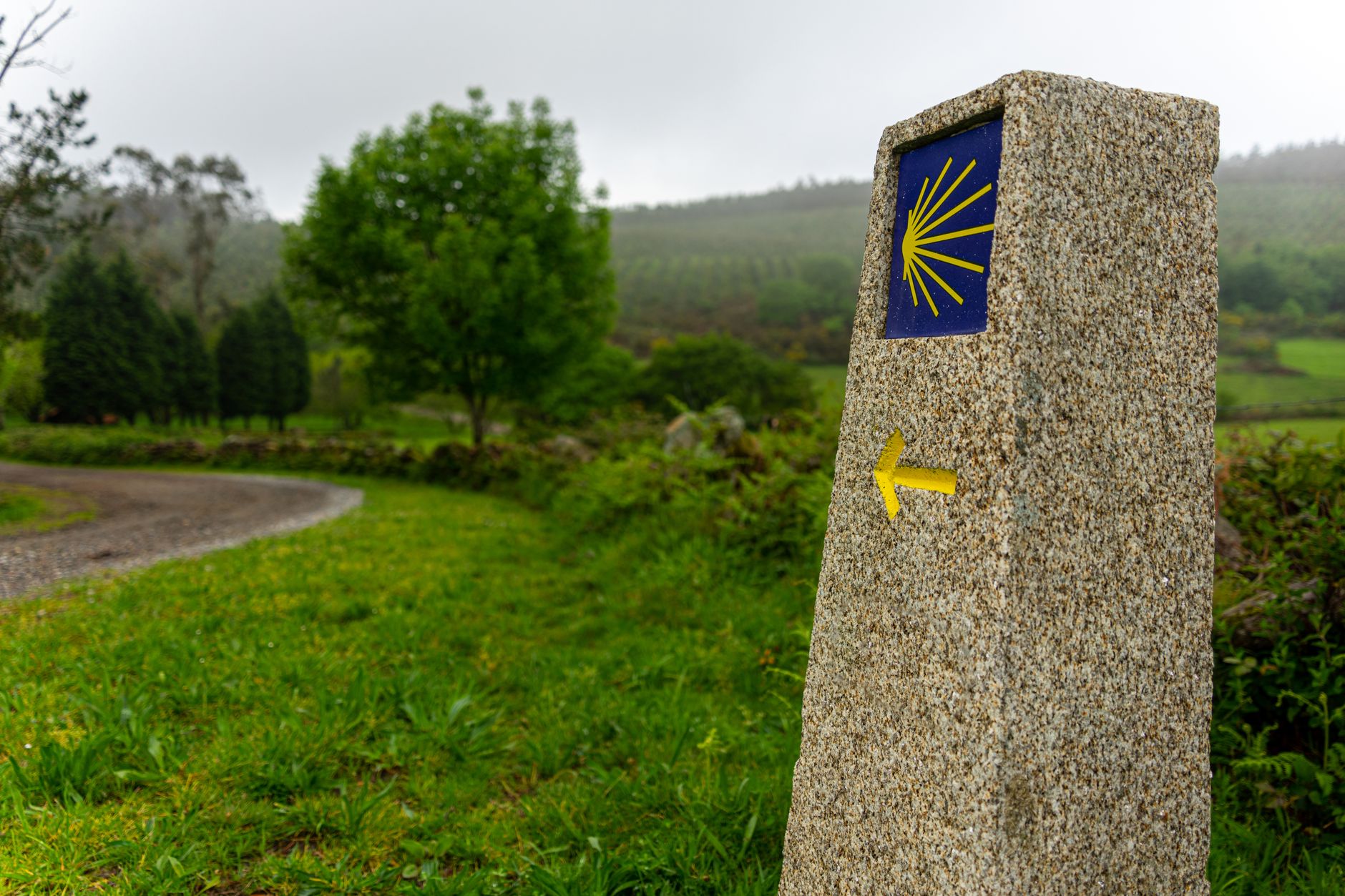
Deep in the verdant, rolling hills of Galicia, this quiet valley town marks the transition into the region’s limestone-heavy landscape. The pace here is dictated by the damp, green countryside and the steady rhythm of those trekking toward the coast. It is a place of peaceful reflection, defined by its rural simplicity and the mist that clings to the surrounding slopes in the early morning hours.
How it got here
Triacastela takes its name from the three castles that guarded the valley during the early Middle Ages though physical traces of these fortifications vanished long ago. The settlement emerged as a waypoint on the Camino de Santiago during the medieval period when pilgrims required passage through the rugged interior of the Kingdom of Galicia. Monastic influence shaped the early development of the village as monks managed the flow of travelers moving toward Compostela. These centuries of movement solidified the village as a vital transit point in the Lugo province while the surrounding rural economy relied on communal land management and subsistence agriculture that persisted until the modern era.
Where it sits
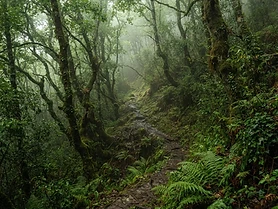
The village sits at the base of the O Cebreiro pass where the limestone mountains rise sharply from the humid Galician plateau. Rain clouds frequently gather against the valley walls to feed the thick pastures and groves of oak and chestnut trees that dominate the horizon. During the spring the landscape turns a deep saturated green while winter brings heavy mist and occasional frost that quiets the mountain roads. Movement through this terrain follows the contours of the valley floor along paths worn deep into the earth by centuries of foot traffic.
What to eat and drink
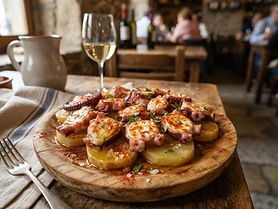
Caldo gallego provides the primary sustenance for those walking the high country. This hearty broth combines kale or cabbage with white beans and pork fat to provide warmth during cold mountain transitions. Pulpo a la gallega appears on most tables as sliced octopus tossed in olive oil and dusted with pimentón. Local bakers produce Tarta de Santiago a dense almond cake topped with powdered sugar and the imprint of the Cross of Saint James. A glass of Mencía from the nearby vineyards of the Ribeira Sacra offers a tart red wine that cuts through the richness of the local lard and pork.
Galicia: the whole region
Galicia is wet, green, cheap and unlike anywhere else in Spain: a drowned coast of rias, granite villages, seafood that justifies the trip on its own, and Santiago at the middle of it. The rain is not a risk, it is a certainty — plan…
Minimum 5 days · better 8-10 days · deep 2 weeks
In Galicia




In Galicia


In Galicia





Linked from elsewhere
Entries that name this place in their own nearby lists.
Logistics are verified only. We don't publish schedules we haven't confirmed.
Ready to build Triacastela into a trip?
You've found a place worth going. When you're ready to turn discovery into an itinerary, Travel Itinerary Co picks up where the Field Guide leaves off — with your saved places already in hand.
Build this into a tripContinues on Travel Itinerary Co
Spain Field Guide may earn a commission when you book through selected links. Recommendations are editorial and independent of commission.