Camino Finisterre–Muxía
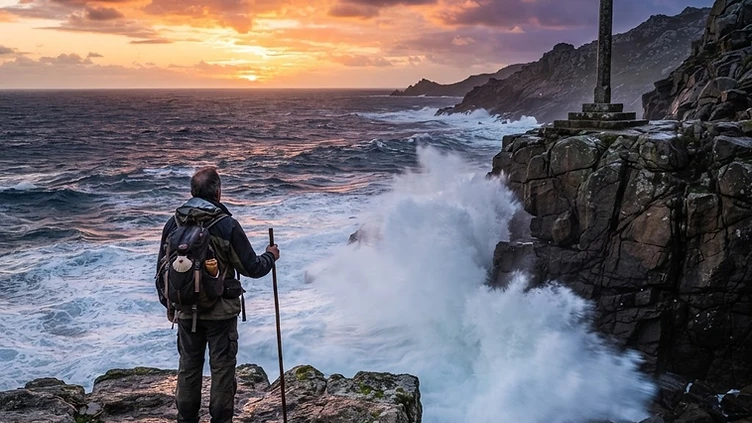
The perfect epilogue to any other Camino. Three days to Finisterre, one more to Muxía, and a bus back. Only do it if you have the days — but if you do, you should.
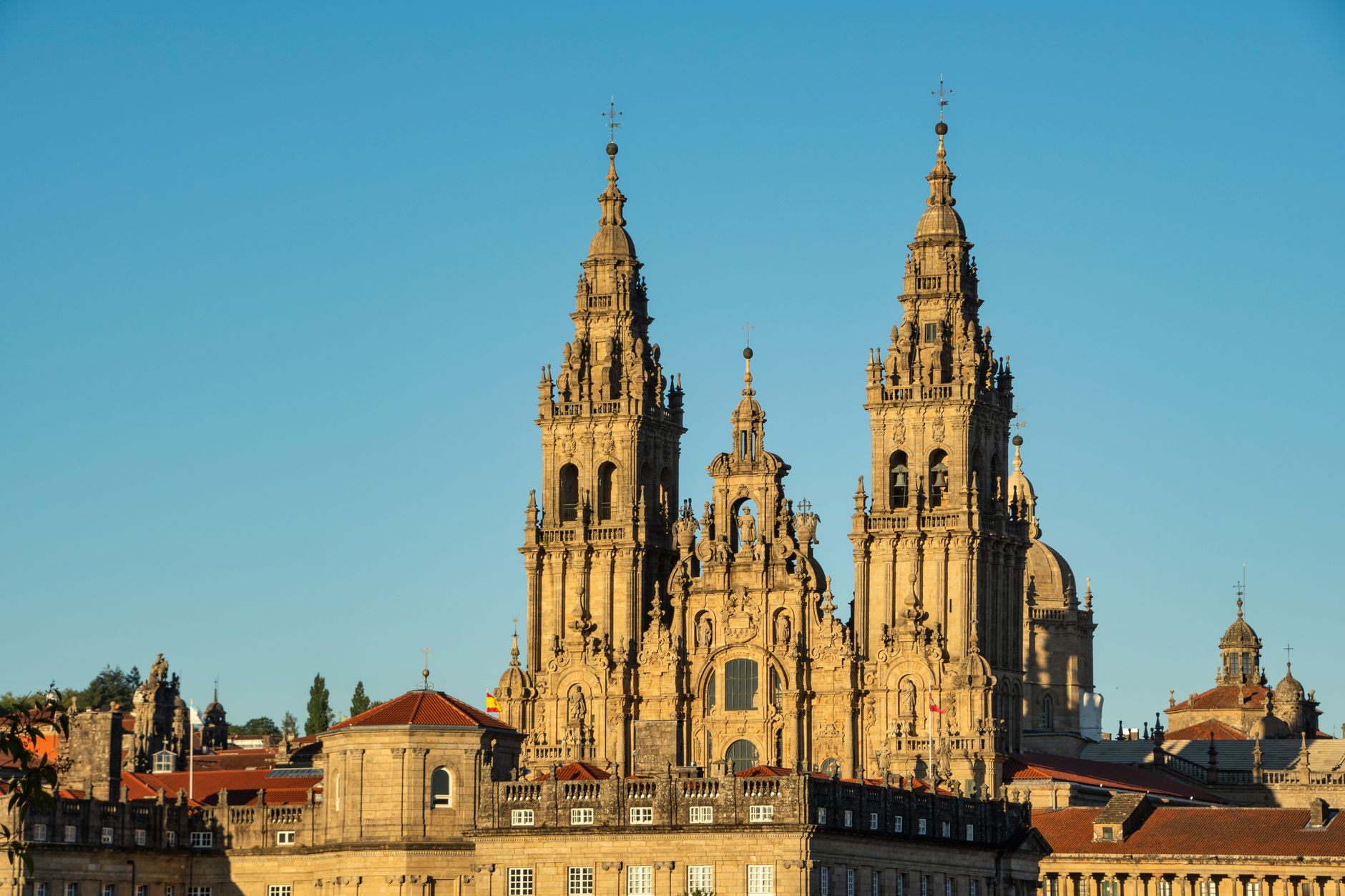
The only Camino that doesn't end in Santiago — it starts there. Pilgrims who've reached Santiago keep walking west to Finisterre (the end of the world) and the shrine at Muxía, finishing at the Atlantic.
At a Glance
- — Your trip ends at Santiago
- — You're pressed for time
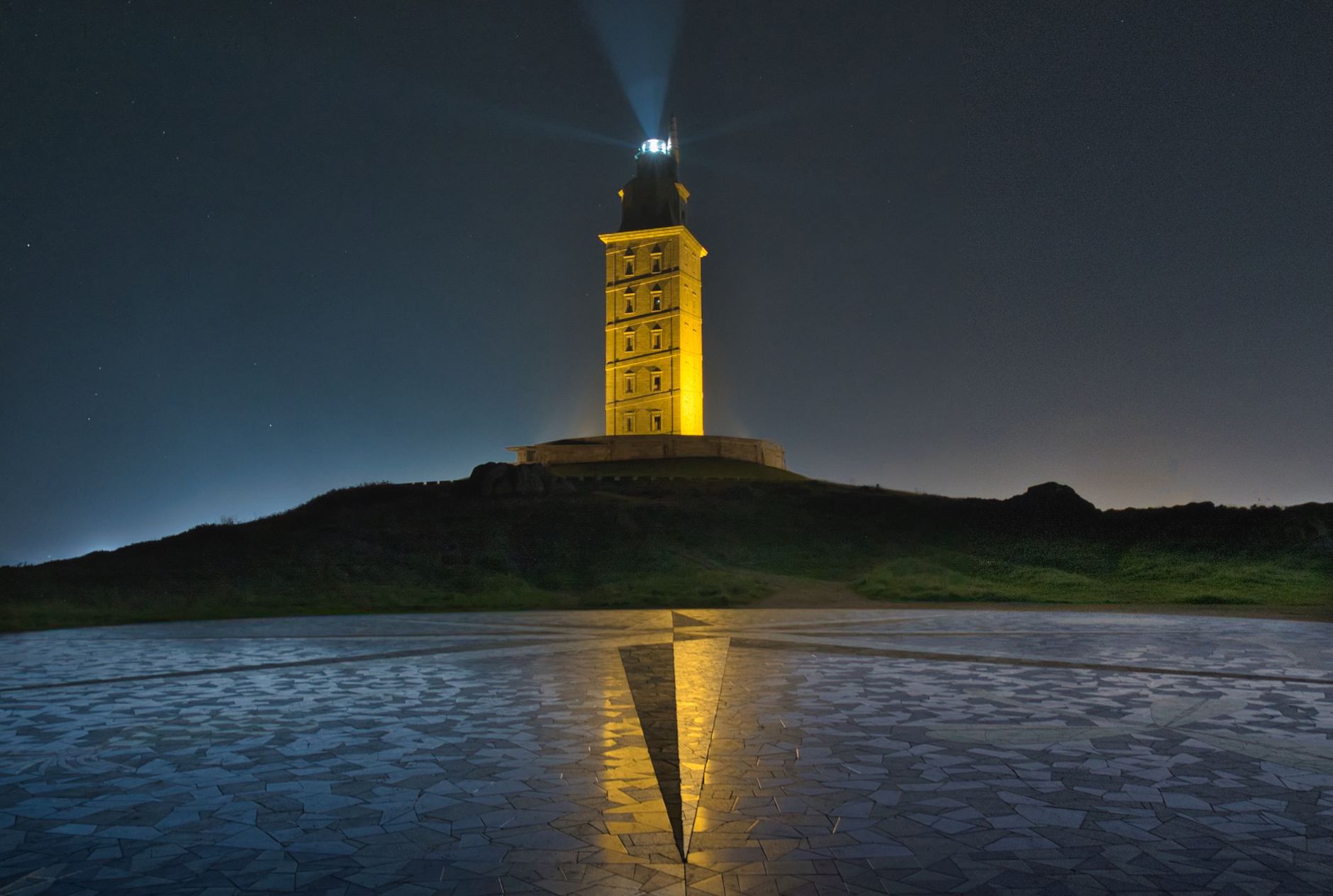
The Camino Finisterre–Muxía is the only route that runs away from Santiago rather than toward it. Pilgrims who've completed another route keep walking three days west to the Atlantic at Fisterra — the Roman end of the world — and one more day to the clifftop shrine at Muxía, then bus back to Santiago. It's an epilogue, not a Camino in itself: short, green, and quietly ceremonial, ending with your boots in the ocean. Build the four days into your plan if you possibly can; it's the most satisfying way to close any Camino.
How it got here
Finisterre and Muxía formed the western reach of the Roman world, a jagged edge where the land fell away into the dark Atlantic. Ancient cartographers identified the cape as the end of the earth, a threshold that drew travelers long before the arrival of the Camino de Santiago. Medieval pilgrims extended their journey to these shrines to venerate the image of the Virgin at Muxía and the wooden icon in Fisterra. The path served as a final stage of penance, connecting the burial site of the apostle in the east to the raw, untamed maritime landscape of the western coast.
Where it sits
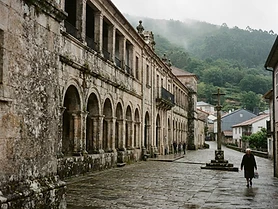
The terrain transitions from the rolling green hills of the Galician interior to the harsh granite cliffs of the Costa da Morte. Eucalyptus forests and small stone farmsteads define the path until the Atlantic air turns the vegetation into low, salt-hardened scrub. Mist clings to the valleys throughout the year, and the winter months bring gale-force winds off the ocean. Trails remain quiet compared to the final segments of the French Way, offering a stark contrast to the bustle of Santiago as the landscape opens to the vast horizon of the ocean.
What to eat and drink
Galicia produces some of the most distinct seafood in the country, drawn directly from the cold currents of the Atlantic. Pulpo á feira, octopus boiled in copper pots and dressed with coarse salt, paprika, and olive oil, forms the core of the local diet. Empanada gallega, a heavy pie filled with cockles or cod and onions, provides essential fuel for the long walking days. Albariño, a crisp white wine grown on granite soils in the nearby Rías Baixas, cuts through the richness of the shellfish and serves as the standard accompaniment at every table.
Galicia: the whole region
Galicia is wet, green, cheap and unlike anywhere else in Spain: a drowned coast of rias, granite villages, seafood that justifies the trip on its own, and Santiago at the middle of it. The rain is not a risk, it is a certainty — plan…
Minimum 5 days · better 8-10 days · deep 2 weeks
What's Nearby

Pair It With


In Galicia




In Galicia


In Galicia





Logistics are verified only. We don't publish schedules we haven't confirmed.
Ready to build Camino Finisterre–Muxía into a trip?
You've found a place worth going. When you're ready to turn discovery into an itinerary, Travel Itinerary Co picks up where the Field Guide leaves off — with your saved places already in hand.
Build this into a tripContinues on Travel Itinerary Co
Spain Field Guide may earn a commission when you book through selected links. Recommendations are editorial and independent of commission.