Roman Aqueduct of Segovia

The reason to go to Segovia. Walk its full length through the old town, see it lit up at night, then eat the cochinillo.
The best-preserved Roman monument in Spain — a 167-arch granite aqueduct, 28m tall, built without mortar, still standing after 2,000 years.
At a Glance
- — You're not doing a Madrid day trip
Carved from rugged granite blocks, this 2,000-year-old marvel spans the heart of the city without a single drop of mortar holding its 167 arches in place. Standing nearly thirty meters tall, the structure commands the skyline and serves as a testament to the engineering dominance of Rome. Walking its full length as the sun dips below the horizon, with the stone glowing orange, provides the best vantage point before retreating into the nearby alleys for a plate of roast suckling pig.
How it got here
Engineers constructed this granite conduit during the first or second century to transport water from the Fuenfría river to the upper fortress. It carried water across the deep valley for centuries until late in the twentieth century. The masonry relies on precise balance and the weight of stacked stone rather than mortar. While the exact decade of its commission remains unknown, it mirrors the design of monuments built across the Iberian Peninsula under Roman provincial rule. The structure survived the Reconquista and the shifts in regional power that transformed Segovia into a crown city of Castile, enduring through the centuries as the central artery of the mountain community.
Where it sits
Segovia sits on a rocky ridge between the Eresma and Clamores rivers, elevated above the dry, rolling plains of the Meseta Central. The Guadarrama mountains rise to the south, trapping cold winds and bringing heavy frosts during the winter months. Granite dominates the local geology, providing the foundation for the city walls and the cathedral. The approach from Madrid requires climbing into the sierra, where the horizon clears to reveal the vast, exposed plateau. During the summer, the sun beats down on the open stone, but the evenings bring a sharp, crisp drop in temperature that lingers until dawn.
What to eat and drink
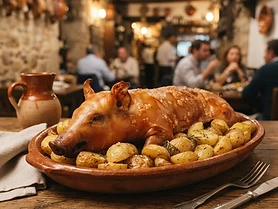
Cochinillo asado, a suckling pig roasted in a wood-fired oven until the skin turns thin and crisp, defines the local kitchen. The meat remains tender and requires only salt for seasoning. Thick, hearty soups like sopa castellana, prepared with bread, garlic, and pimentón, provide warmth during the long winters. Punctuated by the influence of the surrounding highlands, meals often finish with ponche segoviano, a dense sponge cake layered with cream and marzipan. Wine from the nearby Ribera del Duero provides the standard pairing for these heavy roasts, grounding the meal in the flavors of the surrounding Castilian earth.
Castilla y León: the whole region
The largest region in Spain, and the one that most rewards a car: a plateau of walled cities, Romanesque churches and vineyards, with Salamanca, León, Burgos and Segovia as four genuine anchors spread across four hundred kilometres. There…
Minimum 5 days · better 8-10 days · deep 2 weeks
Pair It With



In Castilla y León


In Castilla y León


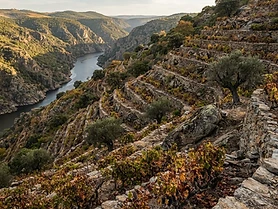


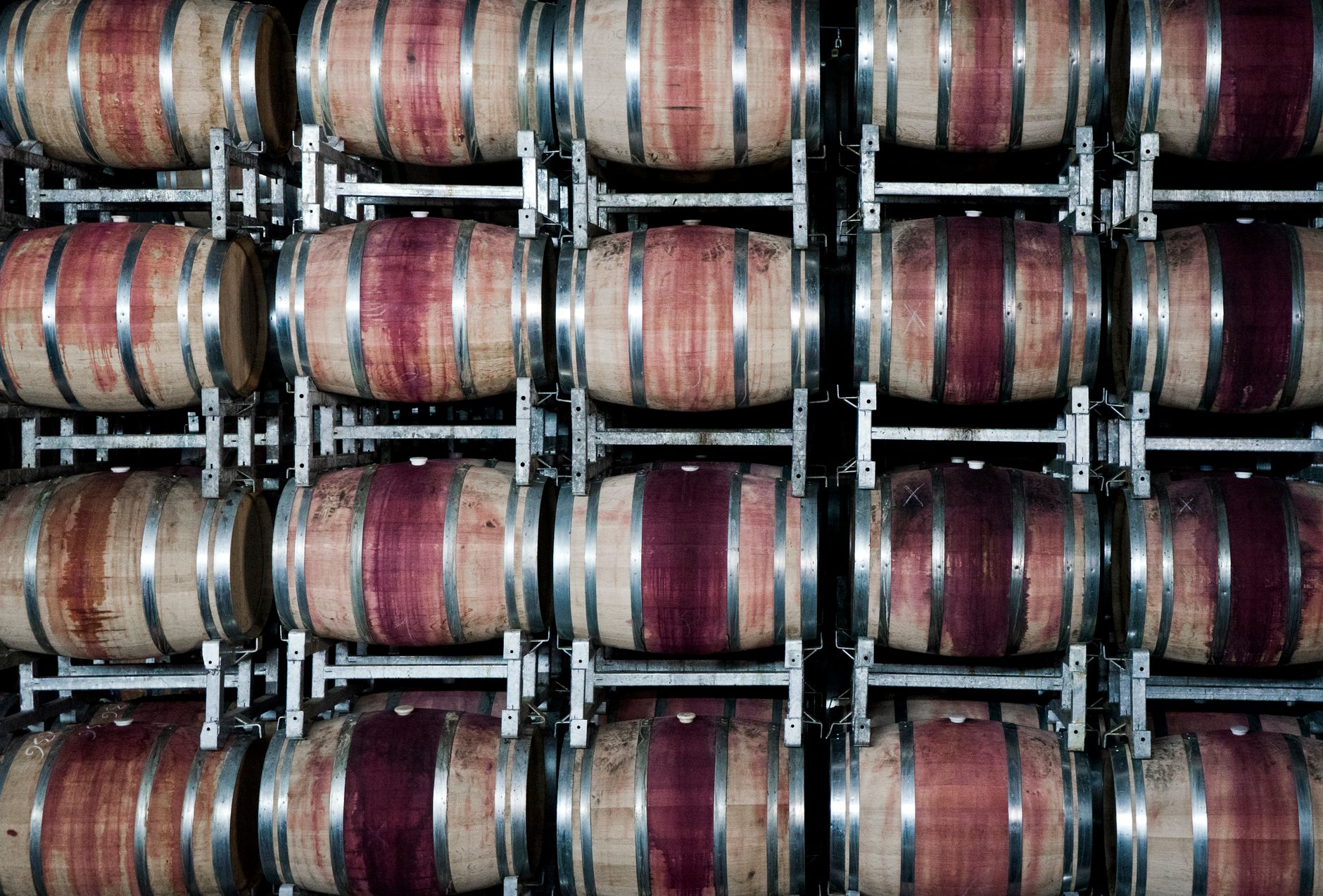

In Castilla y León


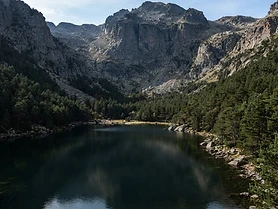


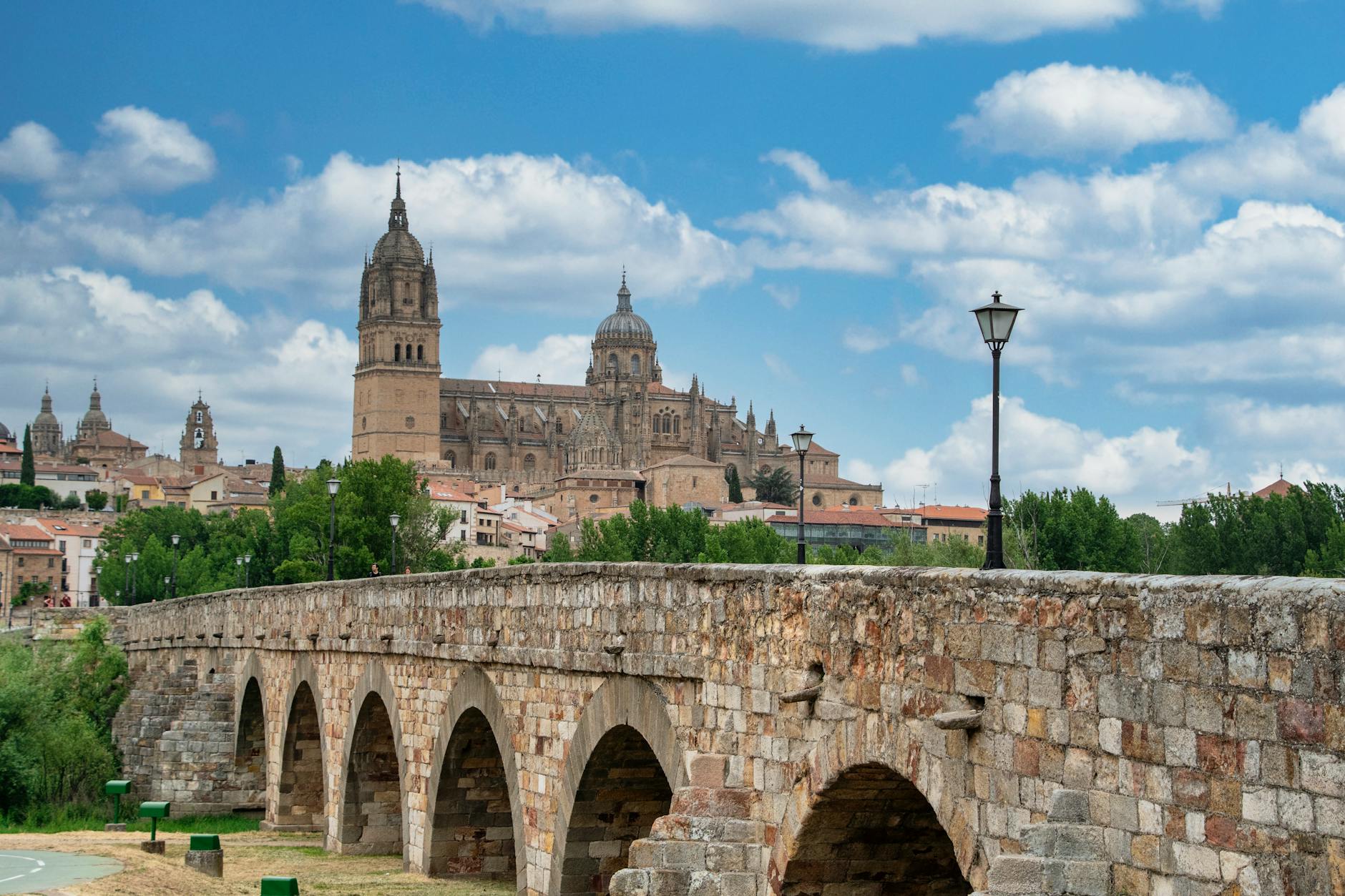






Linked from elsewhere
Entries that name this place in their own nearby lists.
Logistics are verified only. We don't publish schedules we haven't confirmed.
Appears In
Experiences worth booking ahead
- Three Cities in One Day: Segovia, Avila and Toledo from Madrid4.8 (11,350)12 hrsFrom €81
- Avila & Segovia Tour with Tickets to Monuments from Madrid4.8 (12,152)9 hrsFrom €63
- From Madrid: Toledo & Segovia Day Tour with Lunch & Tickets4.6 (5,949)11 hrsFrom €38
- Madrid to Avila & Segovia: Full-Day Highlights Tour4.6 (712)9 hrsFrom €45
Spain Field Guide may earn a commission when you book through selected links. Recommendations are editorial and independent of commission.
Ready to build Roman Aqueduct of Segovia into a trip?
You've found a place worth going. When you're ready to turn discovery into an itinerary, Travel Itinerary Co picks up where the Field Guide leaves off — with your saved places already in hand.
Build this into a tripContinues on Travel Itinerary Co
Spain Field Guide may earn a commission when you book through selected links. Recommendations are editorial and independent of commission.