Roman Bridge of Salamanca
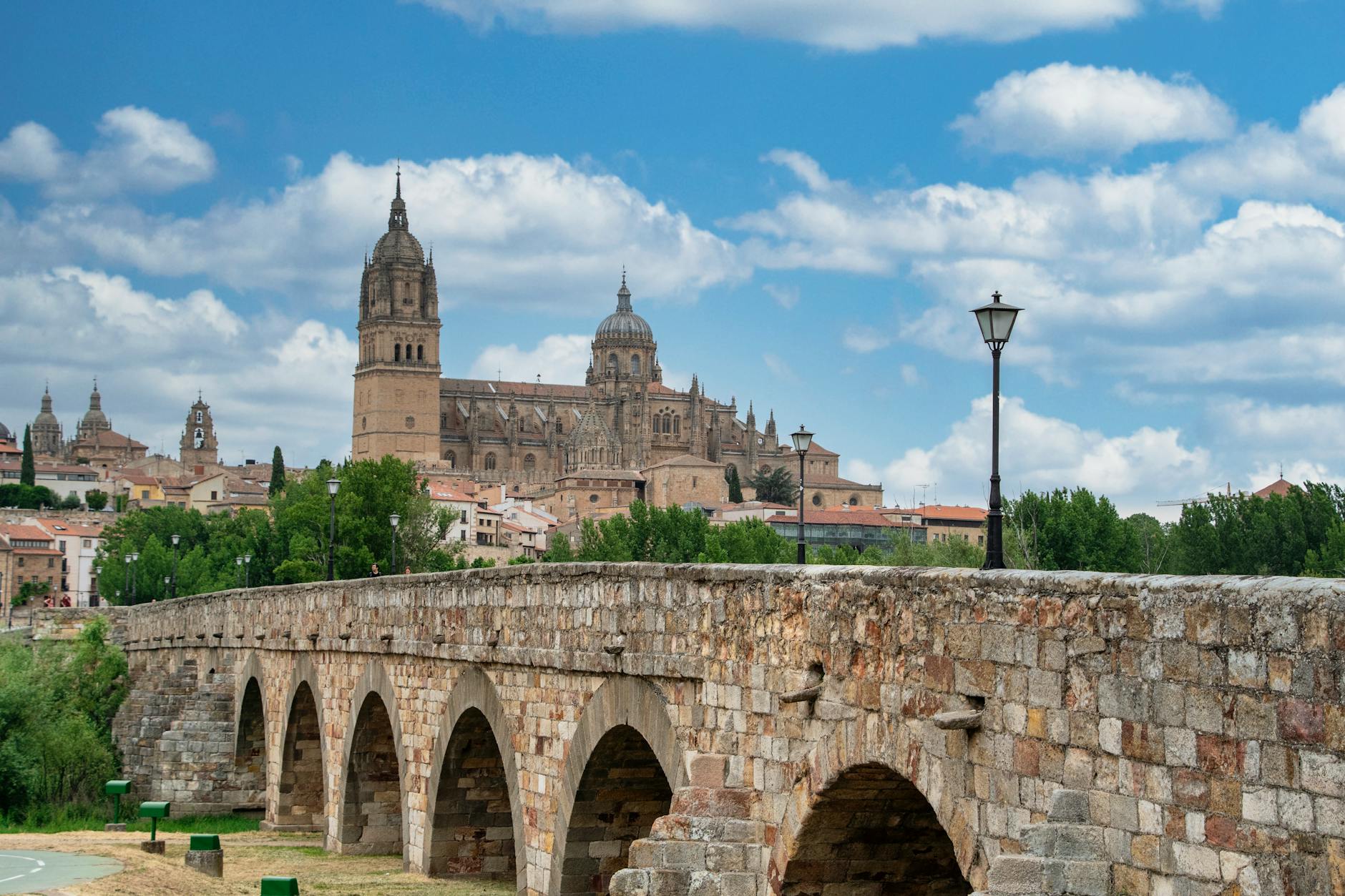
Walk it at sunset for the cathedral-towers view reflected in the river. The bull is the one Lazarillo de Tormes tricked. Free.
A 1st-century Roman bridge (15 of its arches survive) over the Tormes, with a stone bull at its foot — the Via de la Plata crossing into the city.
Plaza Mayor de Salamanca · Old & New Cathedrals of Salamanca
At a Glance
- — You're short on time in the old town
The Tormes River flows slowly beneath these ancient arches, a bridge that has stood as the city's gateway since Roman times. As dusk falls, the cathedral towers cast long reflections in the water, and the stone bull at the entrance waits as it has for generations. It is a place for a slow walk, allowing you to transition from the rural landscape on the far bank into the heart of the city, feeling the connection to the travelers who have walked this exact path for two thousand years.
How it got here
Construction of this bridge spans the first century of the Roman Empire, linking Salamanca to the Vía de la Plata, a critical route connecting the gold mines of the northwest to the interior. Granite blocks cut during the Roman period comprise the original piers. Subsequent centuries brought repair and modification, notably during the reign of Charles I and again in the seventeenth century following heavy floods. These stones supported travelers, armies, and merchants crossing the Tormes River for two millennia. The bridge defines the southern entrance to the city, marking the point where the reach of the Roman road met the urban expansion of the medieval period.
Where it sits
The Tormes River valley cuts through the rolling plateau of the southern Meseta, where the limestone and granite landscape defines the province. Summer heat turns the fields to dust and gold, while winter brings biting winds off the Sierra de Gredos. The bridge crosses from the quiet rural banks into the stone-built density of the city. Pedestrians move between the cathedral spires and the open river plains. Early mornings find the banks sparse, though the light shifts across the water as the day turns. Fog hangs low over the river during colder months, obscuring the path toward the center.
What to eat and drink
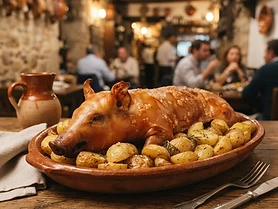
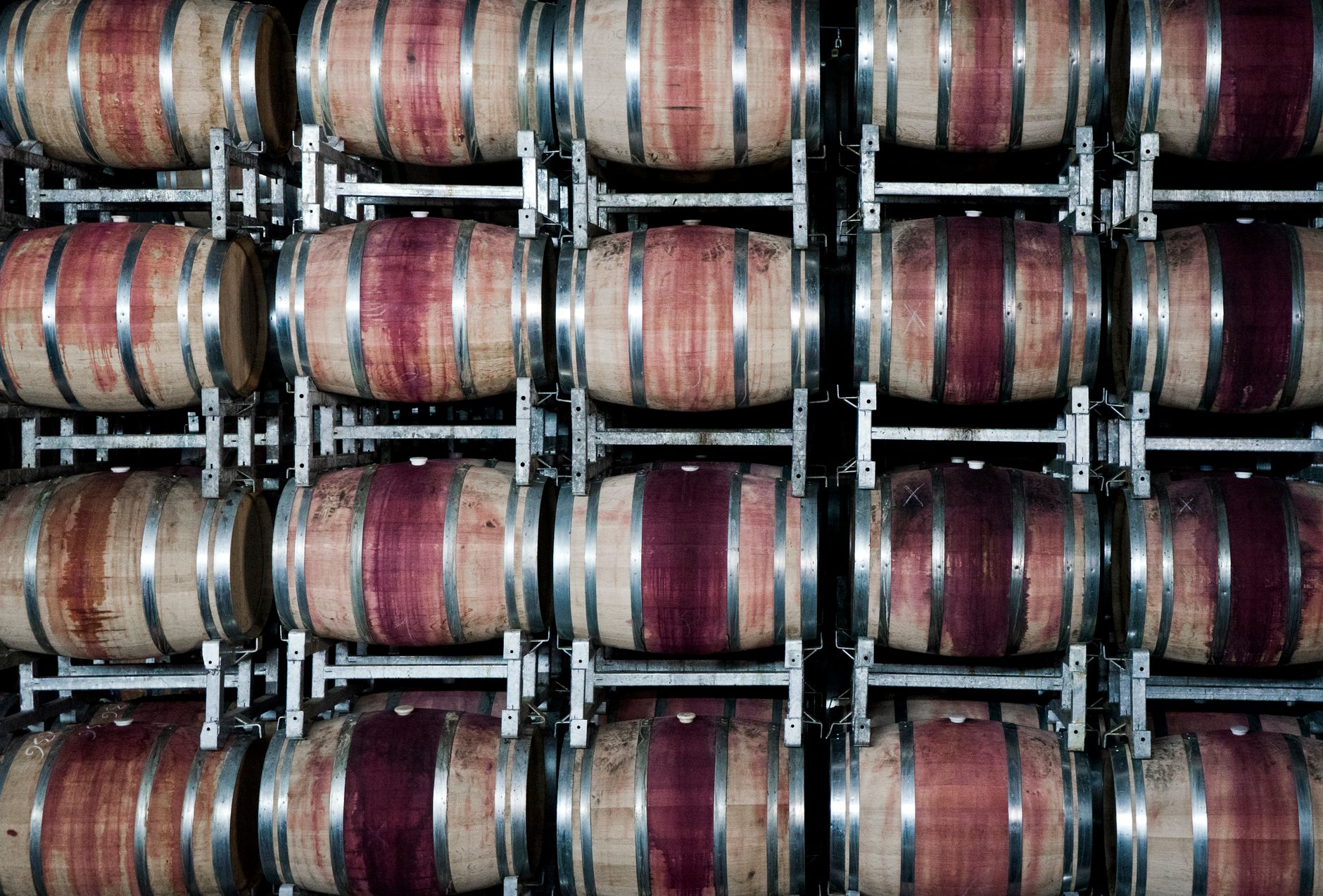
Castilian kitchens rely on the produce of the surrounding plains and the pastures of the province. Hornazo, a substantial meat pie filled with chorizo, loin, and hard-boiled eggs, belongs to the traditions of the river valley. Roast suckling pig, cochinillo asado, comes from wood-fired ovens with skin crisped by dry heat. Farinato, a rustic sausage made from breadcrumbs, flour, pork fat, and paprika, appears fried alongside eggs. Meals pair with the deep red wines of the Arribes del Duero, which draw character from the vines grown in the steep, rocky soils along the nearby border with Portugal.
Castilla y León: the whole region
The largest region in Spain, and the one that most rewards a car: a plateau of walled cities, Romanesque churches and vineyards, with Salamanca, León, Burgos and Segovia as four genuine anchors spread across four hundred kilometres. There…
Minimum 5 days · better 8-10 days · deep 2 weeks

Pair It With

In Castilla y León



In Castilla y León





In Castilla y León











Linked from elsewhere
Entries that name this place in their own nearby lists.
Logistics are verified only. We don't publish schedules we haven't confirmed.
Experiences worth booking ahead
- Salamanca Walk - History Tour4.9 (96)2 hrsFrom €26
- Visit to the Ham Factory in Salamanca. Tasting and Masterclass4.9 (89)1.3 hrsFrom €33
- From Madrid: Ávila & Salamanca Guided Tour with Wall & Cathedral4.4 (273)11 hrsFrom €69
- Avila and Salamanca : Magic and Small Group History from Madrid4.4 (81)10 hrsFrom €149
Spain Field Guide may earn a commission when you book through selected links. Recommendations are editorial and independent of commission.
Ready to build Roman Bridge of Salamanca into a trip?
You've found a place worth going. When you're ready to turn discovery into an itinerary, Travel Itinerary Co picks up where the Field Guide leaves off — with your saved places already in hand.
Build this into a tripContinues on Travel Itinerary Co
Spain Field Guide may earn a commission when you book through selected links. Recommendations are editorial and independent of commission.