Ajoblanco

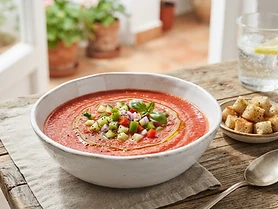
The Málaga summer soup that gazpacho gets the credit for. Drink it ice-cold with green grapes floating in it.
Málaga's almond-and-bread cold soup: ground almonds, stale bread, garlic, olive oil and water, blended silky and chilled, served with grapes and sometimes melon. A Moorish ancestor of gazpacho, creamy without any cream.
At a Glance
- — You have a nut allergy
Ground almonds, stale bread, garlic, and good olive oil blended into a pale, silky cold soup, served with green grapes floating on top for sweetness against the garlic — this is Málaga's version of the almond-and-bread soups that predate gazpacho, and arguably better than the tomato version it's often overshadowed by. It shows up on menus mainly in summer, when the cold, creamy texture, no actual cream involved, does real work against the heat. Order it chilled, not just cool, and check that the grapes are included — some kitchens skip them, which loses the contrast that makes the dish work. Skip it if you have a nut allergy; there's no safe substitution, since the almonds aren't a garnish but the entire base.
How it got here
Before the introduction of tomatoes to the Iberian Peninsula, cold soups relied on the Mediterranean staples of bread, oil, and nuts. This composition belongs to a lineage of Moorish culinary traditions that prioritized local harvests such as almonds and garlic. The preparation predates the modern gazpacho that later became synonymous with Andalusian cooking. It survived in rural households as a peasant dish that utilized dried ingredients stored through the winter. Today, its presence on menus preserves these older agricultural practices, acting as a direct link to the centuries before the arrival of New World produce transformed the regional pantry.
Where it sits
The terrain across Andalusia shifts from the rugged sierras to the fertile plains along the coast. Summer temperatures climb high enough to turn the dry, sun-scorched earth into a furnace, which forces local life to slow during the midday heat. Travelers crossing the region find relief in shaded plazas and thick-walled stone buildings. As the heat sets in, the preference for cold, dense soups becomes a practical necessity. These plates align with the natural rhythm of the climate, providing sustenance during the longest, driest months of the year when the fields produce the grapes used to garnish the bowl.
What to eat and drink
Ajoblanco arrives as a dense emulsion of crushed almonds, bread, olive oil, and garlic, finished with a cluster of green grapes to balance the pungent bite of the allium. It is the signature cold dish of Málaga province. Alongside this, the coastal diet draws heavily from the sea. Espetos, fresh sardines skewered on reeds and roasted over open wood fires, mark the beachside dining culture. Sweet Moscatel wine from the Axarquía hills provides the traditional accompaniment, its floral notes cutting through the richness of the soup and the salt of the grilled fish.
Andalusia: the whole region
The Spain most first-time visitors are picturing: the Alhambra, orange trees, sherry, and a coastline that runs from windsurfing water to resort sprawl. It is also the region people most often ruin by underestimating it. Seville and…
Minimum 5 days · better 8–10 days · deep 2 weeks

Pair It With


In Andalusia





In Andalusia


In Andalusia





















Logistics are verified only. We don't publish schedules we haven't confirmed.
Ready to build Ajoblanco into a trip?
You've found a place worth going. When you're ready to turn discovery into an itinerary, Travel Itinerary Co picks up where the Field Guide leaves off — with your saved places already in hand.
Build this into a tripContinues on Travel Itinerary Co
Spain Field Guide may earn a commission when you book through selected links. Recommendations are editorial and independent of commission.