Flamenquín
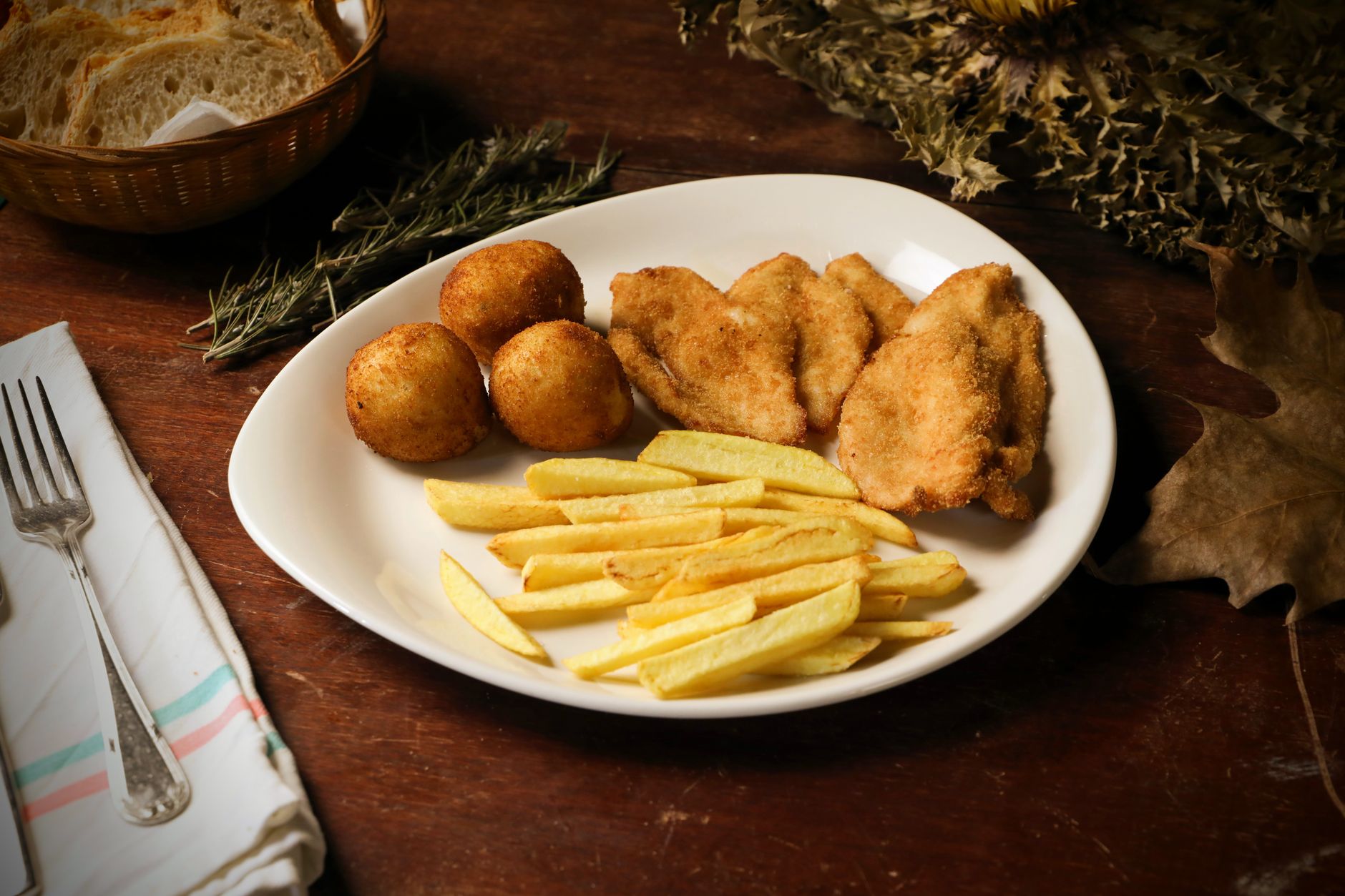
A bar snack, not a meal. Get it in a crowded Cordoban freiduría at 1pm — it's gone cold by 2.
Cordoban rolled fried snack: pork fillet wrapped around jamón serrano, breaded and deep-fried, cut into spirals. Served hot, often as a tapa with a cold beer and a smear of alioli.
At a Glance
- — You don't eat pork
Pork fillet rolled around a slice of jamón serrano, breaded, deep-fried, and sliced into a spiral — this is a Cordoban bar snack, not a dinner, and ordering it expecting a full meal is the main way to be let down by it. The best versions come out of a crowded freiduría around 1pm, still hot enough that the breading hasn't gone soft; by 2pm the kitchen's working through its backlog and quality drops fast. A smear of alioli on the side is standard and worth asking for if it doesn't arrive automatically. Pair it with a cold beer and treat it as one plate among several in a tapas round, not the centerpiece. Travelers avoiding pork should skip it outright — there's no substitution that keeps the dish recognizable as itself.
How it got here
Córdoba stands as the focal point of the Guadalquivir valley where Roman and Islamic layers define the agricultural landscape. The development of deep-fried pork preparations connects to the broader history of Andalusian oil production and the availability of olive oil for frying. Local pork traditions evolved from the intensive livestock management practiced in the surrounding sierras. While earlier culinary texts focus on courtly recipes, the flamenquín emerged within the city bars as a practical way to utilize specific cuts of pork alongside cured jamón. It persists as a culinary shorthand for the city, marking the adaptation of rural hog butchery for urban snack counters.
Where it sits
The city occupies a vast plain of wheat fields and olive groves interrupted by the northern mountain ranges of the Sierra Morena. Summers bring heat that forces life into the shade of stone courtyards and narrow passages. The Guadalquivir river cuts a wide path through the center, separating the historic core from more recent growth. Visitors arriving by train move directly from the arid landscape into the dense limestone fabric of the old town. Activity peaks during the cooler hours of the late evening, contrasting with the quiet maintained during the heat of the afternoon.
What to eat and drink
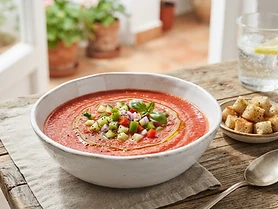
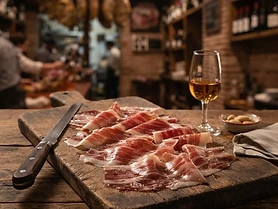
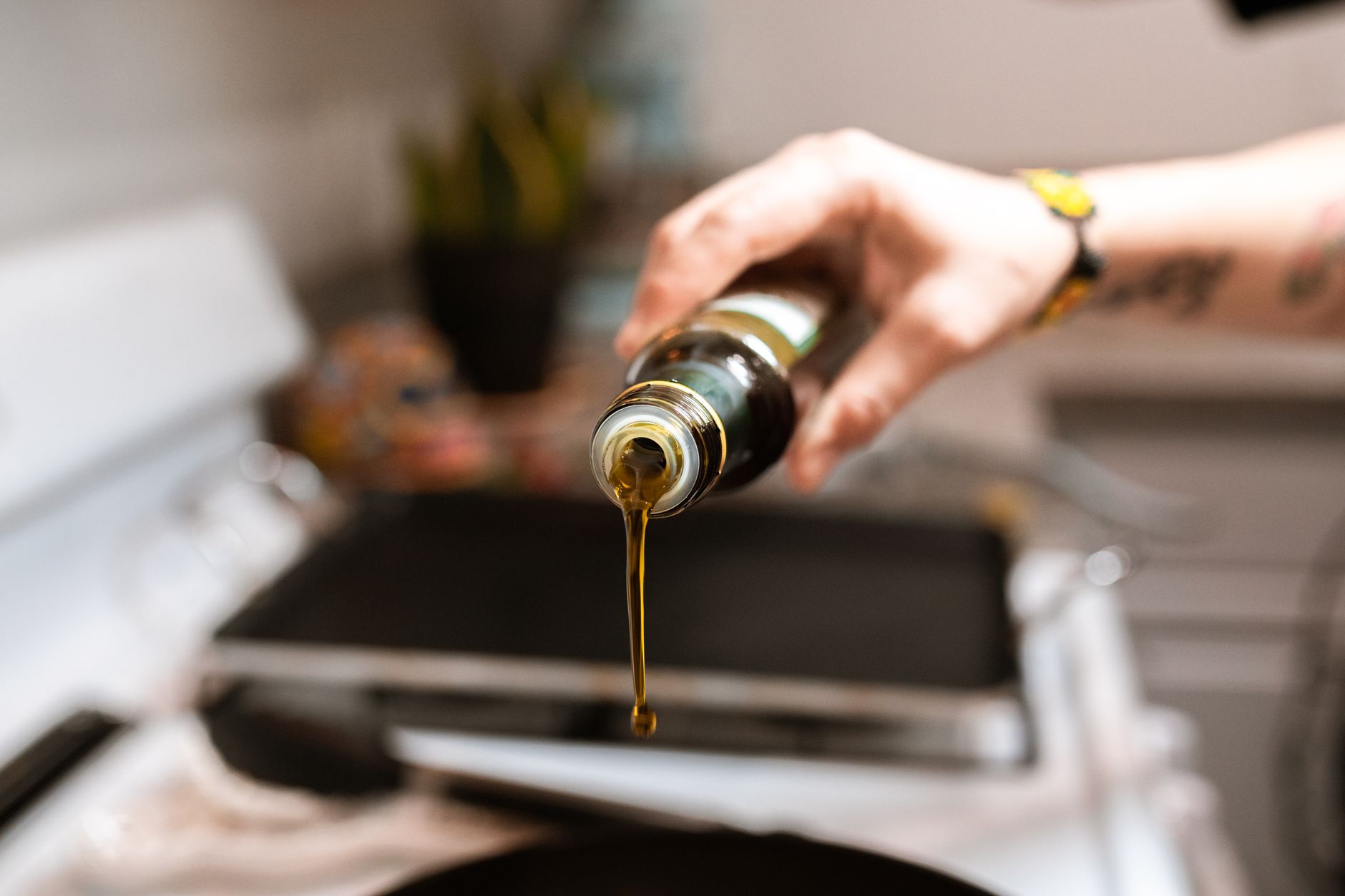
Pork fillet rolled with jamón serrano, breaded, and deep-fried forms the classic flamenquín. Salmorejo, a cold emulsion of tomato, bread, olive oil, and garlic topped with hard-boiled egg and jamón, serves as the standard accompaniment. These dishes rely on the high quality of local extra virgin olive oil produced throughout the province. Regional wine production centers on the Montilla-Moriles denomination, particularly dry fino which cuts through the richness of the fried pork. Diners round out the meal with small portions of local olives or a plate of cured jamón from the mountain pastures of the nearby Pedroches valley.
Andalusia: the whole region
The Spain most first-time visitors are picturing: the Alhambra, orange trees, sherry, and a coastline that runs from windsurfing water to resort sprawl. It is also the region people most often ruin by underestimating it. Seville and…
Minimum 5 days · better 8–10 days · deep 2 weeks

Pair It With

In Andalusia






In Andalusia


In Andalusia














Linked from elsewhere
Entries that name this place in their own nearby lists.
Logistics are verified only. We don't publish schedules we haven't confirmed.
Ready to build Flamenquín into a trip?
You've found a place worth going. When you're ready to turn discovery into an itinerary, Travel Itinerary Co picks up where the Field Guide leaves off — with your saved places already in hand.
Build this into a tripContinues on Travel Itinerary Co
Spain Field Guide may earn a commission when you book through selected links. Recommendations are editorial and independent of commission.