Espinacas con Garbanzos
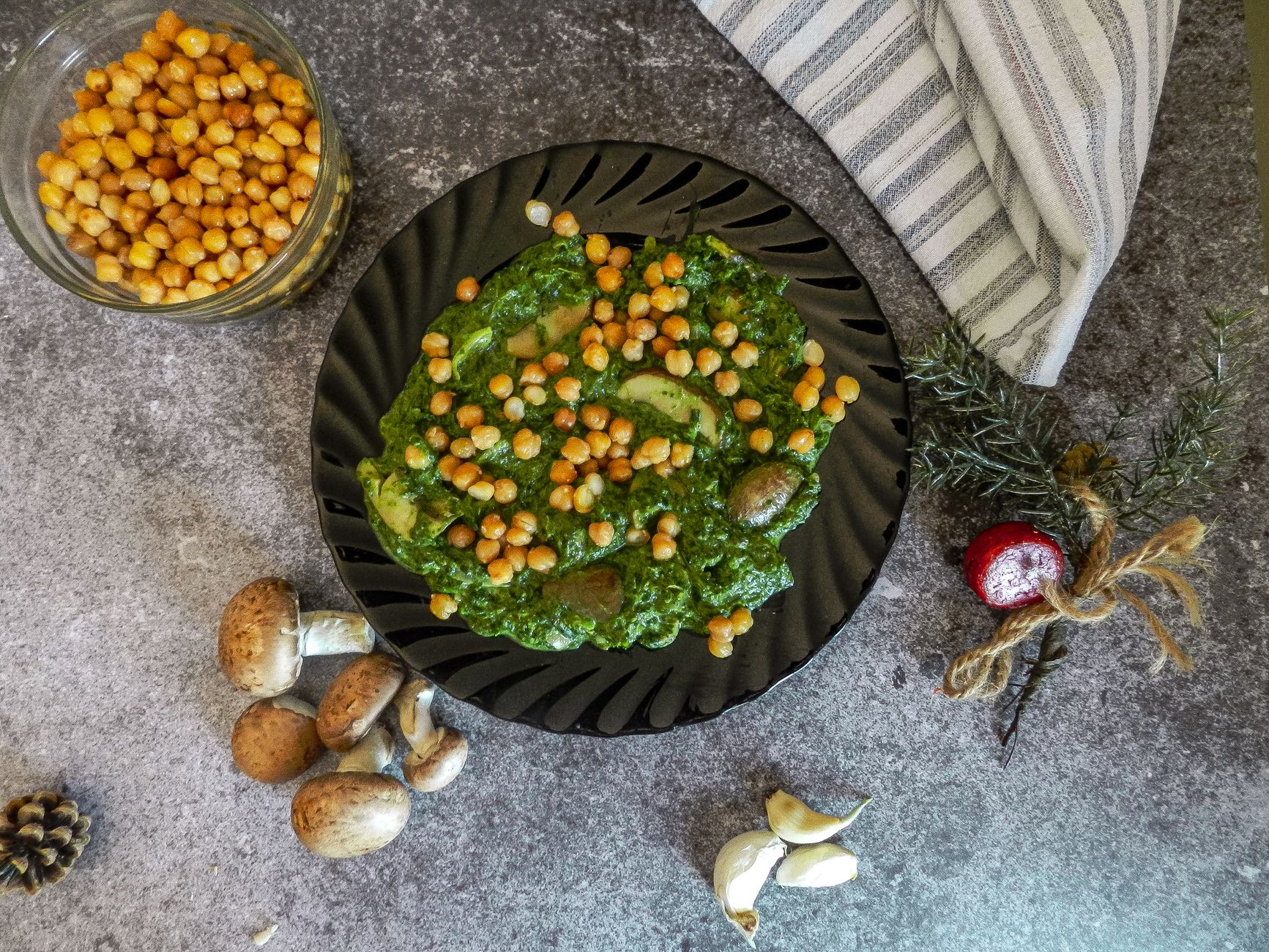
The tapa you order twice. Best in a tiled Sevillian bar at 12:30, before the kitchen fills up.
Sevillian tapa of spinach and chickpeas in a cumin-paprika-garlic sofrito, often with a little jamón or salt cod folded through. A Moorish-flavoured, Lenten-era dish that shows up on every proper tapas bar's display case.
At a Glance
- — You dislike cumin-forward seasoning
Spinach and chickpeas simmered in a cumin-and-paprika sofrito, sometimes with jamón or salt cod folded in, is one of the few tapas that reads as Moorish rather than Castilian — a Lenten-era dish that's stuck around on bar counters across Seville regardless of season. Order it around 12:30, before the lunch rush empties the older trays and refills the display case with fresher ones. It holds up at room temperature better than most tapas, which makes it a safer bet at a bar you haven't vetted yet. Travelers avoiding meat will find this one of the few tapas-bar staples that needs no special request or substitution — it's simply on the menu as written, and done well, it's genuinely good rather than a vegetarian consolation prize.
How it got here
The dish stems from the centuries of Moorish presence in the Guadalquivir valley. Spinach and chickpeas persist as agricultural staples dating to the agricultural advancements of the Al-Andalus period when irrigation techniques transformed the regional landscape. These ingredients migrated from household kitchens to the communal environment of taverns as a Lenten staple. While the influence of northern Castilian cuisine favored pork, this recipe maintained its reliance on cumin and paprika. It persists today as a record of the culinary persistence of the period before the fourteenth century when Sephardic and Muslim foodways shaped the foundational diet of the southern peninsula.
Where it sits
Seville lies on the flat alluvial plain of the Guadalquivir river. The landscape consists of low hills and agricultural fields dominated by olive groves and cereal crops. Summers bring extreme heat that slows movement across the city squares while winters remain mild. Access to the historic center involves walking through dense medieval street patterns where the architecture retains narrow passages and thick walls. The rhythm of daily life follows the daylight hours with activity peaking during the cooler mornings and the late evening when the shade finally covers the plazas.
What to eat and drink
The dish relies on the quality of local dried chickpeas and fresh winter spinach softened in an oil-based sofrito. Sherry vinegar provides the necessary acidity to balance the earthiness of the legumes. For a complete meal, accompany it with local manzanilla or fino, the dry, saline sherries produced in the nearby coastal districts of Cádiz. Pringá, a slow-cooked mash of pork meats and chorizo, provides the primary alternative for those seeking animal proteins. Follow the meal with local olives cured in garlic and wild herbs harvested from the surrounding countryside.
Andalusia: the whole region
The Spain most first-time visitors are picturing: the Alhambra, orange trees, sherry, and a coastline that runs from windsurfing water to resort sprawl. It is also the region people most often ruin by underestimating it. Seville and…
Minimum 5 days · better 8–10 days · deep 2 weeks


Pair It With


In Andalusia







In Andalusia


In Andalusia


















Linked from elsewhere
Entries that name this place in their own nearby lists.
Logistics are verified only. We don't publish schedules we haven't confirmed.
Ready to build Espinacas con Garbanzos into a trip?
You've found a place worth going. When you're ready to turn discovery into an itinerary, Travel Itinerary Co picks up where the Field Guide leaves off — with your saved places already in hand.
Build this into a tripContinues on Travel Itinerary Co
Spain Field Guide may earn a commission when you book through selected links. Recommendations are editorial and independent of commission.