Jabugo

A half-day, and worth it for lunch alone. Book a curing house visit; the museum on its own is thin.
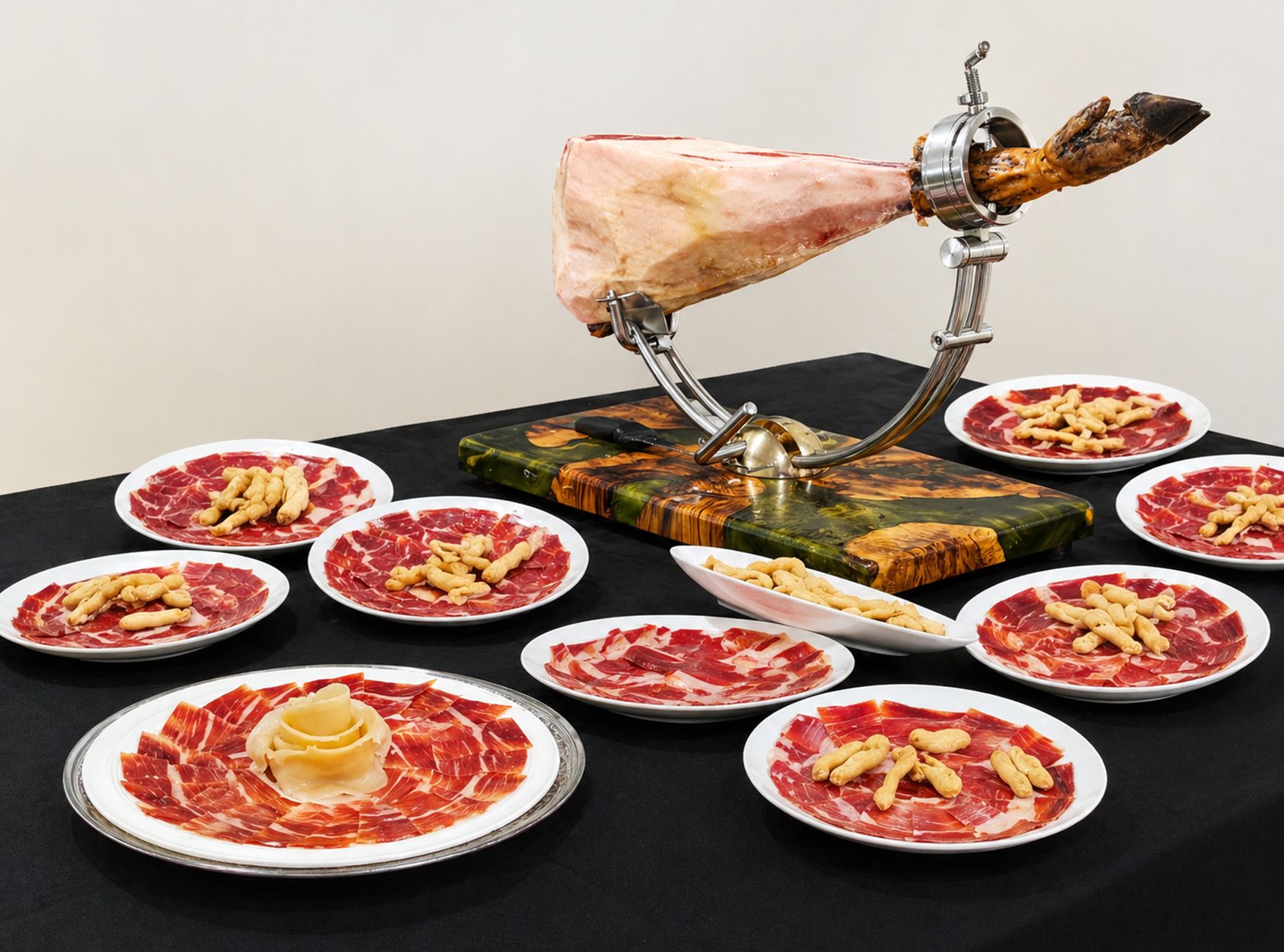
Acorn-fed ham eaten where it is cured, in the oak woods it comes from.
At a Glance
- — You are not going to eat ham — that is the entire reason to come
Jabugo is a village of a few hundred people in the middle of the dehesa, and its name is legally protected: only ham cured here, from pigs raised on acorns in these oak woods, can carry it. The village itself is small and plain, with a couple of curing houses you can visit, a ham museum, and one bar where the ham is sliced by hand and costs what it costs. Do not come looking for a picturesque Andalusian village; come to understand why the ham from this hill costs three times what ham costs in Sevilla, and to eat it where it was made. Twenty minutes of walking, an hour of eating.
How it got here
The Sierra de Aracena and Picos de Aroche maintains a history bound to the seasonal migration of livestock across the Iberian Peninsula. During the reconquest, this territory functioned as a buffer between the Portuguese border and the Kingdom of Seville. The landscape developed around the dehesa, a managed agrosilvopastoral system of cork and holm oaks that provided forage for pigs. This environment dictated the growth of small settlements like Jabugo, where the curing of pork became a necessity for preservation. The focus remains on the specific climatic conditions of these hills which allow for the traditional slow maturation of salt-cured products that defined the local economy for centuries.
Where it sits
The village sits high in the Sierra de Aracena, where the terrain breaks into steep valleys and ridges covered in dense forests of holm oak. Heavy Atlantic rainfall throughout the autumn and winter saturates the soil and keeps the slopes verdant, while summer heat dries the grasses into gold. Narrow roads wind through the woodland to connect these scattered municipalities. Public transport is rare, leaving the winding routes to cyclists and local drivers. The humidity and temperate shifts between day and night provide the conditions needed for the long-term aging of meat in the drying houses.
What to eat and drink
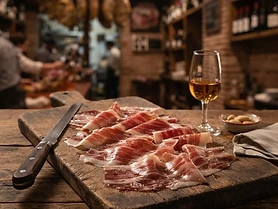
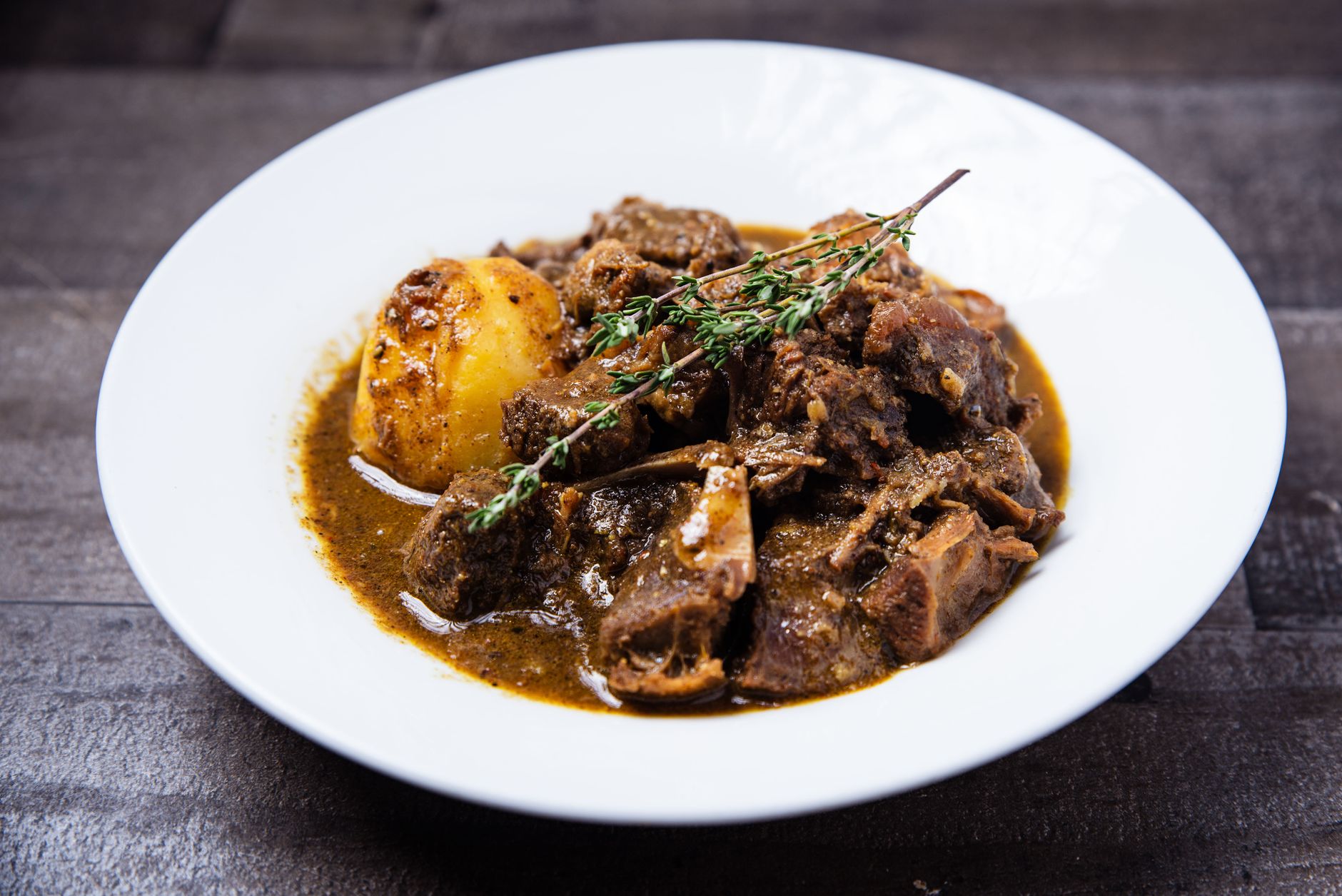
Jamón de Jabugo is the central product, cured from the hind legs of pigs raised on a diet of acorns within the oak forests. The long maturation process results in a deep red meat with intense marbling. Pair this with a glass of dry Fino or Manzanilla from the nearby coastal provinces. The regional diet also relies on migas, here prepared with garlic, olive oil, and cubes of cured pork. Roasted meats from the sierra, particularly suckling pig and local pork sausages like chorizo and morcilla, define the culinary output of this mountain province.
Andalusia: the whole region
The Spain most first-time visitors are picturing: the Alhambra, orange trees, sherry, and a coastline that runs from windsurfing water to resort sprawl. It is also the region people most often ruin by underestimating it. Seville and…
Minimum 5 days · better 8–10 days · deep 2 weeks

In Andalusia






In Andalusia


In Andalusia
















Linked from elsewhere
Entries that name this place in their own nearby lists.

Logistics are verified only. We don't publish schedules we haven't confirmed.
Experiences worth booking ahead
Spain Field Guide may earn a commission when you book through selected links. Recommendations are editorial and independent of commission.
Ready to build Jabugo into a trip?
You've found a place worth going. When you're ready to turn discovery into an itinerary, Travel Itinerary Co picks up where the Field Guide leaves off — with your saved places already in hand.
Build this into a tripContinues on Travel Itinerary Co
Spain Field Guide may earn a commission when you book through selected links. Recommendations are editorial and independent of commission.