Tossa de Mar
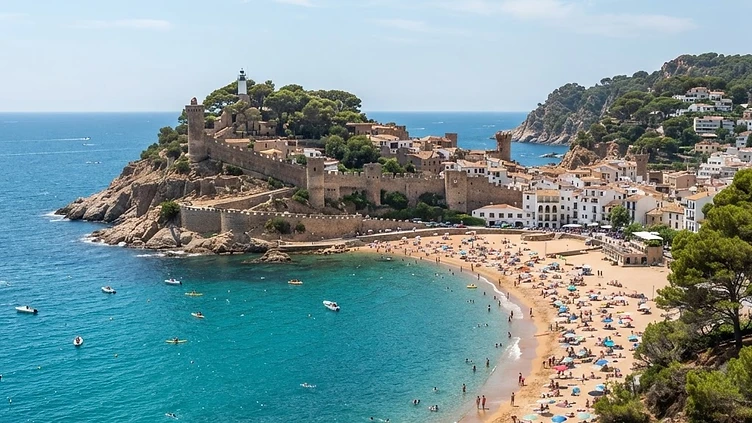
Worth a night rather than a day: the town empties in the evening and the walls are best at sunset. July and August are crowded and priced accordingly; June and September are the months to choose.
A walled medieval town with a beach at the bottom of it, which the rest of this coast cannot offer.
At a Glance
- — You want the emptiest coast; go further north instead
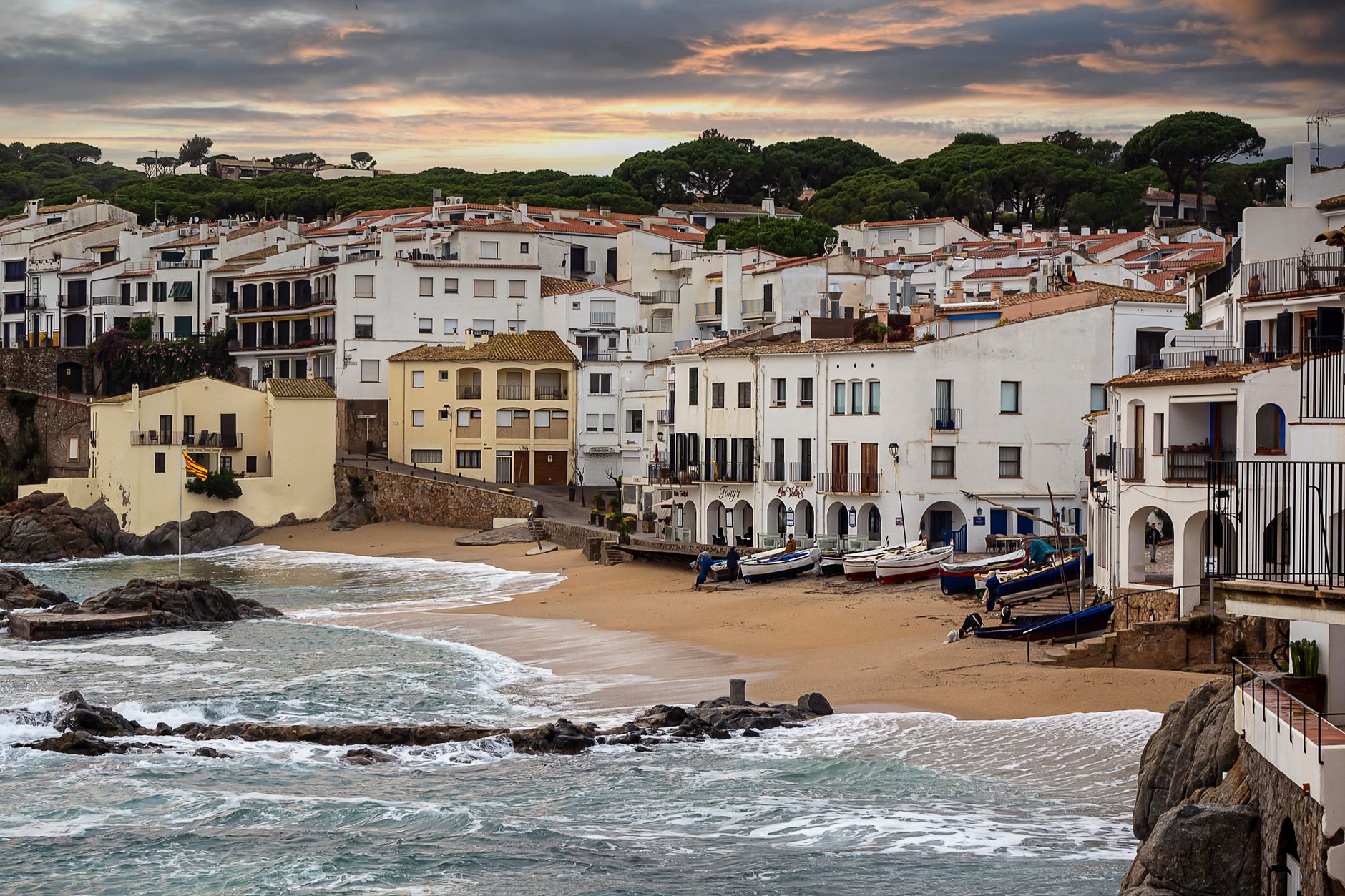
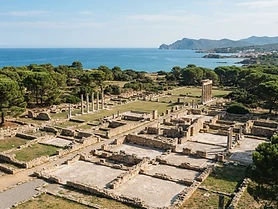
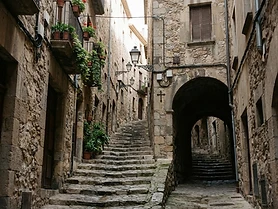
A medieval walled quarter on a headland above a curved beach and a fishing quarter: towers, a lighthouse, cobbles, and a view back along the coast. It is the one Costa Brava resort that kept its old town intact, and it fills accordingly in August.
How it got here
Iberian tribes settled this headland to command the coastal trade routes long before the Roman occupation of the Empordà. The current fortifications date to the twelfth century, when the town acquired its defensive walls to repel pirates raiding from the Mediterranean. These stones provided protection while the local economy turned toward agriculture and fishing. Centuries later, the town avoided the aggressive concrete development that reshaped much of the Costa Brava coastline. The Vila Vella holds the integrity of the medieval grid, preserving the stone watchtowers and the lighthouse that guide sailors today, a physical record of the defensive priorities that defined life here for generations.
Where it sits
The town marks the end of the plains and the start of the jagged granite cliffs that run north toward the French border. Pine forests descend to the water edge, and the roads winding into the town demand caution on narrow turns. Winters bring a sharp chill from the sea, while summer sun turns the coves crowded with travelers who arrive from Barcelona and Girona. The geography forces the town to concentrate within its original footprint, pushing the modern life of the port area against the base of the steep headland where the old walls stand.
What to eat and drink
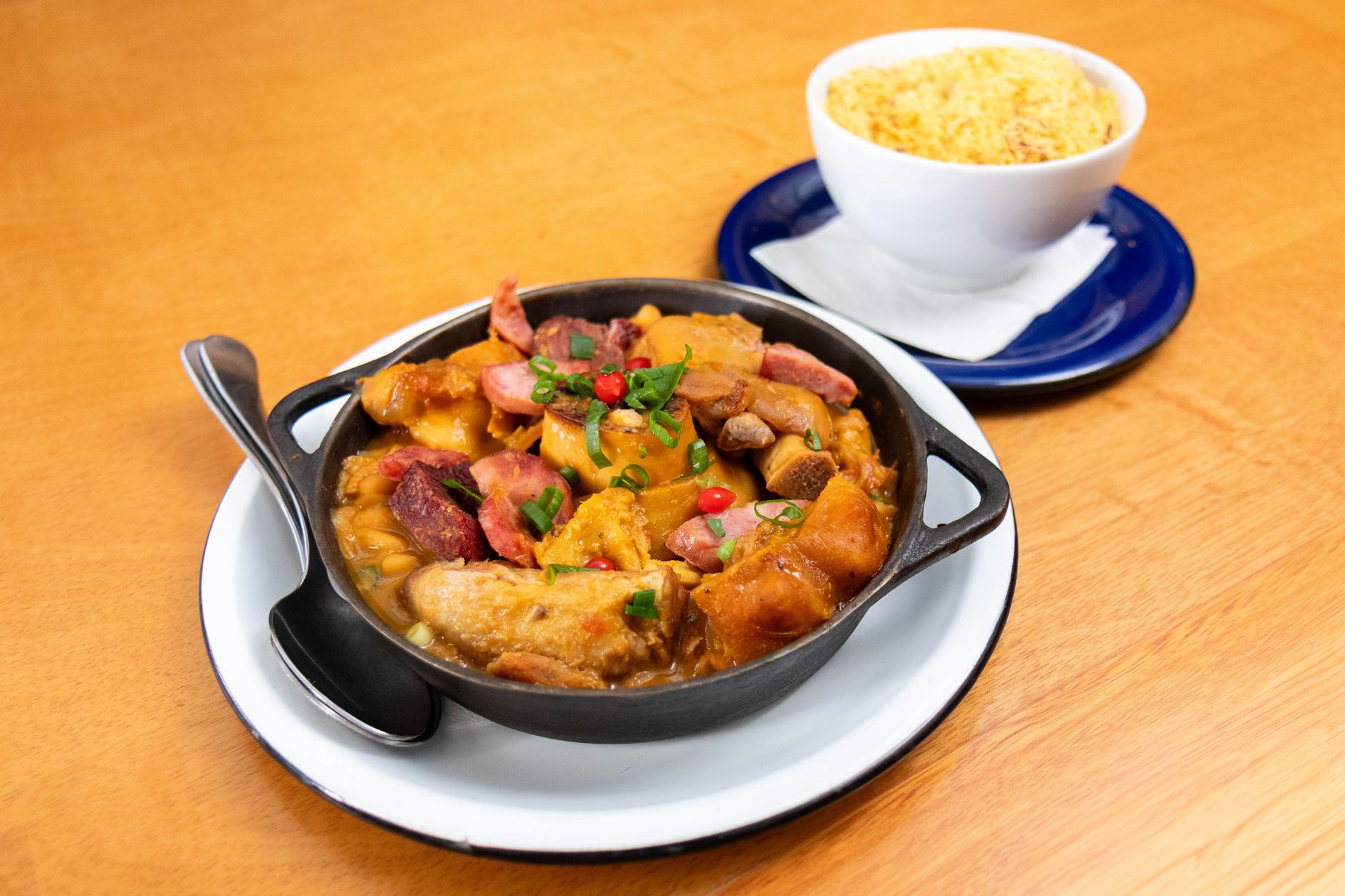
The cuisine draws from the catch of the Mediterranean and the harvests of the Catalan interior. Suquet de peix is the essential dish, a fisherman stew of potatoes and various white fish seasoned with a picada of toasted almonds, garlic, and parsley. Gamba de Palamós, deep-water red prawns pulled from the nearby shelf, appear on tables when the boats return to port. Meals pair with white wines from the Empordà denomination, which grow in the mineral-rich soils of the province. To finish, one finds mel i mató, a fresh unsalted goat cheese drizzled with dark honey produced in the coastal hills.
Catalonia: the whole region
Barcelona is the anchor and most trips never leave it, which is a mistake but not a fatal one: Girona, Tarragona and the Costa Brava's coves are all within two hours by train or a short drive, and the Empordà behind them holds the best…
Minimum 4 days · better 7-8 days · deep 2 weeks


In Catalonia





In Catalonia





In Catalonia





















Logistics are verified only. We don't publish schedules we haven't confirmed.
Experiences worth booking ahead
- Costa Brava & Medieval Village Tour with Lunch4.8 (611)10.5 hrsFrom €115
- Costa Brava Tour: Tossa de Mar Easy Hike & Snorkel from Barcelona5.0 (135)9.5 hrsFrom €85
- Costa Brava, Tossa de Mar Private Tour, hotel pick-up & Boat Ride5.0 (119)10 hrsFrom €293
- Tossa de Mar Discover Scuba Diving PADI4.8 (180)3 hrsFrom €79
Spain Field Guide may earn a commission when you book through selected links. Recommendations are editorial and independent of commission.
Ready to build Tossa de Mar into a trip?
You've found a place worth going. When you're ready to turn discovery into an itinerary, Travel Itinerary Co picks up where the Field Guide leaves off — with your saved places already in hand.
Build this into a tripContinues on Travel Itinerary Co
Spain Field Guide may earn a commission when you book through selected links. Recommendations are editorial and independent of commission.