Fermoselle
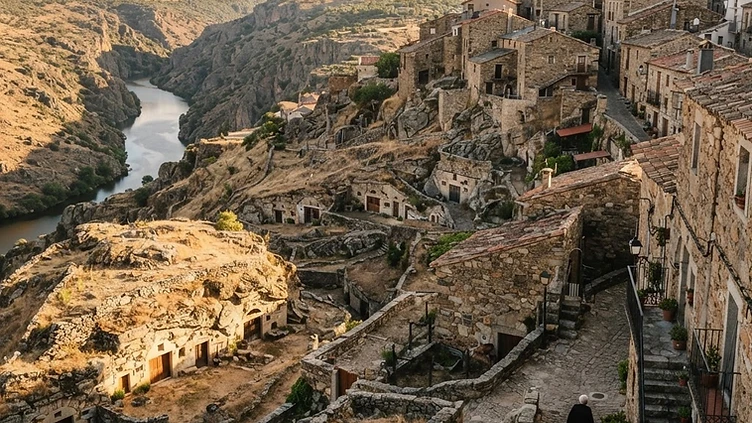
Stay here rather than commute to the gorge. One night, two at most.
The classic view of the Arribes, plus cellars dug into the rock under the streets.
Arribes del Duero · Sierra de Urbión · Aranda de Duero · Sierra de Francia
At a Glance
Fermoselle sits on a promontory above the Duero where the river turns into the Arribes, and it is the best base for the gorge on the Zamora side. The streets are stone, the houses are built against the drop, and the wine cellars — bodegas dug into the rock, some of them centuries old — are underneath the town rather than beside it. There is a mirador at the end of the village, a small castle, and the embarcadero below, where the gorge boat leaves. Two or three places to sleep and eat; book ahead in autumn and on long weekends.
How it got here
The village overlooks the Duero river along the border between Spain and Portugal. Defensive structures here date back to the Middle Ages when the location served as a fortified frontier point for the Kingdom of León against Portuguese expansion. The town layout retains a medieval character with narrow stone passages designed for protection and defense. Centuries of viticulture shaped the subterranean landscape as inhabitants carved expansive wine cellars directly into the granite bedrock beneath their homes. These underground structures provided both climate control for production and secure storage during periods of conflict. The architecture today demonstrates a singular reliance on the local rock to define both the domestic and economic life of the settlement.
Where it sits
The village clings to a granite promontory above the deep Arribes del Duero gorge where the river defines the international boundary. Granite slopes drop sharply toward the water creating a rugged topography of rocky outcrops and Mediterranean vegetation. Reaching the settlement requires navigating the winding roads of the Zamora province that traverse the plateau before descending into the river valley. Winters bring cold winds across the canyon while summer heat intensifies within the stone streets. Quiet dominates the village for most of the year though movement increases during the autumn harvest and national holidays when travelers arrive to explore the surrounding canyon paths.
What to eat and drink
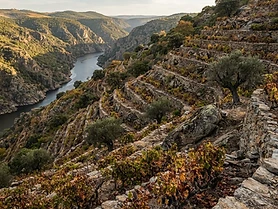
The local diet centers on the robust produce of the Zamora countryside and the traditions of the Douro basin. Bacalao a la tranca, salt cod prepared with garlic and paprika, appears frequently on tables reflecting the proximity to Portuguese culinary customs. Producers here harvest grapes from the steep terraced slopes to create red wines with intense color and high acidity. Patatas a la importancia, potato slices coated in flour and egg before being stewed in a rich saffron broth, provides a standard meal. Hunters contribute game meat to the kitchen while the village remains a center for the production of honey and traditional almond pastries.
Castilla y León: the whole region
The largest region in Spain, and the one that most rewards a car: a plateau of walled cities, Romanesque churches and vineyards, with Salamanca, León, Burgos and Segovia as four genuine anchors spread across four hundred kilometres. There…
Minimum 5 days · better 8-10 days · deep 2 weeks
In Castilla y León



In Castilla y León





In Castilla y León












Other Overnight in Castilla y León







Logistics are verified only. We don't publish schedules we haven't confirmed.
Ready to build Fermoselle into a trip?
You've found a place worth going. When you're ready to turn discovery into an itinerary, Travel Itinerary Co picks up where the Field Guide leaves off — with your saved places already in hand.
Build this into a tripContinues on Travel Itinerary Co
Spain Field Guide may earn a commission when you book through selected links. Recommendations are editorial and independent of commission.